
OPINION: Whose Truth? Academia must earn back the world's trust

Audio By Vocalize
Ask yourself one honest question: when everyone else has let you down, who would you still trust?
I put that question to fellow academics from across East Africa at a recent virtual roundtable, convened by Strathmore University and Kenya's State Department for Foreign Affairs ahead of The Trust Summit 2026 in Nairobi. It is not a comfortable question. Around the world, people increasingly doubt their governments, their regulators, even their places of worship. They wonder whether the product on the shelf was properly inspected, and whether what they are seeing on their screens is real. This is not a Kenyan problem or an African problem. The trust deficit is a global condition, and hardly any institution has been spared.
That includes ours.
A signature under strain
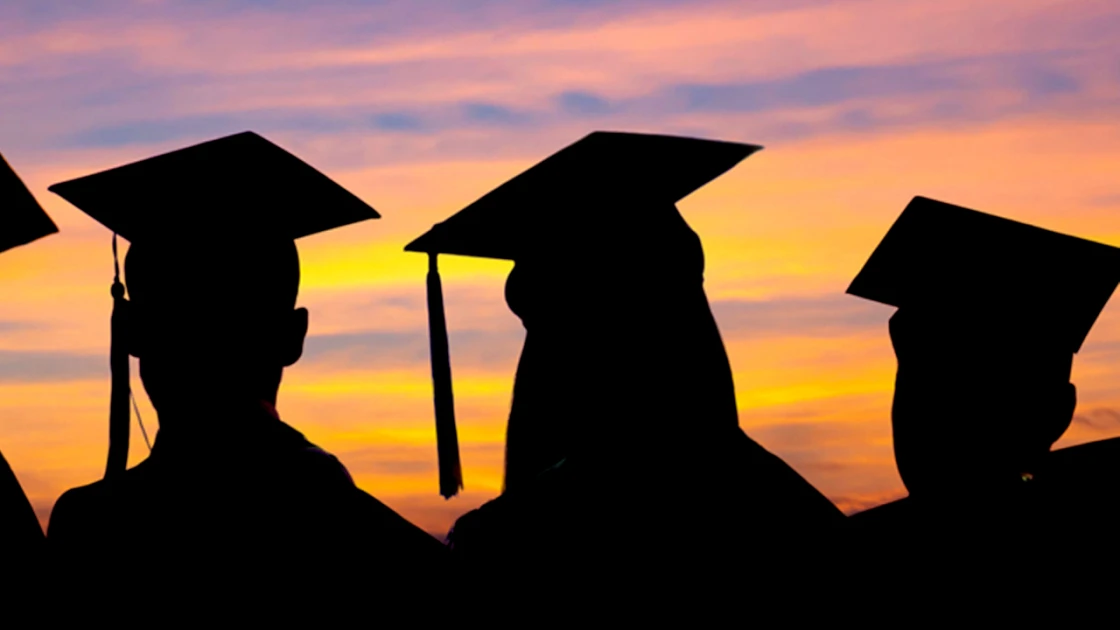
Every graduation season, a Vice Chancellor signs thousands of certificates. Each signature is a promise to an employer, a parent, a stranger across the world: this person has learnt what we say they learnt, and earned it honestly. For generations, that promise was simply believed. Today, it is increasingly questioned. Did this certificate really come from that institution? If it did, does it mean what it should? Or did the holder buy the exam, cram leaked past papers, or graduate from a programme where classes barely happened?
Three reasons we trust
Most of us, asked whom we would trust above all, would name our mothers. We trust them because we believe they mean well for us. That is benevolence. We may trust a religious community because we believe it would not lie to us. That is honesty. And when we fall ill, we choose between a dispensary, a county hospital or a specialist clinic, perhaps even abroad, according to who we believe can actually get the job done. That is competence.
Benevolence, honesty and competence: these are the three reasons we trust anyone. Academia is now being tested on all three: universities and colleges, research institutes, journals, scholars and the bodies that accredit them.
On competence, employers have begun to play the same game we play with hospitals. "Which institution again?" they ask, quietly ranking institutions by how much they believe the degree. On honesty, the pressure to "publish or perish" has fed an industry of predatory journals that promise publication within a week for a fee. Some researchers have gone further, fabricating data to make results look spectacular, and even top-tier journals have had to retract articles. On benevolence, the question is sharper still: are we only producing technical skill, or are we also forming honest citizens who care for their communities?
When knowledge itself is in doubt
This is where the crisis in academia meets the wider crisis of information integrity. When knowledge production is corrupted, misinformation acquires footnotes. A fabricated study, once published, is cited, shared and repeated until it hardens into "fact". And the digital age has made fabrication cheap. Generative AI can now produce a persuasive essay, an invented citation or a doctored image in seconds. The 2026 Edelman Trust Barometer ranks misinformation and generative AI among the top five forces reshaping trust worldwide.
In such a world, "Whose truth?" is no longer a philosophical question. It is a daily one, asked by every reader scrolling a feed, every voter weighing a claim, every patient reading about a treatment.
Earning the right to be believed
Academia cannot answer it by authority alone. Our claim to be trusted has never rested on who we are, but on how we work: gathering data, testing it, submitting it to scrutiny and letting the evidence speak. That is why, when people lose faith in politicians and even in preachers, many still say they trust scientists. It is also why government, industry and communities so often bring their hardest problems to us. Academia should belong to no political party. Its only agenda should be to protect the truth, to grow our knowledge of it and to teach it.
That standing is an inheritance, not an entitlement. If we do not deserve it, people will retreat into the loneliest position of all: "I can only trust myself." No society can function that way. None of us can fact-check every claim we encounter each day; we all take leaps of trust. The task is to make sure those leaps land on solid ground.
What academia should bring to the Nairobi Dialogue on Global Trust
So what should academia bring to the Nairobi Dialogue on Global Trust? I would suggest four commitments. First, make every credential verifiable, so that any employer anywhere can confirm a degree in seconds. Second, guard the integrity of assessment as fiercely as the integrity of research, including in how we respond to AI in the classroom. Third, stop rewarding volume over value: promotion criteria should refuse to count publications in predatory outlets. Fourth, teach every student, whatever their discipline, how to tell evidence from assertion, because information integrity is now a basic civic skill.
None of this is uniquely Kenyan or uniquely African. Academic institutions in every region face the same pressures, and the solutions will travel best if they are built together. The Trust Summit 2026, meeting in Nairobi from 21 to 23 October, gives us a place to do that. Its Arena on Information Integrity and Trust in the Digital Age asks exactly the right question. Its outcome, the Nairobi Call to Action, will be tracked publicly. Academia should arrive not with speeches, but with commitments others can check.
The next time someone asks themselves whom they would still trust when everyone else has failed them, I want the answer to include academia. We will only hear that answer if we earn it.
Dr Vincent Ogutu is the Vice Chancellor of Strathmore University, a convening partner of The Trust Summit 2026, taking place in Nairobi from 21 to 23 October 2026.
Join the Discussion
Share your perspective with the Citizen Digital community.
No comments yet
This discussion is waiting for your voice. Be the first to share your thoughts!