
OPINION: What stops people from getting their financial act together?
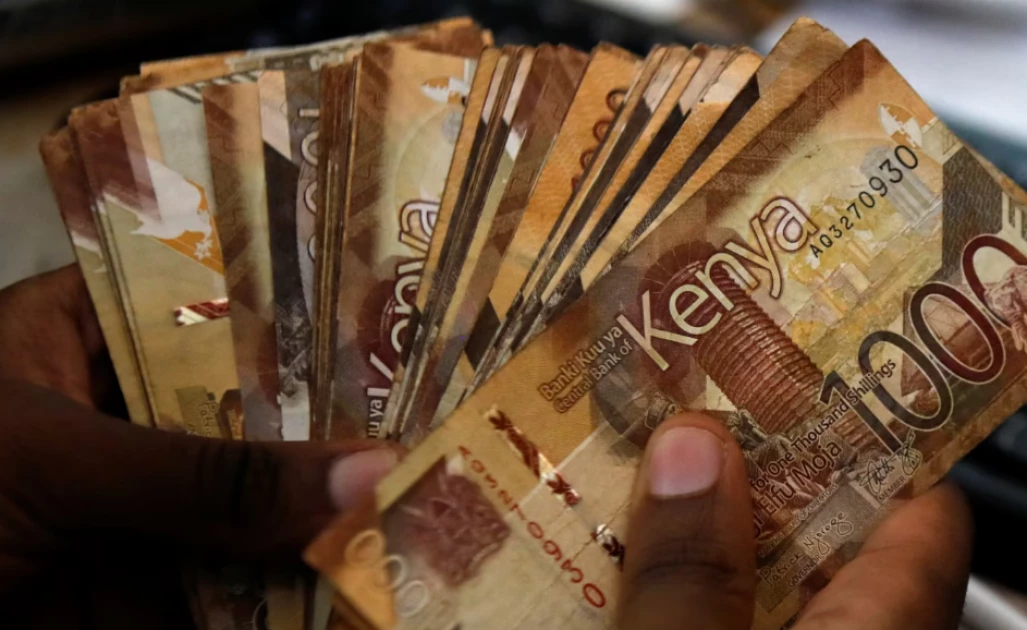
FILE — Kenyan currency notes are pictured inside a cashier's booth at an Equity Bank branch, Nairobi, May 16 2023.

Audio By Vocalize
Personal finance is often presented as a technical challenge, as though financial stability is primarily the result of mastering investment products, understanding complex market dynamics, or earning significantly more income. In reality, the gap between knowledge and getting your financial act together is far wider than many people are willing to admit.
Most adults already understand the basic principles of sound financial management. They know the importance of budgeting, saving consistently, avoiding excessive debt, building emergency reserves and planning for retirement early.
The persistence of financial disorder, therefore, cannot always be explained by a lack of information. It is often the result of behavioural patterns, social pressures and delayed decision-making that quietly compound over time.
One of the most common obstacles is the absence of financial structure, particularly among individuals whose incomes have risen faster than their financial discipline. A young professional earning a respectable salary may appear financially stable from the outside while privately operating with almost no margin for error. Income is quickly absorbed by rent in a high-end apartment, car financing, digital loans, impulsive spending and lifestyle expectations that expand almost automatically alongside earnings.
In many cases, there is no single catastrophic financial decision responsible for the instability. Instead, the problem emerges gradually through a series of unmanaged habits that individually appear harmless but collectively undermine long-term financial progress.
Small recurring expenses, inconsistent saving patterns and dependence on short-term borrowing slowly create financial fragility beneath what outwardly appears to be a comfortable lifestyle.
This is partly because modern consumption has become highly visible and socially reinforced. Social media platforms have normalised a constant public display of upgraded lifestyles, luxury experiences and aspirational living, creating subtle but persistent pressure for individuals to maintain appearances regardless of their actual financial position. As a result, many begin making financial decisions based on the emotional need to avoid appearing left behind.
The difficulty is compounded by the fact that financial discipline rarely produces immediate emotional rewards. Spending creates instant gratification while saving, investing and debt reduction often require prolonged sacrifice before any visible benefit emerges. Most of us understand what we should do financially but struggle to sustain the behaviour necessary to achieve it consistently.
Avoidance also plays a significant role in personal financial disorder. Financial planning forces uncomfortable realities into view, and many people delay confronting those realities for far longer than they should.
Reviewing account balances, calculating debt exposure, projecting retirement readiness or examining actual spending patterns can expose a level of vulnerability that conflicts sharply with how individuals prefer to see themselves.
Unfortunately, financial problems rarely improve through neglect. Delayed action tends to increase both the financial and emotional cost of recovery. High-interest debt compounds, inadequate savings reduce resilience during emergencies, and years of postponed investing significantly weaken long-term wealth accumulation.
What is often overlooked, however, is that financial stability does not usually require dramatic transformation. It is built through ordinary but consistent actions repeated over long periods of time such as establishing automated savings systems, reducing unnecessary recurring expenses, maintaining appropriate insurance coverage and so on.
Financial progress also depends on aligning spending behaviour with actual priorities. Individuals claim to value home ownership or entrepreneurship, but their financial behaviour consistently directs resources elsewhere and this becomes their greatest barriers to meaningful financial progress.
Achieving financial resilience is not always for the highest earners or the most financially sophisticated. It is for those who develop the discipline to consistently make decisions that protect their future selves, even when those decisions offer little immediate reward.
Mr Monyoncho is an Executive Director, Enwealth Capital Ltd.
Join the Discussion
Share your perspective with the Citizen Digital community.
No comments yet
This discussion is waiting for your voice. Be the first to share your thoughts!