
OPINION: The diaspora sends the money. Now Kenya wants the trust
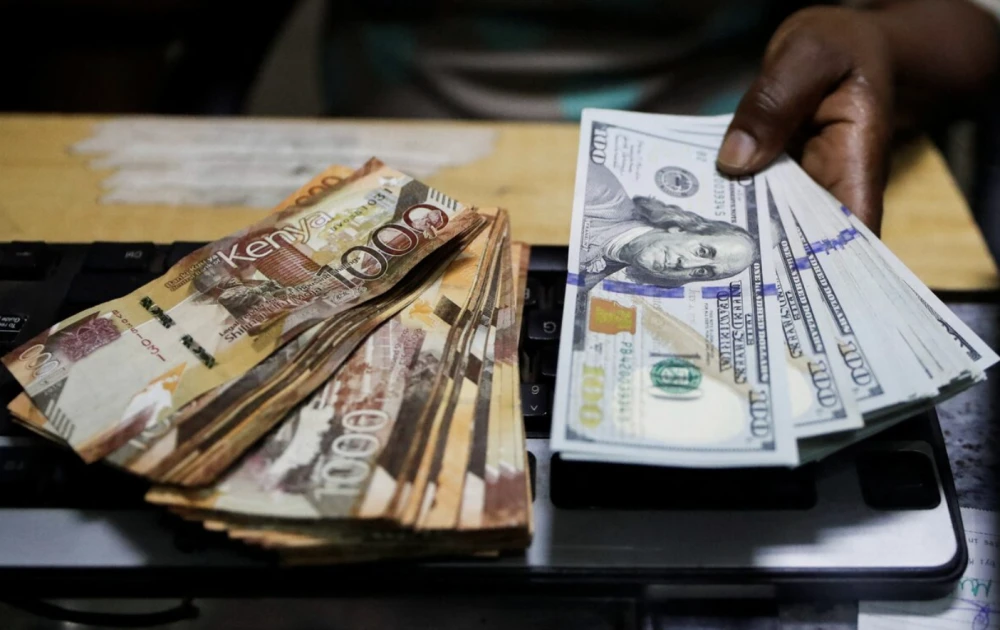
A teller handles US dollar banknotes and Kenyan shilling banknotes. PHOTO I FILE

Audio By Vocalize

By Shawn Ngao Mwatu
This week in New York, President Ruto launched the Kenya Diaspora Impact Platform.
Built with Equity Group and the UN in Kenya, it is meant to move diaspora money out of the remittance channel and into investment: MSME financing, development projects, and a formal route for Kenyans abroad to put capital to work at home.
The pitch is that the diaspora should be more than a source of monthly transfers. It should be an investor class.
The ambition is right. The timing is worth examining. Kenyans abroad sent home a record $5.04 billion in 2025.
For years, remittances have been the country's largest single source of foreign exchange, ahead of tea, coffee and tourism.
They arrive without conditions, without a donor's terms and without the volatility of commodity prices.
They are the most reliable money Kenya receives. That is what makes 2026 notable. In the first seven months of the year, remittances fell for the first time in about 17 years, coming in roughly Ksh.9 billion below the same period in 2025.
The Central Bank has cut its growth forecast for the year to under one per cent. Most of the softening traces to the Gulf, where labour conditions for Kenyan workers have tightened.
The reliable money has, for the first time in a generation, become slightly less reliable.
So the diaspora is being asked to invest more in the same year it is sending less. That is not a contradiction the platform can wish away. It is the context it launches into.
Here is the deeper point. Diaspora capital does not move on appeals or launches. It moves on trust.
A Kenyan nurse in Dallas or an engineer in Doha already sends money home every month. The question is not whether they care about Kenya. They plainly do.
The question is whether they trust an institution to hold their money as well as their mother does.
On the current record, many do not. They send to family because family is accountable in a way that institutions have not been.
They see the corruption cases that go nowhere, the projects that cost triple and deliver half, the funds that vanish between the budget line and the ground.
When money can go missing at scale, and no one is held to account, the rational choice is to keep sending it to a person you can call, not a platform you cannot audit.
There is a signal in the numbers that proves the point. A recent KNBS survey found that actual diaspora inflows are about 43 per cent larger than the official figures capture, because so much moves through informal channels.
That gap is not a measurement problem alone. It is a confidence problem.
People route money around the formal system because they trust it less than the alternative.
A platform, then, is a start. It is not the thing itself. The KDIP can build the rails. Rails carry traffic only when people believe the destination is safe.
What would earn that belief is not more technology. It is governance: transparent accounts, real consequences when money is misused and results the diaspora can measure for themselves.
Ruto called it a bridge "founded on trust, transparency and measurable results." Those are the right words. They are also a test he has set for himself.
The diaspora will hold the platform to exactly that standard, because they have every reason to. They have been disappointed before.
This is not a party question. The opposition is courting the diaspora just as hard. Everyone with an eye on 2027 has worked out that Kenyans abroad are a constituency worth winning, with their money and increasingly their votes.
That is precisely why the diaspora should refuse to be flattered by any of them and insist instead on the one thing that has been missing: institutions that can be trusted with more than a monthly transfer to family.
The diaspora has already shown it will send everything it can. The question Kenya has never quite answered is whether it can be trusted with more than that.
Answer it, and the billions follow.
The writer is an investment and governance specialist and MD of Resourceful Ventures. He divides his time between London and Nairobi.
Join the Discussion
Share your perspective with the Citizen Digital community.
No comments yet
This discussion is waiting for your voice. Be the first to share your thoughts!