
OPINION: Retirement Security - Turning pension savings into lifetime income
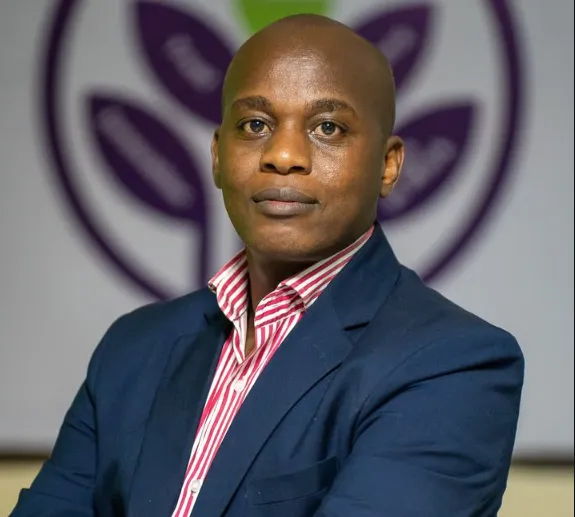
Albanus Muthoka Asst. General Manager – Operations at Enwealth Financial Services Limited.

Audio By Vocalize
At our recent Annual General Meeting for the Enwealth Umbrella Fund, we asked members a simple question: when the time comes, would you rather receive your pension as a lump sum or as a monthly income?
The answer was revealing. Most opted for the lump sum.
A retiring civil servant in Kenya today has three choices for the money sitting in their pension scheme. They can take it as a lump sum, convert it into an annuity that pays a fixed monthly income for life, or put it into an income drawdown fund, where the money stays invested and gets drawn down over time.
It is not difficult to understand why. After 30 or more years of contributing a portion of every pay cheque to a pension scheme, retirement is the moment when a lifetime of savings becomes tangible. A lump sum feels like something you can see, control and put to work. A monthly annuity, by comparison, can feel modest and abstract, particularly when nobody knows exactly how long they will live.
In the past we have done a qualitative study of retirees with Strathmore University's Social Security Study Group and found that most participants who took a lump sum put it into construction, mainly rental units, or land. Rental property was described as permanent, something that would keep earning even after the retiree was gone, and something they could pass on to their children. That is a rational response to a system many retirees often do not understand.
But the bigger question is: What happens after the pension is paid out? Retirement planners generally recommend an income replacement ratio of around seventy-five to eighty percent of pre-retirement income to maintain a similar standard of living after work ends. Kenya's average currently sits below forty percent. Closing that gap has less to do with which payout option a retiree eventually picks and more to do with the decisions made years earlier, often quietly, long before retirement day arrives.
The first lever is how much gets saved in the first place. Kenya's NSSF Act has progressively increased the mandatory contributions made by workers and employers, with the statutory limits now at Ksh 8,000 for the lower tier and Ksh 72,000 for the upper tier. Every increase in that mandatory floor chips away at the gap between the roughly 40 percent Kenyans are currently saving and the 75 to 80 percent target.
The second is what happens to those savings at retirement. Retirees are usually presented with a choice that sounds like all-or-nothing, lump sum or annuity, when in practice the better option is often a blend of both. Taking a smaller slice as cash while letting the rest flow into an annuity or drawdown fund can still cover an immediate need, such as clearing a debt, without giving up a steady income for the years ahead. Kenya's scheme rules already allow this kind of split. What keeps most retirees from using it is the habit of treating the decision as one or the other.
The third is what retirees build alongside their pension before retirement arrives. The Strathmore and Enwealth qualitative study found that the retirees who coped best had not waited for the lump sum to land before figuring out what came next. They had already planned and built something on the side, a small farm, a business, a rental unit, while they were still working.
None of this means Kenyans who choose lump sums are making a mistake. Given the knowledge gap and the appeal of a tangible asset like rental property, it is often the more sensible choice available to them. The problem is that the system asks people to make a life-altering financial decision at the moment they are least prepared for it, without fixing the low savings, low awareness, and thin healthcare coverage sitting underneath that decision.
A retiree who understood their accrued benefits years in advance, who had access to independent guidance rather than a product pitch, and who had a functioning medical fund already in place might still choose a lump sum. But they would be choosing it, rather than defaulting to it because nothing else on offer felt worthy of betting a working life's savings on.
Albanus Muthoka is Asst. General Manager – Operations at Enwealth Financial Services Limited.
Join the Discussion
Share your perspective with the Citizen Digital community.
No comments yet
This discussion is waiting for your voice. Be the first to share your thoughts!