
OPINION: Kenya's growth runs on trusted information. It's time to invest in it
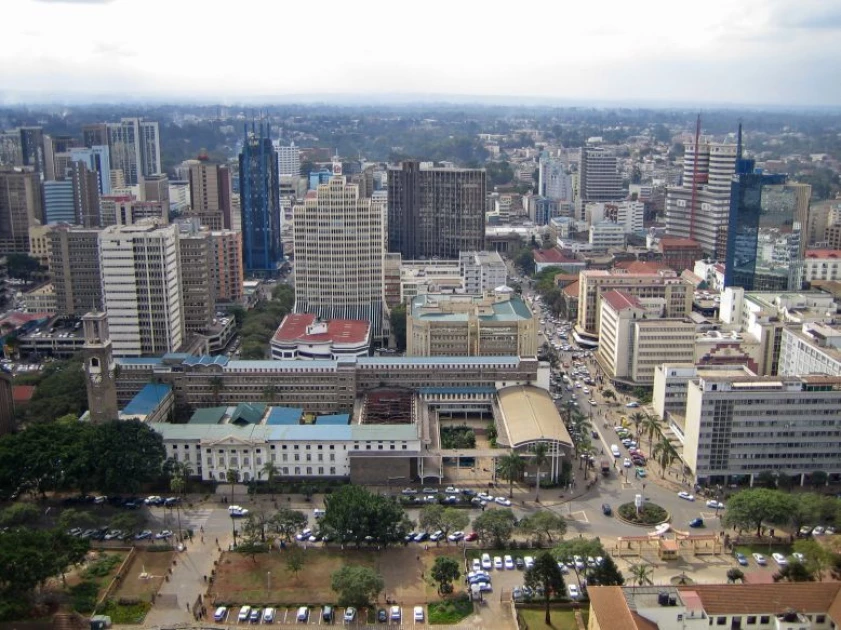
File image of an aerial view of the Nairobi CBD.

Audio By Vocalize
Kenya is the catalyst of East Africa's economic growth. As the region's commercial gateway, it has been central to making East Africa the continent's fastest-growing region, with the African Development Bank forecasting growth of 5.9%.
That success is no accident. It reflects a concerted push to build the physical infrastructure that underpins growth: roads, railways, ports, irrigation and energy. The National Infrastructure Fund, launched this year to mobilise $38bn over the next decade, is the latest example.
Yet the network most important to that economy is the one least discussed. Markets run on trusted information as surely as they run on roads and power.
Public interest media performs a core economic function: oversight. Whether the subject is government policy or corporate conduct, independent newsrooms hold power to account. With Africa losing around $90bn a year to illicit financial flows, that function has never mattered more.
The argument may sound abstract. The returns are not. Declining press freedom has been associated with a fall of one to two percentage points in real GDP growth.
Yet the institutions doing this work are not getting the support they need.
The era when advertising and subscriptions could sustain independent media is over. Advertising has migrated to digital platforms. AI companies scrape journalism without compensating publishers, and in some cases market their products as a cheaper alternative to it.
Kenya is not immune. Its media environment is among the most sophisticated on the continent. Nairobi is arguably the leading hub for international media in Africa, and home to some of the continent's largest newsrooms and independent media houses. Even so, Nation Media Group's revenue fell 4.8% in the first half of this year, to its lowest level in 21 years.
How the sector navigates these pressures has been a focus for Bloomberg for more than a decade. Last week, we convened media executives and business leaders from across the continent in Cape Town for the African Business Media Innovators forum. The message from the industry was clear: investment is needed.
In Kenya, our work began in 2014 with the launch of the Bloomberg Media Initiative Africa. Its Financial Journalism Training programme is a practical executive course that equips mid-career journalists and professionals to interpret and communicate complex economic and financial issues. 191 Kenyan delegates have graduated across four intakes. Additionally, Bloomberg invested philanthropically in four independent media organizations in Kenya.
That work matters more than ever, because Kenya is now asking investors for their confidence. The National Infrastructure Fund is designed to draw in private and institutional capital rather than rely on borrowing.
But capital does not price ambition. It prices confidence. Investors want to know that budget figures are real, that procurement is beyond reproach, and that the institutions behind a deal will still be standing when it matures. It is a free press that makes that information reliable. Journalists verify government data, expose corruption and hold institutions to account. When international investors look at Kenya, they aren't pricing numbers alone. They're pricing confidence in those numbers.
Kenya knows this. When a proposed 30-year lease of Jomo Kenyatta International Airport to the Adani Group surfaced in 2024, public scrutiny turned a closed-door negotiation into a national debate, and the deal was cancelled. The airport's expansion is now set to draw on the National Infrastructure Fund. Kenyans understand the value of that scrutiny: more than three-quarters say the media should continually investigate and report on government mistakes and corruption.
Yet the media's capacity to scrutinise is dependent on its own financial sustainability. If the newsrooms’ ability to report is weakened, it is not a cultural loss it’s a market failure, no different from a port that cannot clear its cargo.
Treating media as economic infrastructure, deserving the same long-term investment as roads, rail and power, must be part of Kenya's next stage of growth. This isn't about preserving the media models of the past. It's about equipping newsrooms for the economic, technological and audience realities that lie ahead. Get this right, and the investment flows will follow.
Philanthropy can provide patient, flexible capital. Kenya's banks, telecoms and technology firms, which depend on an informed market more than most, can bring distribution and commercial expertise. Governament can guarantee the conditions for journalism to operate without fear or favour.
Kenya has done the hard part by building the foundations for growth. The task now is to make investor confidence durable. That won't come from concrete and steel alone. It will come from investing, with the same seriousness, in the credible information that transparent institutions and efficient markets depend on. Infrastructure can attract capital to Kenya. A free press can maintain it.
The writer is , Bloomberg Corporate Philanthropy Lead, Africa and the Middle East
Join the Discussion
Share your perspective with the Citizen Digital community.
No comments yet
This discussion is waiting for your voice. Be the first to share your thoughts!