
If you see a Leopard, keep walking: lessons from Wangari Maathai, 15 years on
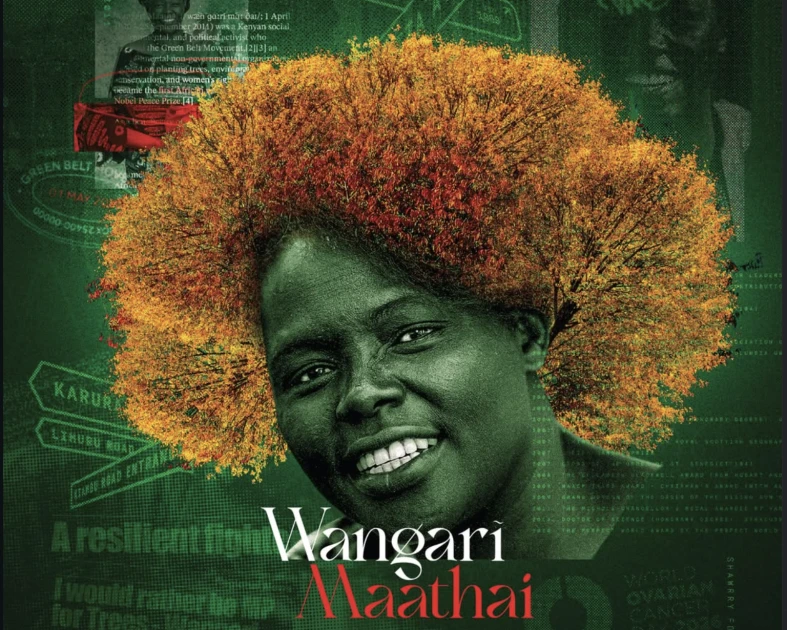
Wangari Maathai by Too Early For Birds

Audio By Vocalize
Wangari Maathai walked the earth between April 1940 and September 2011, a living embodiment of a daughter of the soil.
In the history books, she is painted as a champion of the earth, a lover of the greenscape and a woman with a heart for the people.
Yet I left the theatre understanding how faint my knowledge of her was, because she was so much more than a decorated laureate.
"I stand before you and the world humbled by this recognition and uplifted by the honour of being the 2004 Nobel Peace Laureate." The stage lit up with the opening words of Maathai's 2004 Nobel Prize lecture in Norway, a tribute to the woman whose journey we were about to embark on.
Thespian Red Brenda carried the role of a young Miriam Wangari Muta, her love for flora and fauna blossoming from an early age.
Midway through the first half, at a deeply emotional moment, Akinyi Aluoch took over as the grown-up Wangari Muta, just home from Mount St. Scholastica College (now Benedictine College) and the University of Pittsburgh.
An honorary mention goes to the research team, who dug through volumes of information and met Wangari's friends and family, leaving no room for error or misinformation. The writing blended her autobiography, which tells of her detention as a child in a concentration camp for three days, with conversations with childhood friends and schoolmates who recalled their days in New York, and even the news headlines she made. Together they gave the script both background and the weight of truth. It was an exemplary way to immortalise a woman of history and valour.
Wangari's story is not told in a straight line. Instead, the play sets moments from her childhood beside those from her young adult life, showing the experiences that moulded her mind and belief system.
You might not know, for instance, that she attended a Catholic primary school, St. Cecilia's Intermediate Primary School, where she took the name Mary Josephine Wangari Muta, an ode to Mary and Joseph, the parents of Jesus.
Her time in New York and Pittsburgh challenged her core beliefs and identity so deeply that, on returning home, she settled on Wangari Muta, until she married Mwangi Mathai and became Wangari Muta Mathai. After her divorce, she settled into the name we know today, Wangari Maathai.
The end of her marriage was not treated as gossip or hearsay. The playwright let Wangari's character speak for herself, and she declared that she would clarify nothing, because the public had no business prying into her house and private life.
The first half gave the audience context and a strong foundation for the heavier second half, the Wangari we came to read about: her political activism, her environmental championship, her colourful educational background, her marriage, her family and her divorce.
By the end of the night, you had a good grasp of who the world was dealing with. Had I walked into that theatre knowing nothing about her, I would still have left singing her praises.
Director Martin Kigondu's decision to break the fourth wall made every audience member part of the story, through dancing and call-and-response chants. The production, staged by Too Early For Birds, featured Sam Arlcons, Joe Kinyua, Red Brenda, Akinyi Aluoch, Charles Gachanja, Miss Kahiro, Karimi Rimbui, Niya Vaya and Shiviske Shivisi, a star-studded cast that deserved its flowers for every showing.
Putting the story on stage was only the beginning. They say theatre is a reflection of real life, but this time the ideals were switched.
On entry, everyone was handed a bag containing two varieties of seeds, one for dry and arid areas and another for rainy places. So you walked out with a full heart and a reminder from the legend herself: "We cannot tire or give up. We owe it to the present generations of all species to stand up and walk!"
Wangari Muta Maathai was not a perfect woman, nowhere near it, but she was one worth every second on that stage.
To close, I borrow her mother's words: "Wangari, if you see a leopard, just keep walking. You tell it, 'My name is Wa Ngari [of the leopard]. We are the same. Mbona tupigane?'"
Truly a masterpiece.
Join the Discussion
Share your perspective with the Citizen Digital community.
No comments yet
This discussion is waiting for your voice. Be the first to share your thoughts!