
OPINION: Hasten foreign service reforms to avoid embarrassing Kenyan economic diplomacy

Audio By Vocalize
If ever there was a case of scapegoating the hoi
polloi for the sake of a wider trade policy debate, then the recent ban
targeting Burundian retailers and informal traders is a classic case of how
arbitrary diplomacy can blowback.
On September 2, 2026, in an attempt to mollify angry
traders protesting new import container charges and duties, President William Ruto directed that on September 7, 2026, all petty traders engaged in hawking, among other small-scale informal jobs, should leave the country.
The pronouncement was made with little to no
consideration for the East African Community (EAC) treaty and its Common
Market Protocol (CMP) that Kenya is obligated to abide by as a vested partner
in regional integration.
Rather, the president chose to lean into the Local
Content Bill 2025 currently in parliament, seeking to create a regulatory
framework that includes local industries in key economic sectors within the
activities of foreign companies operating in Kenya.
Secondly, the bill seeks to ensure foreign companies
source their agricultural supplies from local farmers in support of the
agricultural sector as a means of improving the livelihoods of Kenyan farmers by
guaranteeing markets for their produce.
Other issues of concern included securing trade and
labour quotas, harnessing supply chain benefits for local entities, preventing tax evasion, addressing transfer pricing, plus alignment with international
standards, particularly the European Union (EU).
However, the order has unleashed creeping xenophobia,
siege mentality, and looming crackdowns from overzealous community members. This
will complicate Kenyan diplomacy with regional partners as other nationalities
such as Ugandans are also reportedly beginning to flee as well.
Such expulsion action is likely to negatively affect
revenue collection efforts that will boomerang into new punishing tax measures
upon Kenyans to recoup lost revenues.
It will also open Kenyan small businesses and informal
traders across the region plus other African countries to retaliatory policies,
or violent actions thereby worsening the state of non-tariff barrier (NTB) through
building unnecessary suspicions among EAC citizens.
Member states will then be keen to offer similar protection
to their citizens, thus creating a downward spiral in a race to the bottom.
Besides the diplomatic egg on the face, the debacle
has shifted conversations from a multinational investment debate with mega
financial; insurance; transport; warehousing; logistics; security; and
construction services to small scale microenterprises.
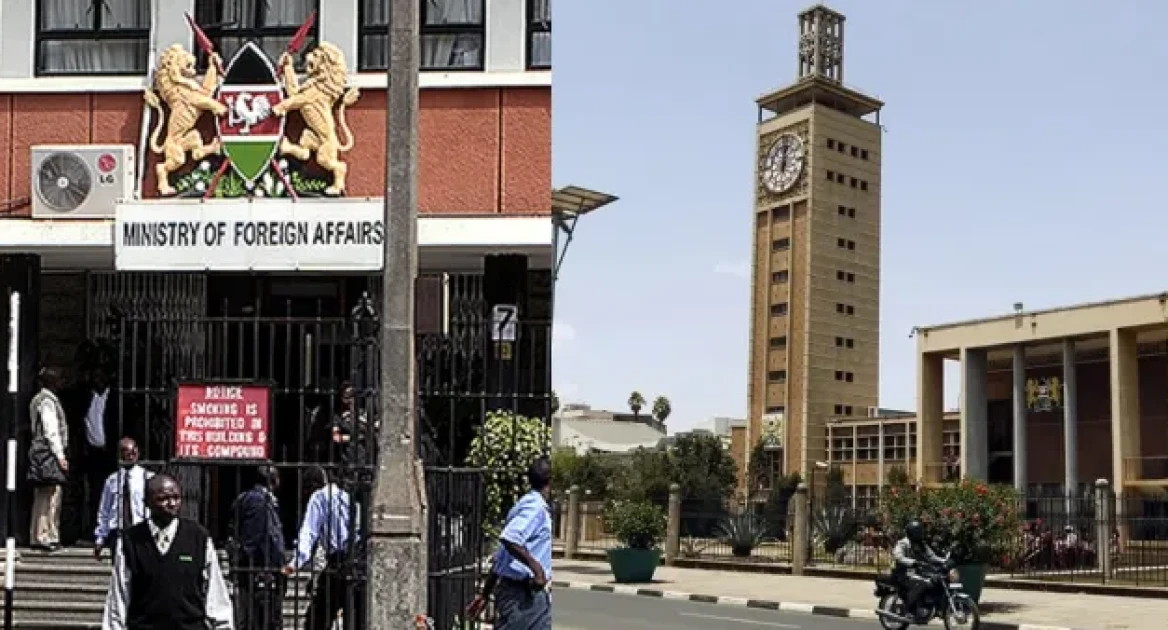
This shows that the Kenyan state department of foreign
affairs should speed up the reforms it launched in July 2026, so that it can have
a responsive and functional economic diplomacy in place as soon as possible.
Focusing on attracting investment and promoting trade
must now go hand in hand with championing economic rights as a key tangible benefit
for citizens, as per the department’s new results-based approach.
By including justice as an important component of the overall
local, national, regional, continental, and global economic diplomacy needed today,
the reforms will expand beyond current efforts to “strengthen coordination,
improve knowledge management, accelerate digital transformation, and enhance
strategic communications.”
It will interface with citizen needs by enhancing
their issue awareness and support skills transfer to diplomatic officials so
that they can satisfactorily build public legitimacy.
Moreover, it will expand spaces for regular interactions
plus participation, as improved and new stakeholder relations break down the
traditional exclusiveness of old diplomatic practices.
This may require considering frameworks of implementation
such as multi-agency foreign policy engagements and cooperation objectives
(MAFECO), which create structures for regular interactions with both policy
friends or foes, in attaining a well-rounded 360-degree perspective of the
country’s external relations.
Overall, completing these diplomatic reforms will
result in a clear assignment of responsibilities for government, civil society,
private sector, and faith organisations to establish the modern foreign policy
practices needed in Kenya’s emerging digital era.
The author is the Regional Coordinator for the East African Tax and Governance Network (EATGN). Follow on X @lennwanyama.
Join the Discussion
Share your perspective with the Citizen Digital community.
No comments yet
This discussion is waiting for your voice. Be the first to share your thoughts!