
OPINION: Diaz - The climate finance revolution, pricing natural capital for global prosperity

Audio By Vocalize
As a global business leader who has spent decades working across international markets, I view the climate transition not as a narrative of burden, but as the greatest economic, technological and investment opportunity of our generation.
Across Africa and the Global South, we are witnessing a
fundamental paradigm shift: moving away from traditional donor frameworks
toward a high-value, market-driven global natural capital economy.
Africa holds one-fifth of the world’s carbon sinks,
including the majestic Congo Basin, a living biome that absorbs tens of
billions of tons of carbon dioxide and sustains the entire planet's atmospheric
balance. For decades, the global economy viewed these assets through a narrow
lens of grant dependency or unpriced ecosystem services.
Today, that narrative is rapidly obsolete. The climate
finance gap is being re-engineered not as a charity shortfall, but as a
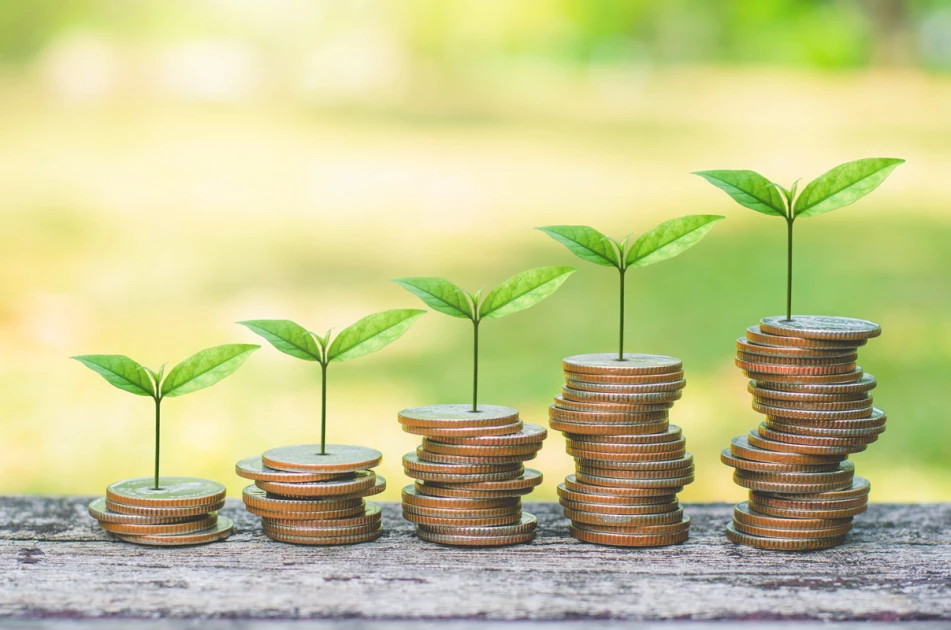
multi-trillion-dollar market opportunity to accurately price, trade, and scale
high-integrity natural assets on the world stage.
By aligning international capital markets with sovereign
environmental leadership, we can unlock an unprecedented wave of sustainable
economic growth that benefits local communities, global investors, and the
planet alike.
The global voluntary carbon market is undergoing a vital
evolution toward quality, transparency, and high performance. Projected to
scale toward 100 billion dollars by mid-century, the carbon economy has the
potential to generate up to 100 billion dollars annually for Africa alone by
2030, while catalyzing millions of high-skilled, future-ready green jobs.
Sovereign leadership across the continent is already
establishing the gold standard for how natural capital should be legislated and
monetized globally:
Kenya’s Climate Regulations mandate that 40% of revenues
from land-based carbon projects flow directly into local communities,
establishing a benchmark for inclusive wealth creation.
Rwanda pioneered the first corresponding adjustment under
Article 6 of the Paris Agreement, providing a clear global blueprint for
sovereign authorization and international trade integrity.
Ghana and Kenya have launched operational national
registries, seamlessly linking domestic environmental goals with global capital
markets.
This modern, market-based framework replaces unpredictable,
short-term aid with reliable, performance-based cash flows. It rewards
measurable conservation achievements, proving that environmental stewardship
and economic growth are mutually reinforcing imperatives.
Ecosystems like the Congo Basin, the Great Green Wall across
the Sahel, and coastal mangrove belts are not merely regional geographic
features, they are critical planetary infrastructure. Global initiatives like
the Tropical Forest Forever Facility (TFFF), co-created by Brazil with support
from the African Development Bank, demonstrate how international solidarity can
merge with commercial pragmatism. By establishing clear, predictable price
signals for keeping tropical forests standing, the world is creating a stable
financial return on natural capital.
When we integrate natural capital into national economic
accounting as advocated by leading development finance institutions, we
transform standing forests, savannas, and ocean corridors into valuable
balance-sheet assets. This fundamental shift elevates sovereign
creditworthiness, lowers the cost of capital, and attracts long-term
institutional portfolio investment to regional economies.
While governments establish enabling regulatory
environments, it is the private sector that will drive scale, technology
deployment, and execution globally.
Corporate leaders,
institutional investors, and tech innovators are proving that investing in
high-integrity natural capital is both an environmental imperative and an
exceptional commercial opportunity.
To fully realize this win-win future, we must accelerate
three strategic pillars of public-private collaboration:
Global Institutional Capital Deployment: Institutional
investors, sovereign wealth funds, and pension funds hold trillions in global
assets. Redirecting even a fractional percentage into green infrastructure and
African natural capital generates strong, risk-adjusted returns while
diversifying portfolios into resilient real assets.
Co-Innovation and Advanced Verification: Technology leaders
are bringing satellite analytics, AI-driven biomass modeling, and transparent
digital ledgers to natural capital projects—ensuring absolute integrity,
verifiable benefit-sharing, and institutional trust across international supply
chains.
The private sector continues to demonstrate that driving the
green and blue economy is one of the most value-accretive business strategies
of our time. By combining commercial discipline with technological innovation,
private enterprise is translating natural potential into lasting prosperity,
energy resilience, and shared global growth.
The markets are energized, the global integrity architecture is maturing, and the economic rationale is undeniable. By treating natural capital as a premier global asset class and pricing it fairly on the world stage, we will power a sustainable, highly prosperous future for generations to come.
Chris Diaz
Business Leader
Join the Discussion
Share your perspective with the Citizen Digital community.
No comments yet
This discussion is waiting for your voice. Be the first to share your thoughts!