
OPINION: Beyond the Stage: Kenya's arts are now a core economic engine
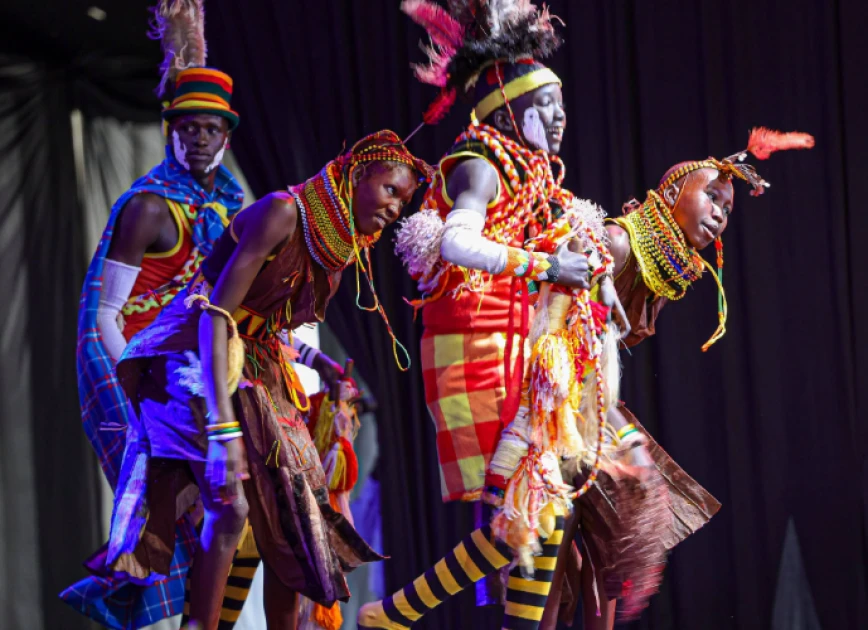
Performers during the State Concert for the 98th Kenya Music Festivals, at the Bungoma State Lodge.

Audio By Vocalize
By Prof Frederick B J A Ngala,

The
global economy is undergoing a profound structural shift. In the age of
artificial intelligence and automation, human ingenuity has never been more
valuable. The 2026 UNESCO report on the creative economy concluded that human
creativity, paired with digital and entrepreneurial literacy, is the most
resilient hybrid skill in the modern workforce.
To meet this demand, leading education systems worldwide are undergoing radical transitions. Singapore and South Korea are overhauling curricula to abandon rote memorisation for personalised, problem-solving models.
Similarly, the
STEM-to-STEAM shift is forcing nations across Europe and the Americas to blend
technology with the creative arts. While these developed nations are currently
adjusting their policies, Kenya is demonstrating this educational synergy in
practice.
This
reality was on display at Kibabii University during the 98th National Kenya Music
Festival (KMF), where over 140,000 students converged to showcase their talents
under the theme: Enhancing the Creative Economy through Knowledge,
Skills and Artistic Production for Sustainable Development. This was not
merely an extracurricular exhibition; it was a live laboratory for the
Competency Based Education (CBE) approach. The learners on stage were not just
entertaining audiences; they were building early professional portfolios for a
globalised creative economy.
In
2025, I advocated for the formal integration of financial resilience and
business acumen into our arts programmes. I noted that celebrating raw talent
without equipping our youth with financial literacy leaves them economically
vulnerable. Today, the narrative has radically shifted. We are no longer
nurturing student talent; we are institutionalising and monetising it to build
a sustainable creative economy.
The most revolutionary development this year is that a stage performance need not be fleeting. Globally, young creatives fear career instability, struggling to protect intellectual property and earn fair compensation in the digital space. Kenya is tackling this crisis head-on through state innovation.
The launch of
SomaPlay, a digital platform created by the Kenya Institute of Curriculum
Development (KICD) and eCitizen, is a game changer. By digitising, live
streaming, and monetising student performances, the government has created an
ecosystem that turns raw art into revenue-generating assets for our youth.
Digital infrastructure, however, requires robust corporate synergy to thrive. For three years, Equity Bank has proven that corporate involvement must go beyond basic event support to become an active economic investment.
This year, they expanded
their financial injection, resulting in millions of shillings paid directly to
winning institutions and the dedicated teachers who train these learners, and
demonstrating that the creative arts can be a tool for wealth creation.
State
institutions have also recognised the power of this platform. The Central Bank
of Kenya utilised the festival to celebrate its 60 years of existence,
injecting cash prizes for winners in their composition category. This proved
that institutional messaging paired with the arts translates into financial rewards
for young creatives.
Crucially,
a sustainable economy is one that leaves no one behind. The 2026 festival
proved that the creative economy is an equaliser. By placing Special Needs
Education centrally and expanding corporate financing to visually and hearing-impaired
learners, we showed that talent transcends physical limitations. When a
hearing-impaired choir commands a national stage and earns a substantial cash
prize, it sends a clear message that every Kenyan youth has bankable potential.
Yet,
as we celebrate these monumental strides, we must confront a stark reality.
Hosting 140,000 creatives and building the infrastructure for a formal creative
economy is a massive logistical and financial undertaking. This burden rests on
the Ministry of Education and a few corporate pioneers.
To
compete globally and position the creative arts as a primary driver of Kenya's
GDP, we must de-silo our approach. The creative economy is not merely an
educational issue; it is a matter of trade, technology, and national development.
This
is why I amplify the call made by Basic Education Principal Secretary John
Ololtuaa, who urged stakeholders to partner with the festival to make the
financial and logistical load lighter. Fulfilling his vision requires a
multi-sectoral coalition. We need the Ministry of Information, Communications
and the Digital Economy, the Ministry of Trade, county governors, and Chief
Executive Officers to bring their resources to the table. Partnering to support
this national fete will not only answer the Principal Secretary's call but will
revolutionise the festival into a premier global talent incubator.
We
have proven the concept. The talent is abundant, the digital platforms are
active, and the educational framework is perfectly aligned. We must now unite
to unlock our youth's economic potential. The arts are no longer just an
extracurricular activity; they are the engine of Kenya's sustainable future.
The author is the Chairman, Kenya Music Festival
Join the Discussion
Share your perspective with the Citizen Digital community.
No comments yet
This discussion is waiting for your voice. Be the first to share your thoughts!