
OPINION: Barpello-Tot-Marich Pass Highway a legacy of shared prosperity

Audio By Vocalize
Throughout history, roads have served purposes far greater than moving people and goods from one place to another. They have been instruments of statecraft, shaping how governments govern, deliver services, open underserved areas and maintain stability.
The Roman Empire understood this well. Its vast network of roads facilitated commerce across continents, but it also enabled soldiers to move quickly across territories, strengthening the empire's ability to administer and protect its domains.
Centuries later, colonial administrations invested heavily in railways and roads not only to support trade, but also to extend administrative reach into distant regions.
Today, modern states continue to invest in roads, airports, communications networks and digital infrastructure because they recognize a simple truth: mobility creates reach and reach boosts connectivity, enhances impact, strengthens governance, delivers shared prosperity – true transformation.
This lesson remains relevant in modern day Kenya.
When discussions arise about infrastructure projects, attention often focuses on travel times, transport costs and economic growth.
These benefits are undoubtedly important. Yet infrastructure delivers another often overlooked dividend: it strengthens the ability of public institutions to reach citizens and respond to their needs.
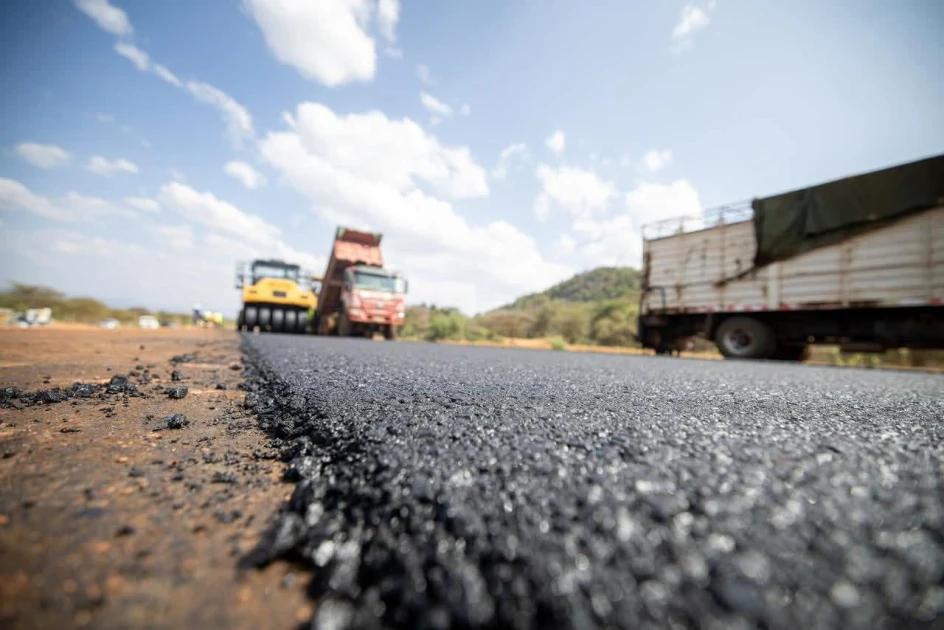
Revival and completion of the Barpello–Tot -Marich Pass Highway transversing Baringo, Elgeyo Marakwet and West Pokot Counties offers a compelling example. Keeping this Promise is worth it.
Stretching over 124 kilometres through the rugged terrain of the Kerio Valley at a cost of Ksh.14.5 billion, the project underscores the government's commitment to connecting historically underserved regions to the rest of the country.
Although implementation had stalled after minimal work, due to inadequate budgetary allocations, land compensation, historical insecurity and community concerns, the project was revived in 2025 following a Presidential Directive.
Accelerated progress has been recorded because of prioritised budgetary allocations, extensive stakeholder engagement and resolution of the underlying issues through multi-agency interventions coordinated by the Office of the President.
With overall progress currently standing at approximately 30 per cent, substantial completion of critical sections (lots) is expected by June 2027.
Yet to view the project solely through the lens of transport infrastructure would be to miss its broader significance.
Traversing one of Kenya's most challenging terrains, the highway is helping connect communities that have historically been separated from markets, services and opportunities by geography. While its economic benefits are significant, its broader impact may prove even more transformative.
Security begins with access. Before a security officer can respond to an incident, before an ambulance can reach a patient, before a teacher can report to a remote school or an agricultural officer can support farmers, there must first be a reliable route to get there.
Geography should not determine whether citizens can access public services or whether government institutions can effectively serve them.
By improving connectivity in the Kerio Valley, the multi-billion-dollar Barpello–Tot-Marich Pass Road project is helping reduce the barriers that distance and terrain have long imposed.
Faster movement enables quicker emergency response, easier deployment of public services and stronger engagement between communities and government institutions. In this way, infrastructure becomes more than a development project; it becomes an enabler of security and inclusion.
This is an important lesson for nation-building. Lasting peace is rarely achieved through security interventions alone.
It is sustained when citizens feel connected to opportunity, when public services are accessible and when institutions can consistently reach the people they serve. Roads play a vital role in creating these conditions. Without peace and security, transformation lags.
The Bottom-Up Economic Transformation Agenda (BETA) championed by President Ruto recognizes that development is ultimately about expanding opportunity and improving quality of life.
Achieving this vision requires more than policy; it requires the infrastructure that creates jobs, allows services, investment and opportunity to reach every corner of the country.
The significance of the Barpello–Tot-Marich Pass Highway therefore lies not only in the vehicles that will travel on it, but in what it represents.
By reducing isolation and strengthening connectivity, the road is helping bring citizens closer to markets, services and institutions. It demonstrates a principle that successful states have understood for centuries: when communities are connected, governance becomes stronger, opportunity expands, and peace is easier to sustain.
Just like the iconic 750Km Isiolo-Kulamawe- Wajir-Mandera Highway project, delivery of this trans-county road corridor underpins a legacy of shared prosperity, envisaged under the Singapore Dream: Towards a First World Kenya.
The author is a Delivery and PPP Expert and Head of Government Delivery Unit in the Executive Office of the President, Kenya. Sitatiolando@gmail.com
Join the Discussion
Share your perspective with the Citizen Digital community.
No comments yet
This discussion is waiting for your voice. Be the first to share your thoughts!