
OPINION: Africa’s digital revolution cannot come at the expense of its children
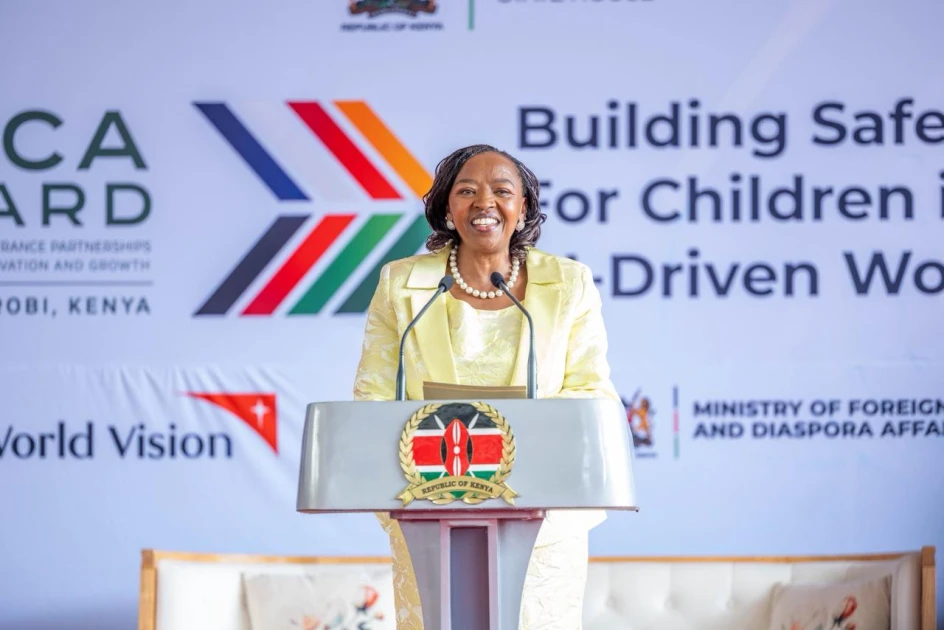
That warning came into sharp focus during the High-Level Side Event on Building Safer Digital Spaces for Children in Africa in an AI-Driven World, where Kenya’s First Lady, Rachel Ruto, called for child protection to become a central pillar of Africa’s digital transformation agenda rather than an afterthought.

Audio By Vocalize
Africa is rapidly becoming one of the world’s fastest-growing digital frontiers. According to the International Telecommunication Union (ITU), internet penetration in Africa reached approximately 40% in 2025, representing over 500 million users. The continent's child online population is projected to exceed 400 million by 2030 — the largest youth digital market in the world. Yet the systems meant to protect them remain dangerously fragmented.
A 2024 UNICEF report indicates that child online safety legislation is critically underdeveloped in Africa, with only a small minority of countries having dedicated laws. According to the INTERPOL Africa Cyberthreat Assessment Report 2025, cybercrimes, including online child sexual exploitation, abuse (OSCEA), and digital sextortion, are increasing rapidly, with 60% of African member countries reporting a surge in such cases.
From classrooms and gaming platforms to social media and AI-powered applications, African children are increasingly exposed to cyberbullying, online abuse, pornography, exploitation, misinformation, manipulation, and harmful content. The threats evolve faster than the safeguards designed to contain them.
This is no longer simply a technology conversation. It is becoming one of the defining social and policy challenges of Africa’s digital future.
That warning came into sharp focus during the High-Level Side Event on Building Safer Digital Spaces for Children in Africa in an AI-Driven World, where Kenya’s First Lady, Rachel Ruto, called for child protection to become a central pillar of Africa’s digital transformation agenda rather than an afterthought.
Mrs. Ruto challenged African leaders, policymakers, technology companies, educators, and civil society organizations to confront a difficult question: Can Africa truly celebrate digital progress while leaving its children exposed to growing online harm?
The question arrives at a critical moment for the continent.
Africa has the world’s youngest population, and by 2030, nearly 40 percent of the world’s youth are expected to be African. At the same time, internet penetration and smartphone adoption continue rising rapidly across the continent, connecting millions of young people to digital platforms for education, entertainment, communication, and commerce.
But while Africa’s digital economy is projected to generate billions of dollars in growth and investment opportunities, the continent’s child protection systems remain fragmented, underfunded, and dangerously slow compared to the pace of technological change.
Many African leaders grew up in a world where internet access was limited and intentional. Going online often meant visiting a cyber café and paying for a few minutes of connection. Today’s children are born into permanent connectivity. The digital world no longer waits to be sought out; it arrives instantly in the hands of a child.
That transformation has created extraordinary opportunities for learning, innovation, creativity, and inclusion. But it has also exposed children to risks that parents, teachers, and governments are struggling to fully understand, regulate, or control.
Across Africa, reports of online exploitation, cyberbullying, digital fraud targeting minors, and exposure to harmful content are becoming increasingly common. Artificial intelligence is adding a new layer of complexity, enabling deepfakes, algorithmic manipulation, and increasingly sophisticated forms of online abuse.
Much of the technology shaping African childhoods today is designed outside the continent, often with limited understanding of African social realities, languages, cultural contexts, or vulnerabilities. Platforms optimized primarily for engagement and profit can unintentionally amplify harmful content while exposing children to emotional and psychological risks.
As United Nations Secretary-General António Guterres has repeatedly warned, digital technology must serve humanity — not the other way around.
Mrs. Ruto emphasized that Africa’s challenge is not necessarily the absence of policy frameworks. In fact, the continent already possesses significant instruments capable of guiding digital child protection efforts, including the African Union Child Online Safety and Empowerment Strategy, the Continental Artificial Intelligence Strategy, the Malabo Convention on Cyber Security and Personal Data Protection, and the African Union Digital Transformation Strategy 2020–2030.
The problem is implementation.
Too often, governments move cautiously while technology evolves aggressively. Institutions operate in silos. Regulations struggle to keep pace with innovation. Policies exist on paper but fail to translate into meaningful protections for children navigating digital spaces in real time.
Beyond the human cost, unsafe digital environments threaten educational outcomes, mental wellbeing, social cohesion, and ultimately the quality of Africa’s future workforce.
This is why responsibility cannot rest with governments alone.
Technology companies must embed child safety into the design of their platforms and AI systems from the beginning rather than treating protection as a public relations exercise after harm has already occurred. Schools must integrate digital literacy and online safety into learning systems. Parents and guardians need tools and knowledge to help children navigate online risks. Civil society organizations, regional institutions, and policymakers must strengthen collaboration across borders because digital threats themselves are borderless.
Importantly, Africa also needs stronger African voices in shaping global AI governance conversations.
The continent risks becoming a passive consumer of technologies developed elsewhere without sufficient influence over the ethical standards guiding them. African children should not become test subjects for unregulated digital systems built without their realities in mind.
In this context, platforms such as the Organization of African First Ladies for Development can play a uniquely important role by elevating child online safety to the highest levels of public policy and continental cooperation.
Through Kenya’s Voice of Children Programme, the Office of the First Lady is already working to better understand how children experience digital spaces, what fears they carry, and what support they need in an increasingly connected world.
The writer is a Pan-African strategic communications and public affairs expert.
Join the Discussion
Share your perspective with the Citizen Digital community.
No comments yet
This discussion is waiting for your voice. Be the first to share your thoughts!