
OPINION: Africa Forward Summit must address agricultural value chain potential
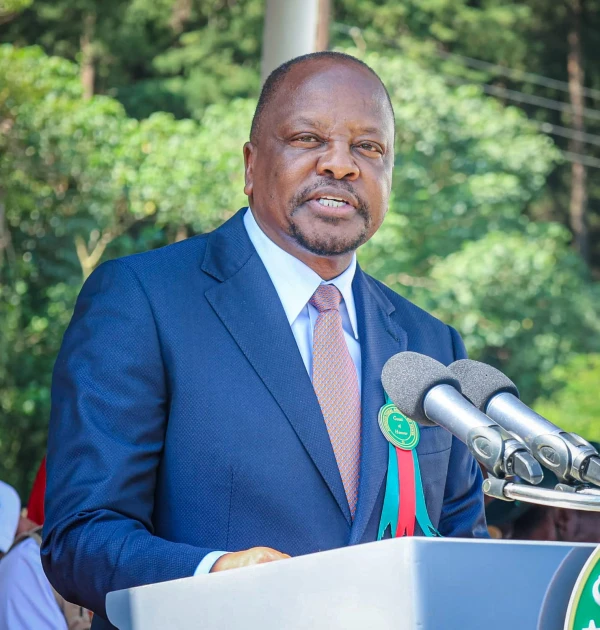
Cabinet Secretary for Agriculture and Livestock Development Mutahi Kagwe.

Audio By Vocalize
As the Africa Forward Summit (AFS) 2026 convenes in Nairobi starting Monday, the spotlight is likely to be on the heads of States and government officials present, the investment deals consummated, protocols signed, and new continental initiatives started.
But for me, the key highlight will be the discernible shift in the relationship between Africa and the rest of the world. From sterile debate in capitals in the global north, to tangible action on the continent. Beginning with the centrality of African agricultural producers who feed us and play a critical role in key global value chains, while addressing the impact of unfair power dynamics in trade between the continent and the global North.
It is altruistic that African smallholder farmers have faced challenges over the decades that have stymied their productivity, access to markets, and returns on investment. It is time to bring them to the negotiating table and execution.
This will be achieved by ensuring better terms of trade, investment in local value addition, access to financing instruments that are attuned to the intricacies of the value chains they are in, targeted deployment of technology and AI-powered advisory services, and access to markets.
As France redefines its relationship with Africa, Kenya is scoring its historic first as an anglophone country by hosting this inaugural summit. As a nation, we are tacitly pivoting away from the traditional aid and military agreements to mutually beneficial partnerships fostered on an equal footing whilst giving us an opportunity to comprehensively address the structural and systematic barriers that have held agricultural trade back for decades.
We are at a pivotal stage in value addition of our agricultural products such as coffee, tea, avocado, macadamia nuts, leather, hides and skins enabled by the Kenya-EU Economic Partnership Agreement (EPA) providing immediate duty-free and quota-free access to the European market for our goods, excluding arms. This agreement encourages investment, allowing our products to enter EU without tariffs.
On the other hand, a unilateral tariff escalation on value-added products is mischievous, self-defeating, exploitative and perpetuates the power asymmetry that has consigned Africa to mere production and export of raw, high-value crops for a pittance. This arrangement is no longer tenable.
As stakeholders gather under the theme 'Inspire and Connect', I am convinced that this is the perfect opportunity to creatively collaborate, co-create and co-invest in Africa as equal partners.
The discourse must change from mere talk on development assistance to pragmatic and practical action that encourages commitment and investments such as manufacturing partnerships, joint ventures that preserve value in African economies while providing equitable access to European markets; research and development; innovative financing instruments, less bureaucracy and compliance requirements; and new, better, greener jobs. It is about shared responsibilities and common values.
The Africa-France Impact Coalition, the Comprehensive Africa Agriculture Development Programme (CAADP) and the Kampala Declaration on Food Systems (2025) offer relevant foundations. The Africa Continental Free Trade Area (AfCFTA) too, as a common market of over 1.2billion people is a lucrative entry-point at scale, for those who dare to dream and get it right.
The success of the AFS will be determined by whether we genuinely incorporate African ownership, leadership, nuances, local equity, technological transfer, and innovative financing into the core. For example, Kenya’s experience in the dairy and horticultural sectors demonstrates that when value-addition occurs near producers, incomes, well-being and political leverage align; trade, economic and foreign policy converge, making diversification in agriculture more than a strategic imperative.
Therefore, more than just aspirational rhetoric, the Nairobi Declaration must specify milestones, ownership, investment ratios, technology transfer benchmarks, funding schedules, and continental monitoring procedures post-Summit. In economic diplomacy, clarity is key.
In this new dispensation, Africa's link with Europe is evolving into one of continental enterprise rather than a linguistic or colonial inheritance. This summit has to recognise the broader context - that the true subject of negotiation is fairness, who participates, how, when, who profits, and who makes decisions. I envision a relationship that recognises Africa's demographic strength, resource abundance, and policy maturity. The goal is reciprocity, not animosity. Africa now speaks as a builder of mutual prosperity.
The writer is the Cabinet Secretary for Agriculture and Livestock Development in Kenya.
Join the Discussion
Share your perspective with the Citizen Digital community.
No comments yet
This discussion is waiting for your voice. Be the first to share your thoughts!