
Online Safety Bill: Protecting Kenyans or threatening hard-won freedoms?
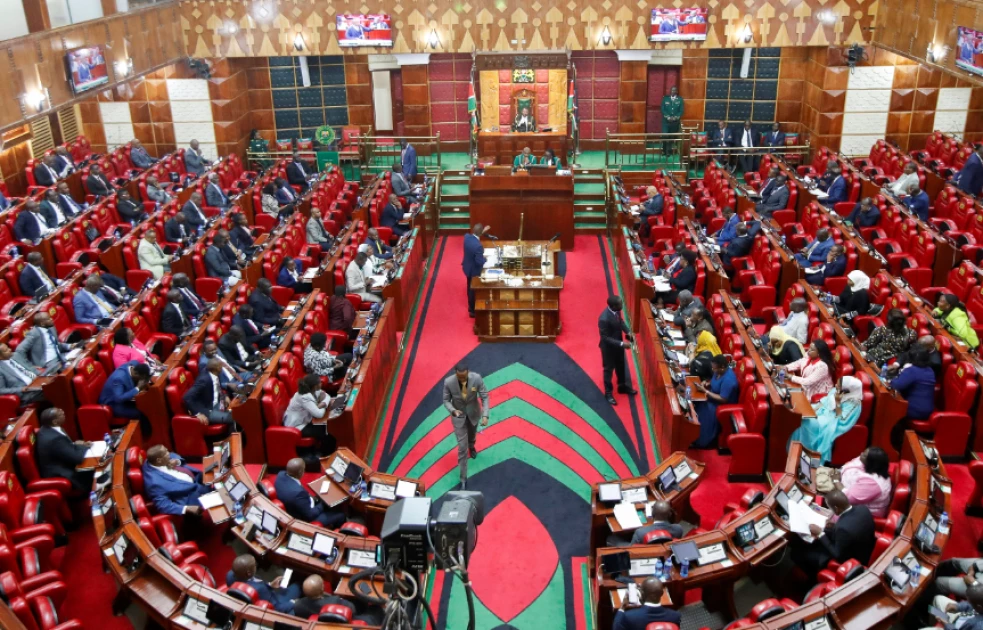
A general view shows Kenyan Members of Parliament as they discuss the impeachment of then Deputy President Rigathi Gachagua inside the Parliament buildings in Nairobi, Kenya October 8, 2024. FILE PHOTO | REUTERS

Audio By Vocalize
The internet has become one of the most powerful accountability tools available to ordinary Kenyans.
A video recorded on a mobile phone can expose police brutality. A social media post can draw attention to an enforced disappearance.
A photograph can help establish the last known whereabouts of an abducted person. A hashtag can turn an isolated family's search for justice into a national conversation.
Kenyans have, over the years, fought and even bled to protect basic human rights and freedoms. From the struggle against colonial rule and the fight for multiparty democracy to the resistance against authoritarianism and the demand for constitutional reforms, generations have paid a heavy price for the freedoms we enjoy today.
Freedom of expression, access to information, privacy and the ability to hold those in power accountable were never handed to us on a silver platter.
Today, as Kenya debates the proposed Online Safety Bill, 2026, we must ask whether we are protecting these hard-won freedoms or creating new ways of undermining them.
Sponsored by Embakasi West MP Mark Mwenje, the Bill seeks to protect children from online exploitation, cyberbullying, pornography, predatory behaviour and other harmful content.
These are legitimate concerns that deserve serious attention.
However, protecting citizens online must not come at the expense of the constitutional freedoms that allow them to question those in power.
The concerns surrounding the Bill go beyond content moderation. Clause 2 allows additional categories of harmful content to be prescribed, raising questions about who determines what is harmful and how broadly these definitions could be interpreted.
Could footage exposing police brutality be taken down because it depicts graphic violence? Could criticism of government policies or investigative reporting be restricted under an expansive interpretation of harmful content?
The proposed penalties make these concerns even more significant. Under Clause 18, providers could face fines of up to Sh500 million or 10 per cent of their annual global turnover, whichever is higher.
Faced with such penalties, platforms might choose to remove controversial content rather than risk punishment, potentially suppressing legitimate public-interest information.
Clause 8 also raises questions about the proactive identification of harmful material in private communications, particularly regarding privacy and encryption.
Meanwhile, Clause 21 gives the Cabinet Secretary powers to make regulations on content classification, monitoring and removal. Without sufficient independent oversight, such powers could create opportunities for executive interference in online expression.
The danger is not necessarily that every government will abuse these powers. It is that legislation should not create opportunities for abuse in the first place.
For the Missing Voices Coalition, these concerns are particularly important. The Coalition brings together human rights organisations working to end extrajudicial killings and enforced disappearances in Kenya.
Its work involves documenting violations, supporting victims' families and demanding accountability from institutions responsible for protecting citizens.
Increasingly, this work depends on the ability of people to share information digitally. During protests, mobile phones have become essential tools for recording police operations, documenting alleged human rights violations and preserving evidence. Social media campaigns can also help families locate missing relatives and mobilise public support.
In 2026, the Missing Voices Coalition, documented 74 cases of extrajudicial killings and 22 cases of enforced disappearances so far.
Imagine a young Kenyan recording an alleged extrajudicial killing and uploading the footage. If a platform removes it because it fears regulatory penalties, potentially crucial evidence could disappear before investigators or human rights organisations have an opportunity to preserve it.
Similarly, what happens when a family searching for an abducted relative publishes photographs and details online, only for automated moderation systems to restrict the content?
For these families, the internet is not simply a communication tool. It can be a lifeline.
Kenya's history with digital regulation should also inform this debate. The Computer Misuse and Cybercrimes Act, 2018, attracted criticism over provisions criminalising certain forms of online expression.
Subsequent amendments and constitutional challenges have further demonstrated the need for digital regulation that respects fundamental rights.
None of this is an argument against regulating technology companies. Online grooming, child sexual exploitation, cyberbullying and non-consensual intimate images require effective responses.
But regulation must guarantee independent oversight, transparency in content removal, protection of personal information and meaningful avenues for appeal. Any restrictions on constitutional rights must satisfy Article 24 of the Constitution, including the requirements of necessity and proportionality.
The public participation process offers Kenyans an opportunity to scrutinise the Bill and demand necessary safeguards. Parliament must listen to journalists, civil society organisations, digital rights advocates, victims' groups and ordinary internet users.
Ultimately, Kenya needs a safer internet, but not one where government can determine what citizens are allowed to say, share or see without adequate safeguards.
Online safety must protect people, not power. It must protect children without silencing citizens and regulate platforms without turning the internet into an instrument of surveillance and censorship.
For families searching for their loved ones, journalists documenting abuses and citizens demanding accountability, the freedom to speak, share information and be heard is part of the struggle for justice.
The writer, Shukri Wachu, is a Journalist, Human Rights Defender and National Coordinator of the Missing Voices Coalition.
Join the Discussion
Share your perspective with the Citizen Digital community.
No comments yet
This discussion is waiting for your voice. Be the first to share your thoughts!