
'Nulla Poena Sine Lege': Kindiki's latin insight on law and reparations
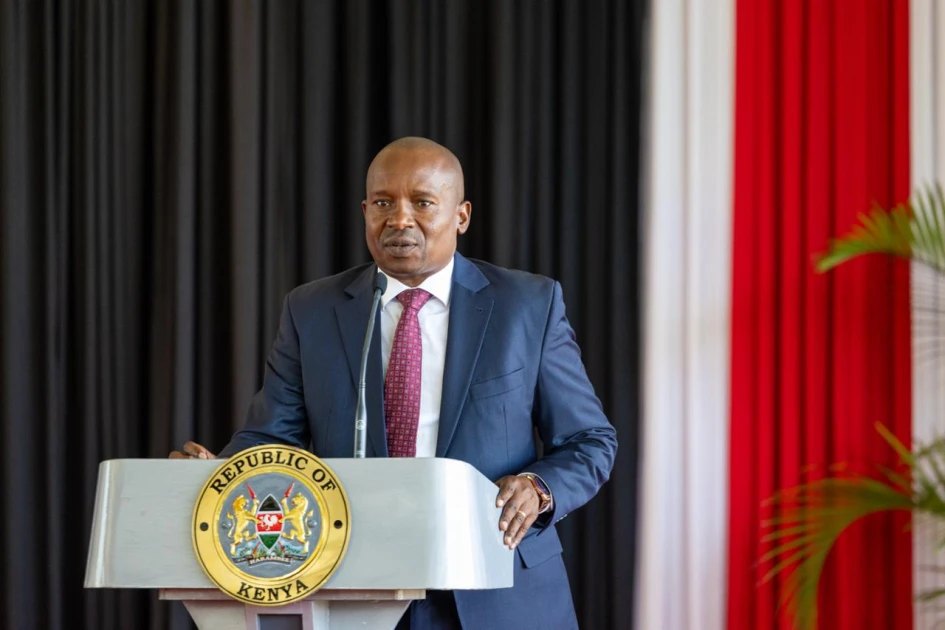
Deputy President Kithure Kindiki speaking during the presentation of a framework for reparations for victims of human rights violations.

Audio By Vocalize
Speaking during the presentation of a framework for reparations for victims of human rights violations, Prof Kindiki noted that while Kenya is pursuing restorative justice for victims of protests and political unrest, the country's criminal justice system must remain anchored in established legal principles.
"I know Speaker Kingi talked about the principle of Nullum crimen sine lege, in which there's no crime without law, but likewise there's Nulla poena sine lege, that there is no punishment without law and the two must be proportionate," Kindiki said.
The Latin phrases, which translate to "no crime without law" and "no punishment without law", respectively, are among the foundational principles of criminal law across many jurisdictions.
"The crime, the gravity and the gravity of punishment must be balanced if we have to resolve and get the deterrence that we require," he added.
The Deputy President was speaking during the presentation of a reparations framework developed under the National Dialogue Committee (NADCO) process and presented to President William Ruto by the Kenya National Commission on Human Rights.
The framework is one of the key outputs of Pillar Six of the 10-point political agreement signed in 2025 by President Ruto and ODM leader the Late Raila Odinga. The pillar focuses on the right to peaceful assembly and compensation for victims of protests and human rights violations.
Kindiki added that the country's efforts were primarily aimed at advancing restorative justice rather than replacing criminal accountability.
"Today, we are not talking about compensation. We are talking about reparation because we cannot compensate for death. We are gathered here this morning to advance the agenda of our country more in the area of restorative justice and repairing relationships among ourselves," he said.
He distinguished between retributive justice, which punishes offenders, and restorative justice, which seeks to repair relationships damaged by wrongdoing.
"It is my humble submission, Your Excellency, we are gathered here this morning to advance the agenda of our country more in the area of restorative justice and repairing relationships among ourselves. That is why we are here."
The Deputy President argued that nothing in the reparations process should prevent the criminal justice system from carrying out its mandate.
"Nothing prevents the criminal law justice system from continuing with what it has been doing. All what you are saying is that there is another facet of justice that has stalled and has never been operationalized."
Kindiki also reflected on the challenges surrounding Article 37 of the Constitution, which guarantees the right to assemble, demonstrate, picket and petition.
He said many demonstrations by professionals, trade unions and other groups had remained peaceful, but argued that political demonstrations had often presented the greatest challenge.
Looking ahead, he said he hoped for a future in which political leaders organise demonstrations responsibly, ensure accountability among their supporters and work with police to guarantee public safety.
"That is the dream of this country," he said, adding that political disputes should not make life difficult for millions of Kenyans who "do not earn a living from politics."
Join the Discussion
Share your perspective with the Citizen Digital community.
No comments yet
This discussion is waiting for your voice. Be the first to share your thoughts!