
Northern Kenya turns to cultural tourism to boost community livelihoods
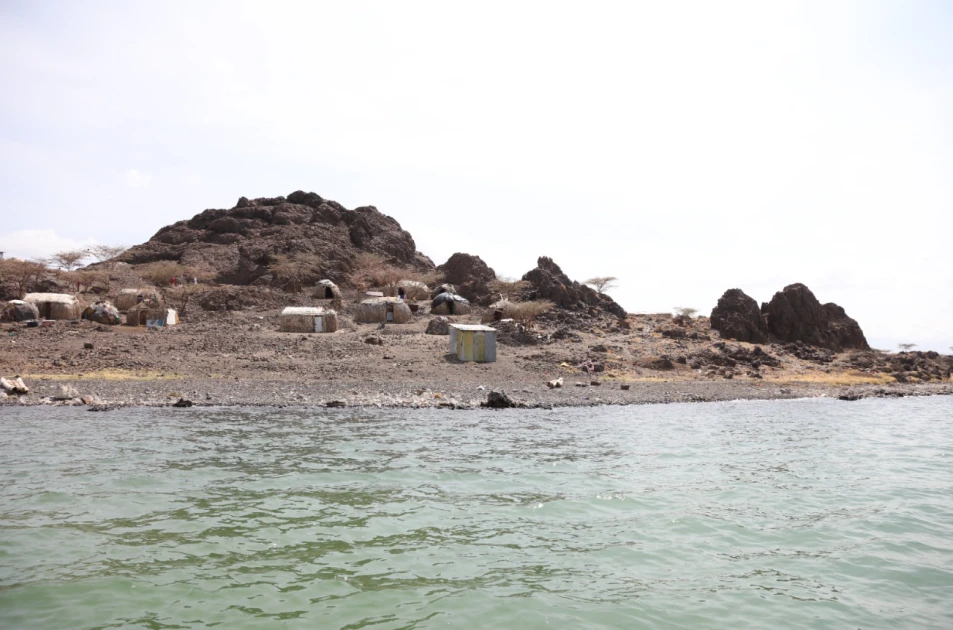
The Komote Island, home to the El Molo community, Kenya smallest ethnic group.

Audio By Vocalize
Northern Kenya is seeking to strengthen its position as a cultural and adventure tourism destination, with local communities looking to preserve their heritage while generating income and supporting vulnerable households.
At the centre of
the initiative is the Loiyangalani Desert Cultural Museum, which documents the
history, traditions and lifestyles of communities living around Lake Turkana,
including the Turkana, Samburu, Rendille, El Molo and Dassanech.
Sara Elema, a
destination management company operator involved in promoting Marsabit in
partnership with the Kenya Tourism Board (KTB) and Kenya Wildlife Service
(KWS), said the museum offers visitors insights into traditional housing, food,
ornaments, marriage customs and household utensils.
The facility also
preserves aspects of the El Molo language, which faces the risk of disappearing
as younger generations increasingly communicate in other community languages.
Elema said
researchers, linguists and archaeologists had contributed to documenting the
language, while community outreach programmes were helping integrate it into
everyday life.
Established by the
Marsabit County Government and managed jointly with the National Museums of
Kenya, the museum serves as a cultural learning centre and a gateway for
tourists exploring northern Kenya.
Elema said the
region could distinguish itself through authentic cultural experiences,
including homestays, traditional cuisine and annual festivals that bring
together different communities.
She cited cultural
festivals in Loiyangalani and Kalacha as opportunities for visitors to
experience local traditions, food and performances.
“Northern Kenya
should be sold as an adventure and cultural tourism hub because that is the
niche which the rest of the country does not have,” she said.
On El Molo Island,
tourism is viewed as an important source of support for households facing
economic challenges.
The El Molo are
recognised as Kenya's smallest and most endangered indigenous ethnic group.
They live mainly along the southeastern shores of Lake Turkana in Marsabit
County, where their culture, identity and livelihoods are closely tied to the
lake.
The 2019 national
census recorded 1,104 people identifying as El Molo. Community elders say
generations of intermarriage have further complicated efforts to preserve the
group's distinct cultural identity.
Unlike
neighbouring pastoralist communities that depend largely on livestock, the El
Molo are traditionally fisherfolk, relying on Lake Turkana for food and income.
Severio Lenapir, a
local tour guide and youth representative, said tourism provides opportunities
to support vulnerable families, widows and children's education, including
transport to school.
However, he said
visitor numbers had declined compared with previous years, partly due to taxes
and other costs, reducing the economic benefits reaching local households.
Fishing also faces
challenges, with residents reporting declining demand and rising operational
costs. Fish from the lake are transported to markets in towns including Kisumu
and Nairobi.
Lenapir identified
the island's cultural shrine, fishing activities and traditional way of life as
key attractions that could draw more visitors.
The community is
seeking stronger tourism promotion and partnerships to expand these
opportunities while preserving its cultural identity.
The initiative
comes amid efforts by KTB to unlock the potential of northern Kenya and promote
lesser-known destinations as part of a broader domestic tourism drive.
Through its Hapa
Ni Wapi Sales Conversion Campaign, KTB is bringing together tour operators,
county governments and tourism partners to develop ready-to-book travel
packages as it targets 5.6 million bed nights by 2027.
Join the Discussion
Share your perspective with the Citizen Digital community.
No comments yet
This discussion is waiting for your voice. Be the first to share your thoughts!