
NGEC Warns of Persistent Child Marriage Risk Despite Progress in Kenya

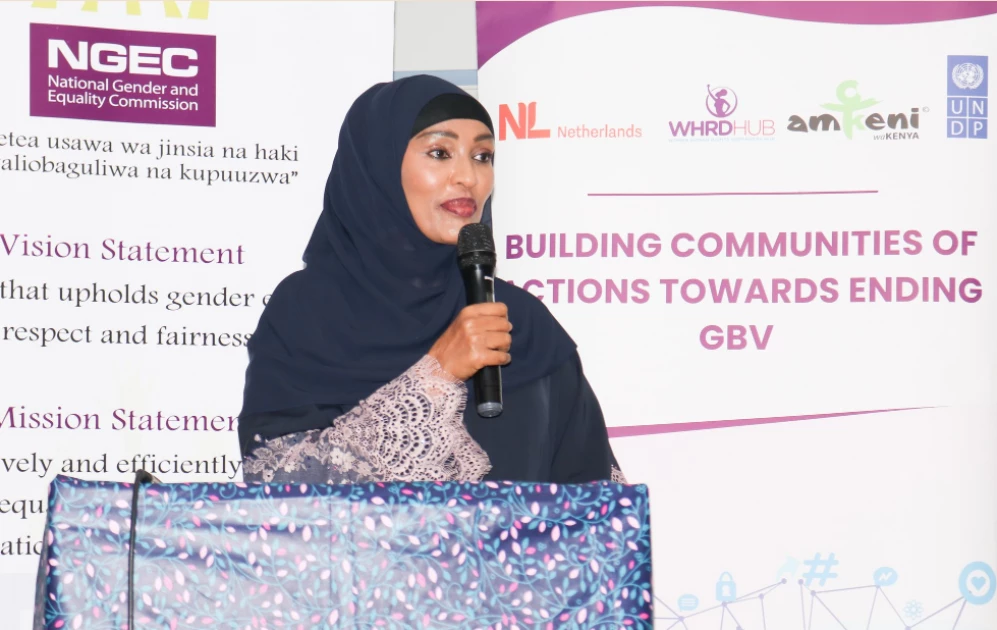
A file photo of National Gender and Equality Commission (NGEC) Chairperson Rehema Jaldesa makes an address on March 7, 2025. PHOTO | COURTESY

Audio By Vocalize
In a statement marking the 2026 International Day of the Girl Child, the commission called for increased investment in girls’ education, protection services and economic empowerment to eliminate child marriage and safeguard their future.
The day, observed annually on October 11, is being commemorated under the theme “End Child Marriage and Invest in Girls’ Rights.”
NGEC said approximately 3.9 million Kenyan girls and women had been married before turning 18, underscoring the scale of the challenge facing efforts to protect children from early unions.
Globally, UNICEF estimates cited by the commission indicate that about 640 million girls and women alive today were married during childhood, while 12 million girls enter child marriages every year before their 18th birthday.
Kenya has recorded a decline in child marriage prevalence, with the proportion of women aged 20 to 24 who were married or in a union before 18 falling from 23 per cent in 2014 to 13 per cent in 2022, according to the Kenya Demographic and Health Survey.
However, the commission warned that the national figures mask significant regional and economic inequalities.
Data cited from UNICEF shows that child marriage prevalence stands at 43 per cent in Tana River County, 40 per cent in Marsabit and 37 per cent in Samburu. The practice is also more prevalent in rural areas, affecting an estimated 16 per cent of girls, compared with nine per cent in urban areas.
Girls from the poorest households are particularly vulnerable, with prevalence estimated at 29 per cent, compared with six per cent among those from the wealthiest households.
The Commission said early marriage undermines girls’ health and safety, interrupts their education and limits their ability to participate in economic activities. It also noted the close relationship between child marriage and teenage pregnancy, estimated at 15 per cent nationally.
NGEC Chairperson Rehema Jaldesa said the country needed to move beyond policy commitments and strengthen implementation to ensure girls are protected, particularly in communities where the practice remains widespread.
The commission called on law enforcement agencies, prosecutors and the Judiciary to investigate and prosecute child marriage-related offences promptly while protecting survivors and witnesses from intimidation and retaliation.
It also urged civil registration and marriage authorities to strengthen birth registration and age verification to prevent underage unions, including customary and religious marriages.
The Ministry of Education and county governments were asked to address financial and social barriers that push girls out of school, as well as ensure adolescent mothers and girls leaving child marriages can return to learning without discrimination.
NGEC further called for increased funding for bursaries, menstrual health support, life skills, safe spaces and protection services, alongside stronger coordination between health, education, child protection and justice agencies.
Families, religious and cultural leaders, men and boys were also urged to challenge harmful social norms and involve girls in decisions affecting their lives.
The commission encouraged the public to report children at risk of abuse, including early marriage, through the National Child Helpline on 116 or the National Gender-Based Violence Helpline on 1195.
It reaffirmed its commitment to gender equality and called for sustained action to ensure every girl enjoys her childhood, completes her education and has the freedom to determine her future.
Join the Discussion
Share your perspective with the Citizen Digital community.
No comments yet
This discussion is waiting for your voice. Be the first to share your thoughts!