
New coffee flavour Atlas seeks to boost farmer earnings

Audio By Vocalize
The Atlas, expected to be published in 2027, is being developed through a national exercise involving about 300 professional cuppers who are assessing coffee samples from different growing regions.
Agriculture Cabinet Secretary Mutahi Kagwe said the initiative would help Kenya move beyond conventional coffee grading, which largely identifies beans by size rather than their distinct flavour characteristics and geographical origins.
“A grade tells you how big the bean is. It does not tell you what the coffee tastes like, where it grew, or who grew it,” Kagwe said.
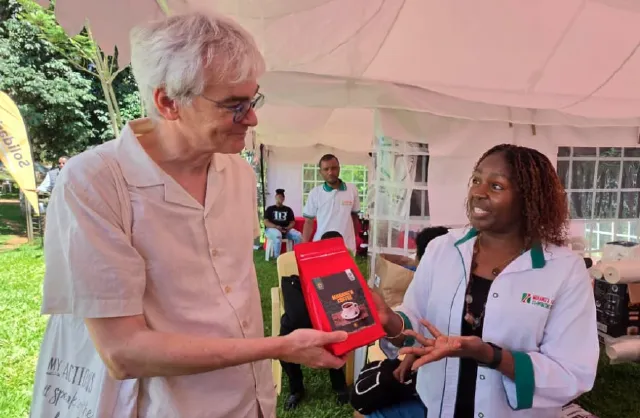
The initiative was unveiled during the inaugural Kenya Coffee Flavour and Origin Expo at Shamba Events Centre in Loresho, Nairobi, on Saturday, November 14, bringing together government officials, international development partners, coffee producers and buyers.
The assessment uses blind tasting, meaning cuppers evaluate samples without knowing the cooperative, factory or region they come from, allowing the quality and characteristics of each coffee to determine its assessment.
The exercise draws on more than 630 coffee samples collected from different production regions, with several professional cuppers assessing each sample to establish a shared profile rather than relying on an individual's judgement.
The regions represented include Nyeri, Kirinyaga, Kiambu, Murang'a, Embu, Upper Eastern, Machakos, Kericho and Nandi, North Rift, Western and Nyanza.
The development comes as the government seeks to increase annual coffee production from approximately 50,000 tonnes to 150,000 tonnes by 2030, while raising smallholder yields through improved varieties, better farming practices and access to affordable inputs.
According to the Coffee Board of Kenya's 2024/25 Yearbook, the country produced 50,598 tonnes of clean coffee, with export earnings rising by 17.5 per cent to Ksh.43.9 billion.
However, more than 800,000 smallholder farmers account for 71 per cent of production, while local consumption remains below five per cent of the country's output.
Export earnings rose by 17.5 per cent to USD 344 million (approximately Ksh.43.9 billion), while the average auction price increased by nearly 50 per cent to USD 340 per bag.
The average cherry payment to farmers also increased from Ksh.81 to Ksh.114 per kilogram.
The government is banking on improved varieties such as Ruiru 11 and Batian, better extension services, access to financing and stronger cooperative management to increase productivity.
The government says the free Atlas will provide farmers with evidence to negotiate better prices while helping buyers discover coffee from regions that may previously have been overlooked.
The initiative is being implemented in partnership with the Food and Agriculture Organisation (FAO), the United Nations Industrial Development Organisation (UNIDO) and other coffee-sector stakeholders.
Join the Discussion
Share your perspective with the Citizen Digital community.
No comments yet
This discussion is waiting for your voice. Be the first to share your thoughts!