
NCIC orders CS Ruku to publicly withdraw 'divisive ethnic' remarks within 7 days

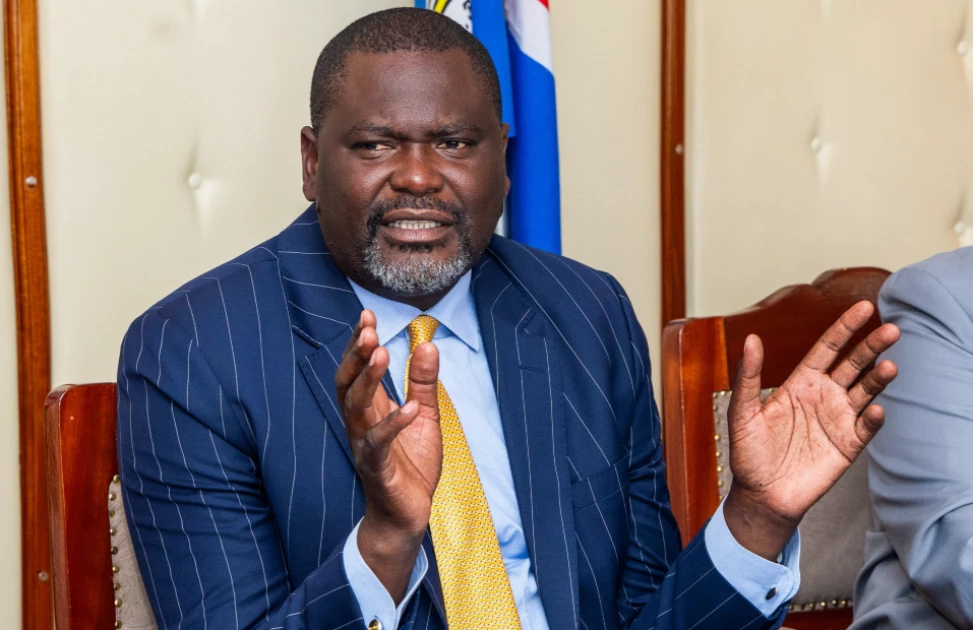
Public Service, Human Capital Development and Special Programmes CS Geoffrey Ruku speaks during a past meeting. PHOTO | COURTESY

Audio By Vocalize
The National Cohesion and Integration Commission (NCIC) has
ordered Public Service Cabinet Secretary Geoffrey Ruku to publicly withdraw
remarks it found to be divisive and ethnically inflammatory, giving him seven
days to communicate his acceptance or proposed changes to the corrective
measures.
The commission said Ruku’s remarks made at Kiang’ondu, Tharaka
Nithi County, in July 2026 crossed the line from legitimate advocacy for
identity and equitable development into divisive ethnic generalisation and
collective blame.
NCIC said the remarks included references to Kikuyu people,
allegations that people from Mt. Kenya West believed Kenya belonged to them,
and the use of ethnic surnames to link one community to development and public
appointments.
“The Commission finds that Hon. Geoffrey Kiringa Ruku’s
remarks at Kiang’ondu, Tharaka Nithi County, in July 2026 crossed from
legitimate advocacy for identity and equitable development into divisive ethnic
generalisation and collective blame,” read a statement by NCIC Chairperson Bishop
Dr. Kepha Nyamweya Omae on Wednesday.
“The remarks undermined equal dignity and harmonious relations
and fell below the restraint and responsibility expected of a Cabinet
Secretary.”
The commission also considered repeated references to stepping
on former Deputy President Rigathi Gachagua’s neck until he had no room to
“breathe”.
While appearing before the commission on September 1, 2026,
the CS had admitted making the remarks but argued that the Constitution
protects distinct ethnic identities and allows communities to demand equitable
development and public appointments.
He denied harbouring ill will towards Kikuyu people and told
the commission that the reference to stepping on Gachagua’s neck was figurative
political language referring to political defeat rather than physical injury.
However, NCIC found that the remarks amounted to collective
ethnic blame, saying references to Kikuyu people and ethnic surnames had turned
institutional grievances into blame against an entire community.
The commission said Ruku’s position as a Cabinet Secretary
also required greater restraint because of the influence and authority attached
to his office.
Under the proposed remedial measures, Ruku is required to
withdraw publicly, in both Kiswahili and English, allegations that Kikuyu
people regard Kenya as their property or are collectively responsible for
disparities in development and public appointments.
He is also required to affirm equal citizenship, dignity and
freedom of political choice for all communities while recognising their right
to preserve distinct identities.
“Ruku must withdraw publicly, in Kiswahili and English, the
collective allegations that Kikuyu people regard Kenya as their property or are
collectively responsible for inequitable development and appointments. The
wording must be issued jointly with, or approved by, the Commission,” NCIC
stated.
NCIC further wants Ruku to participate in discussions on
verified disparities and institutional remedies, as well as a commission-facilitated
dialogue on equitable development and inclusive appointments.
The commission also directed that his proposed peace caravan
be developed as a non-partisan initiative involving communities from Mt. Kenya
East and West.
Ruku will additionally be required to organise and fund a
restorative peacebuilding and social cohesion activity, subject to approval by
NCIC.
The commission acknowledged Ruku’s subsequent peace efforts,
including the return of a symbolic axe, acceptance of a flywhisk and a planned
peace caravan, describing them as “genuine and substantial first steps towards
reconciliation,” but said the actions do not erase its adverse findings or
complete the corrective process.
NCIC further ordered for an audit of ethnic diversity in
national public establishments to determine whether institutions are complying
with legal requirements on representation.
The commission said it had not established the actual
compliance position of any specific institution and that this would require
verification using official staffing and appointment records rather than
assumptions based on surnames.
According to NCIC, the findings and immediate cessation notice
remain in force regardless of whether Ruku accepts the proposed conciliation
terms.
It warned that if conciliation fails or agreed measures are
not implemented, it will take further lawful action in accordance with the
National Cohesion and Integration Act.
Join the Discussion
Share your perspective with the Citizen Digital community.
No comments yet
This discussion is waiting for your voice. Be the first to share your thoughts!