
Nairobi hosts key WHO regional meeting on traditional medicine as Africa pushes integration
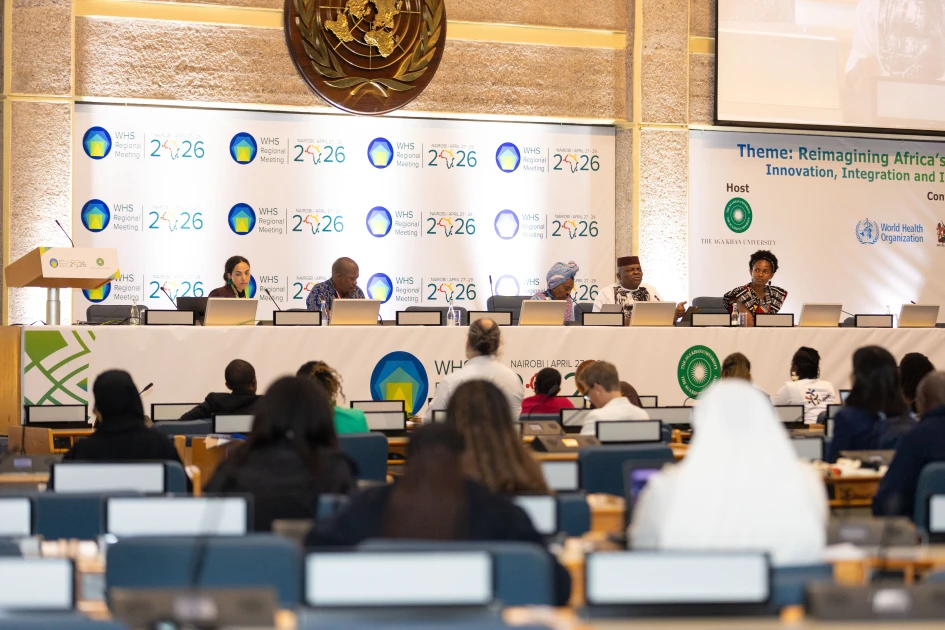
A panel of speakers on traditional medicine at the World Health Summit WHO Regional Meeting in Nairobi.

Audio By Vocalize
Across the continent, traditional medicine remains the first point of care for millions, particularly in rural and underserved communities.
With health worker shortages, rising treatment costs and persistent inequalities in access to formal healthcare, governments are increasingly considering how regulated, evidence-informed use of TM could help strengthen primary health care and advance universal health coverage (UHC).
Momentum around this shift is already building. Twelve African governments have made formal commitments under the WHO Global Traditional Medicine Strategy to integrate traditional medicine into their national health systems.
The progress and implications of this transition formed a central theme of discussions at the Nairobi meeting, convened under the broader agenda: “Reimagining Africa’s Health Systems: Innovation, Integration, and Interdependence.”
The Nairobi meeting is the first major international engagement on traditional medicine since the Second WHO Global Traditional Medicine Summit in New Delhi, where 27 countries—including 12 from Africa—committed to strengthening governance, regulation, research, and integration frameworks for TM.
Moderating one of the key sessions, Dr. Hiba Boujnah, Head of Global Strategy and Partnerships and WHO Collaborating Centre Coordinator at Charité Competence Center for Traditional and Integrative Medicine (CCCTIM) in Berlin, underscored the entrenched role of traditional medicine in healthcare delivery across the continent.
“Across Africa, traditional medicine remains a vital component of health and well-being. It remains the first point of care for many in Africa and around the world. It is today undeniable that traditional medicine plays a crucial role in strengthening primary health care towards achieving universal health coverage,” she said.
Dr Boujnah noted that commitments made at the New Delhi summit had reinforced global momentum toward structured implementation.
“This momentum was particularly reinforced at the second WHO Global Summit on Traditional Medicine last December in India, whereby 27 countries participated. Twelve of these were African countries and made serious commitments towards implementation of the WHO strategy on traditional medicine,” she said. “The question now is no longer whether traditional medicine has a role to play, but how we translate it into safe, evidence-informed and scalable implementation.”
From a policy perspective, countries are now beginning to define what integration means within their national contexts. Mr. Bruce Mbedzi, Director of Traditional Medicine at South Africa’s National Department of Health, said his country’s focus is on formal policy development rather than full system fusion.
“As South Africa, we attended the Global Summit in India and made commitments, the most important being finalising policies that will include traditional medicines into the national health care systems,” he said.
He added that South Africa prefers the term “inclusion” rather than “integration,” arguing that both systems should retain distinct identities while operating in parallel.
“We actually use the term inclusion rather than integration because we believe the two systems should run parallel to each other,” he said.
Health experts at the meeting are now examining the practical implications of these policy shifts, including how traditional medicine can expand access to care, support preventive health, reduce pressure on overstretched health facilities, and contribute to more resilient, people-centred systems—while ensuring safety, quality, and accountability.
Fiona Njeri, a Kenyan community-based researcher and herbalist and founder of Tremendous Organics, said traditional medicine is already deeply embedded in frontline healthcare delivery.
“Traditional medicine in Africa is already functioning as primary health care for many communities. Globally, nearly 80% of the population use traditional and complementary medicine for primary health care,” she said.
As discussions continue, the Nairobi meeting has highlighted both the opportunity and complexity of formalising traditional medicine within modern health systems—balancing cultural relevance and accessibility with regulation, scientific validation, and patient safety.
Join the Discussion
Share your perspective with the Citizen Digital community.
No comments yet
This discussion is waiting for your voice. Be the first to share your thoughts!