
Nairobi County Assembly approves Ksh.49.27B budget to fast-track infrastructure, healthcare and service delivery

Audio By Vocalize
The budget, themed “Consolidating the Gains, Securing the Future,” rises from KSh44.6 billion in the previous financial year, reflecting an increase of KSh4.67 billion. It is the fourth budget under Governor Sakaja’s administration and seeks to consolidate achievements made over the last three years while financing critical infrastructure, healthcare, education, environmental management and revenue reforms.
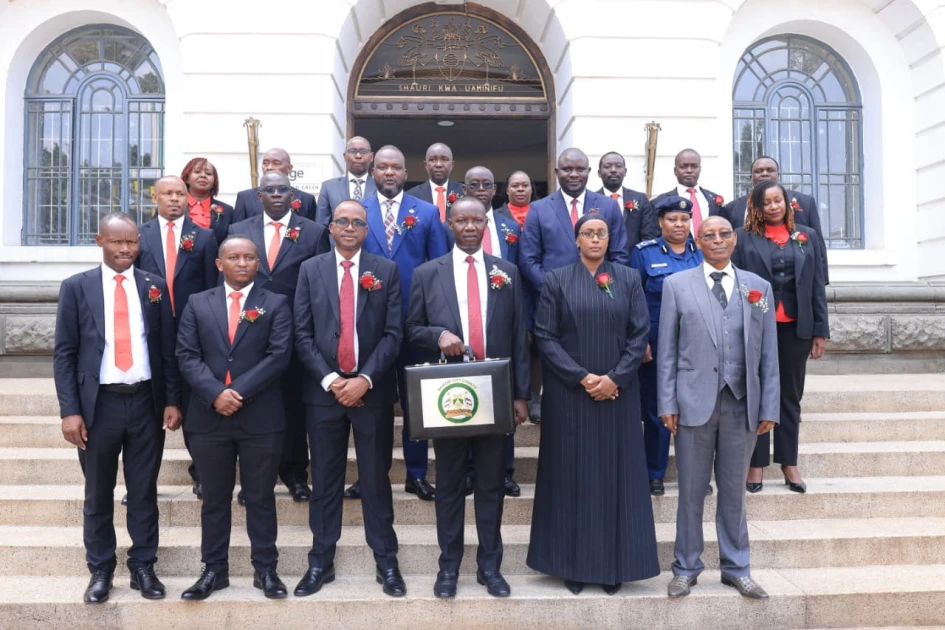
Finance and Economic Planning CECM Ibrahim Auma said the spending plan was informed by public participation and prioritises better roads, improved healthcare, flood mitigation, water and sewerage infrastructure, affordable housing and enhanced public service delivery.
The county expects to finance the budget through KSh23.47 billion from the equitable share and grants, KSh20.86 billion from own-source revenue, KSh3.2 billion from the Health Facilities Improvement Fund (HFIF) and liquor licensing, and KSh1.7 billion in projected cash balances.
Development spending has also increased, with KSh14.91 billion, representing about 30 per cent of the budget, set aside for development projects compared to KSh13.4 billion in the previous financial year. Recurrent expenditure has similarly risen from KSh31.2 billion to KSh34.36 billion.
Roads, bridges, drainage and street lighting remain among the county’s biggest priorities. While the Mobility sector has KSh2.4 billion specifically earmarked for the construction and rehabilitation of roads, bridges, storm-water drainage and street lighting, the county will also undertake additional infrastructure works through the KSh2.255 billion Ward Development Programme, up from KSh2.155 billion last year.
The ward allocation is expected to finance community-driven projects across Nairobi’s 85 wards and reduce development disparities.
Housing has also been prioritised under the 2026/2027 budget, with the county targeting the delivery of 10,000 housing units through affordable housing projects and slum upgrading programmes across nine informal settlements. The initiative is aimed at improving access to decent housing, upgrading underserved neighbourhoods and supporting the county’s broader urban renewal agenda.
Funding for public health has recorded one of the most notable increases. Allocation for the construction, rehabilitation and equipping of health facilities has risen from KSh849 million to KSh1.06 billion, supporting projects at Pumwani Maternity Hospital, Mama Lucy Kibaki Hospital and Mutuini Hospital, among other facilities. Provision for pharmaceutical and non-pharmaceutical supplies has also increased significantly from KSh400 million to KSh600 million, strengthening the county’s capacity to provide essential medicines and medical commodities.
Education continues to receive increased investment. The county has allocated KSh900 million for the Dishi Na County School Feeding Programme, up from KSh700 million last year, reinforcing one of Governor Sakaja’s flagship programmes aimed at improving school enrolment, retention and learner performance.
While bursary funding stands at KSh793 million, translating to KSh7 million per ward, the county says the programme will continue supporting thousands of vulnerable learners across Nairobi.
Trade and economic empowerment have also received additional funding. Allocation for market construction and rehabilitation has increased from KSh450 million to KSh491 million, while KSh190 million has been earmarked for the Biashara Stimulus Programme to support small and medium-sized enterprises and expand economic opportunities.
Investment in sports, youth and social infrastructure has grown from KSh1 billion last year to KSh1.4 billion, covering sports facilities, stadiums and ECDE infrastructure aimed at nurturing talent and expanding learning facilities.
Environmental management remains one of the county’s largest investment areas, with KSh5.3 billion allocated to the Environment, Water and Natural Resources sector to strengthen waste management, sanitation, water services and implementation of the Green Nairobi Strategy.
To improve access to government services, KSh421 million has been allocated to complete borough, sub-county and ward offices that will operate as one-stop service centres. Although this is lower than last year’s KSh580 million allocation, the county says the reduction reflects the completion of several administrative facilities already under construction.
Beyond sectoral spending, the budget outlines major institutional reforms, including the full operationalisation of the Nairobi City County Revenue Authority, rollout of a countywide Enterprise Resource Planning (ERP) system, expansion of e-procurement, stricter expenditure controls and continued efforts to clear pending bills while preventing accumulation of new ones.
Like the previous financial year, the county has maintained that there will be no increase in taxes, fees or charges, opting instead to widen the revenue base through improved compliance, digital payment systems, enhanced land rates collection and operationalisation of a Customer Care Centre.
The Nairobi County Assembly will receive KSh4.5 billion to support its legislative and oversight functions, an increase from KSh2.6 billion allocated in the previous financial year.
Presenting the estimates, Finance and Economic Planning CECM Ibrahim Auma said the county had made difficult but necessary choices to ensure available resources are directed to projects with the greatest impact on residents.
He said the budget is designed to move Nairobi from institutional recovery to project completion, sustained economic growth, improved public services, job creation and a more competitive and liveable capital city.
The estimates received broad support from Members of the County Assembly, who said the spending plan places greater emphasis on completing projects already initiated across the city while complying with the Public Finance Management Act.
Majority Leader Peter Imwatok welcomed the budget, saying it reflects the county’s commitment to delivering tangible development in every ward.
“I believe this budget is very keen on the completion of key projects in all the 85 wards,” said Imwatok.
Minority Leader Antony Kiragu also backed the estimates, saying they respond to the needs of ordinary Nairobi residents by prioritising infrastructure, healthcare and other essential public services.
The Assembly Majority Whip praised the budget for complying with the Public Finance Management Act, 2012, noting that it had met the constitutional threshold for development expenditure while safeguarding investments in education.
“As I was looking at it, I have seen the ECDE allocation, and this is good to ensure that our children go to school. Further, a third of the money has gone to development,” the Whip said.
The Deputy Majority Whip, who also serves on the Budget Committee, said the committee had incorporated concerns raised by MCAs during the budget-making process, including support for ward projects and settlement of pending bills.
“As a member of the Budget Committee, I support the report. Our offices as nominated members have been considered, the pending bills of the County Assembly have also been captured, and the Ward Development Fund has also been provided for. It is good that we shall be able to complete projects in our wards,” she said.
Woodley MCA Davidson Ngibuini (DNG) said the budget had complied with the constitutional requirement on development spending, describing the 30 per cent allocation as a significant milestone in ensuring resources are directed towards projects that directly benefit residents.
“We have met the 30 per cent development spending threshold in this budget, and that is good in law,” he said.
The bipartisan support from both Majority and Minority leaders is expected to strengthen implementation of the county’s flagship programmes, with the administration now shifting its focus to delivering projects, improving services and sustaining Nairobi’s economic transformation over the next financial year.
Join the Discussion
Share your perspective with the Citizen Digital community.
No comments yet
This discussion is waiting for your voice. Be the first to share your thoughts!