
Museveni sworn in for seventh term as Uganda’s long-serving rule stretches into fifth decade

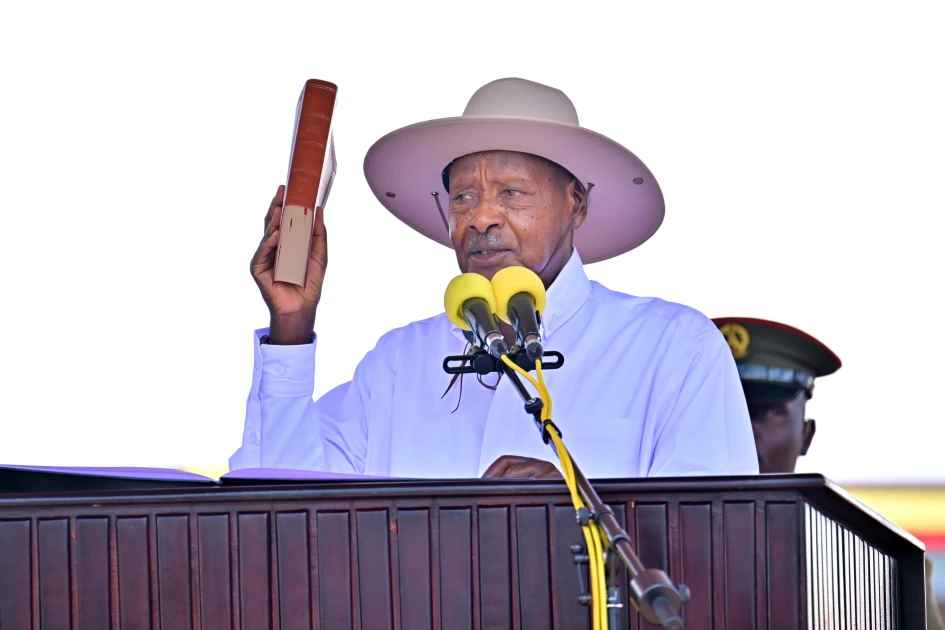
Uganda's President Yoweri Museveni takes the oath of office, beginning his seventh term at Kololo Independence Grounds on Tuesday, May 12, 2026. PHOTO | COURTESY

Audio By Vocalize
The roar of Sukhoi fighter jets over Kampala signalled the start of the ceremony in a scene that has become a staple of Ugandan political history, which on Tuesday carried the weight of four decades.
Below, the Kololo Independence Grounds had been transformed into a heavily guarded venue as more than 40,000 guests, including 15 heads of state, gathered to witness the inauguration of the 81-year-old leader.
Chief Justice Alfonse Owiny-Dollo administered both the Oath of
Allegiance and the Oath of Office in a ceremony steeped in state symbolism.
The transition rituals were overseen by Museveni’s son, General
Muhoozi Kainerugaba, who currently serves as the Chief of Defence Forces of the
Ugandan army.
The ceremony also featured the presentation of national
symbols, including the 1995 Constitution, the national flag, the presidential
standard, the coat of arms and the public seal.
To supporters, the symbols represented decades of stability and
continuity. Critics, however, view them as emblems of a presidency that has
stretched across nearly 40 years.
“I, Yoweri Kaguta Museveni, swear in the name of the Almighty
God that I will faithfully exercise the functions of the President of Uganda,”
Museveni declared during the oath-taking ceremony.
In his speech, Museveni reflected on Uganda’s turbulent past
and acknowledged Kenya’s role during periods of instability in the 1970s and
1980s.
“When Ugandans were running away from Uganda, they were running
to Kenya. They really helped us. I want you to know about them; they are our
brothers and sisters who stood by us when the house was on fire,” he said.
As he begins his seventh term, Museveni said his administration
will focus on pushing Uganda towards high middle-income status, with plans
aimed at transitioning the remaining 38 per cent of Ugandans from subsistence
living into the money economy.
Even so, questions over Uganda’s political future continue to
linger, with growing speculation that General Muhoozi Kainerugaba could
eventually succeed his father and extend the Museveni family’s grip on power in
the East African nation.
Join the Discussion
Share your perspective with the Citizen Digital community.
No comments yet
This discussion is waiting for your voice. Be the first to share your thoughts!