
Muchiri: Examining climate change, Child and Maternal health nexus in the Kenyan context
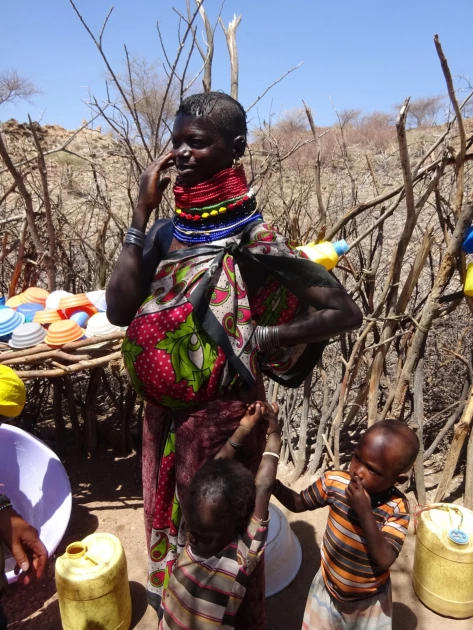
Expectant mother and her children in drought-prone Turkana, Kenya. Photo Credit: Fiona Duby

Audio By Vocalize
Unfortunately, the most vulnerable communities and populations bear the brunt of the effects.
Pregnant women, children, and newborns are increasingly getting recognized as vulnerable populations in the context of climate change. Pregnant women, in particular, have been identified as the most vulnerable group among human populations.
This is due to both immune suppression in pregnancy and the gravity of an individual infection to impact not one but two human lives.
Climate change is an important factor that influences the distribution of vector-borne diseases by altering temperature and precipitation patterns.
Approximately 17% of all infectious diseases are caused by vector-borne diseases, resulting in over 700,000 global deaths annually.
At any given time, just over half of the world's population is at risk of these vector-borne diseases. According to the UN Climate Report 2022, vector-borne diseases such as malaria and dengue fever in Africa may double by 2050 and triple by 2080 as a result of global warming.
The situation in Kenya is dire, with the WHO estimating that 70% of the population is at risk of contracting malaria, as climate change is expected to lengthen transmission periods and change the geographic range of vector-borne diseases, for example, due to rising temperatures.
These vector-borne diseases, particularly malaria, complicate infections during pregnancy and, in many cases, result in maternal and neonatal deaths.
According to the Intergovernmental Panel on Climate Change (IPCC), every additional tenth of a degree of warming will have a significant impact on people's lives and health. Extreme heat is a dangerous weather condition that is becoming more common and severe as climate change warms the planet.
They cause high blood pressure and possibly pre-eclampsia in pregnancy, which is one of the three leading causes of maternal death worldwide.
Extreme weather events, according to research findings, increase the risk of postpartum depression and post-traumatic stress disorder, as well as the occurrence of preterm birth and low birth weight infants.
Storms, heavy rains and longer-lasting floods have been experienced in some parts of the country. Flooding can put a strain on health services due to damaged infrastructure, a loss of health professionals, and a lack of access to medicine, potentially delaying care or treatment for those in need.
Extreme climate change-related events, such as floods, will limit access to proper pregnancy care, increasing the risk of complications during delivery and, as a result, the risk of maternal and infant mortality.
Climate change becomes a powerful amplifier of health disparities in areas where access to healthcare is limited.
Climate-induced shifts like prolonged drought and rainfall variability disrupt agricultural practices, impacting food security.
According to the Integrated Food Security Phase Classification, approximately 5.4 million people in Kenya's ASAL areas are expected to face high levels of acute food insecurity.
As a result, the number of children aged 6 to 59 months who required treatment for acute malnutrition increased from 884,464 in July 2022 to 970,214 in February 2023. In addition, 142,179 pregnant and lactating women require acute malnutrition treatment. Pregnant women and children are more vulnerable to malnutrition, which can result in maternal and child mortality if not treated.
Climate change does not undermine human security in isolation of structural factors such as poverty. For instance, an extreme climate event such as flooding can exacerbate poverty, loss of property and rise in unemployment levels which may force people to move in search of alternative livelihoods.
People’s ability to migrate is conditioned by their access to resources and social capital. Thus, people with inadequate resources may be forced to stay in the affected areas rather than migrate. Poverty creates a vicious cycle of inadequate care and can indirectly contribute to maternal and child deaths by amplifying the challenges that pregnant women face.
Kenya has achieved significant progress and has played a pivotal role in global endeavors to combat climate change.
Hosting the inaugural African Climate Summit further highlighted the country's determined commitment to addressing this pressing issue, showcasing its unwavering dedication to mitigating this challenge.
While this is commendable, Kenya has to set in motion a dynamic and synchronized approach that weaves together concerted efforts to reduce maternal and child mortality with the imperatives of climate change mitigation and adaptation.
As we grapple with the far-reaching consequences of climate change, the nexus with child and maternal health highlights the intricate interplay between climate-induced shifts and human well-being.
The author is a Monitoring and Evaluation Expert.
Email: muchirijhon@gmail.com
Join the Discussion
Share your perspective with the Citizen Digital community.
No comments yet
This discussion is waiting for your voice. Be the first to share your thoughts!