
Mother of four gets second chance after six-hour surgery reattaches severed finger
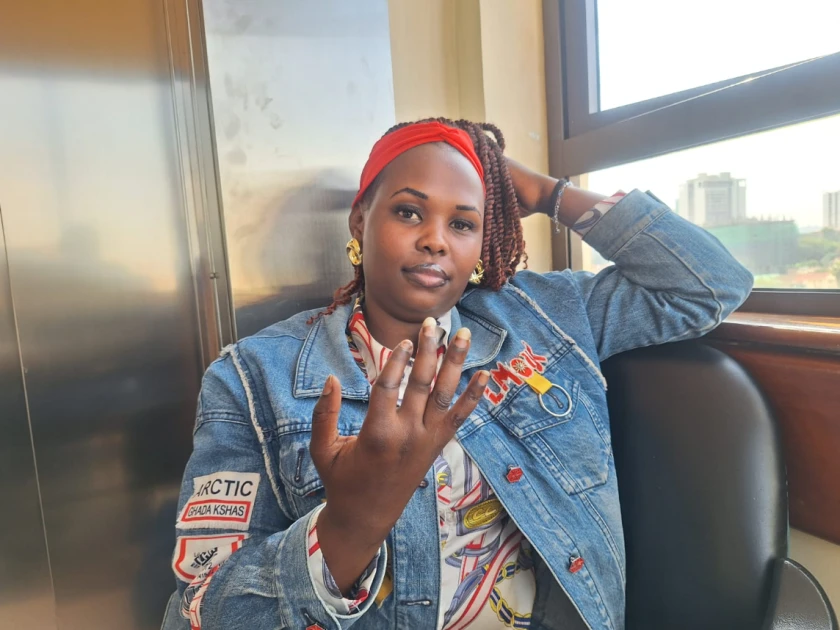
Ann Nyambura Mwangi displays her fingers during an interview at Aga Khan University Hospital, Nairobi, months after undergoing a complex six-hour microsurgical procedure to reattach one of the fingers severed in a workplace accident. She continues to undergo rehabilitation as she works to regain function in her hand. Photo | Vincent Anguche | Citizen Digital

Audio By Vocalize
A complex microsurgical procedure has given a 30-year-old mother of four a second chance at using her hand after she suffered a devastating workplace accident that left three fingers severely injured.
Ann Nyambura Mwangi, an interior designer who worked in a
joinery workshop, sustained the injuries in January after her hand was caught
by an electric saw while operating machinery. One finger was completely
amputated while two others suffered severe damage.
"I just felt pain. My fingers had been chopped off and
I started bleeding," Ann recalled, describing the traumatic moments after
the accident.
She was rushed to a nearby health facility for first aid
before being referred to Aga Khan University Hospital, Nairobi, where
specialists assessed whether the severed finger could be successfully
reattached.
The surgery was led by Dr. Zenebe Teklu Gebremariyam, a
Consultant Plastic and Reconstructive Surgeon and Assistant Professor at Aga
Khan University Hospital, Nairobi, who said Ann's quick arrival at the hospital
significantly improved her chances of a successful outcome.
"She presented to us after sustaining a workplace
injury caused by an electric saw. One finger was completely amputated while
another was only attached by skin," Dr. Gebremariyam said.
The medical team first assessed the detached finger to
determine whether re-implantation was feasible before undertaking a six-hour
operation using an operating microscope.
The procedure involved reconnecting the bone, tendons,
arteries, veins and nerves in sequence to restore blood circulation and
function to the finger. Following surgery, Ann remained under close observation
before being discharged a week later to begin rehabilitation.
Dr. Gebremariyam said clean-cut injuries, such as those
caused by electric saws, have a higher chance of successful reattachment than
crush injuries.
He also stressed the importance of preserving amputated body
parts correctly by wrapping them in a clean cloth, placing them inside a
plastic bag and then keeping the bag on ice while seeking immediate medical
care.
"If patients arrive early and the amputated part is
preserved properly, the chances of successful re-implantation are much
higher," he said.
He noted that microsurgical re-implantation is technically
demanding because surgeons work on blood vessels measuring about half a
millimetre in diameter, requiring specialised microscopes and instruments. The
lengthy surgery and need for highly specialised equipment also contribute to
the cost of the procedure.
For Ann, recovery has been physically and emotionally
challenging.
She says she continues to experience pain and has had to
relearn everyday activities using her left hand after losing function in her
dominant right hand. Tasks such as washing clothes, cooking and carrying out
interior design work remain difficult.
"I have to learn how to use my left hand. It's hard,
but I'm hopeful," she said, adding that the accident left her worried
about caring for her four daughters and returning to work.
Dr. Gebremariyam said recovery does not end after surgery, noting
that patients require months of occupational therapy and physiotherapy to
regain movement and function.
In Ann's case, the injury severely damaged one of the finger
joints, making full recovery unlikely.
"One hundred per cent recovery is not realistic because
of the extent of the joint injury, but with rehabilitation she should regain
useful function and return to many normal daily activities," he said.
The surgeon also urged employers to strengthen workplace
safety measures, saying prevention remains the best way to reduce life-changing
injuries involving industrial machinery.
He added that microsurgical re-implantation can also be
performed on amputated hands, forearms, feet, ears and scalp when patients
reach specialised hospitals quickly enough.
Join the Discussion
Share your perspective with the Citizen Digital community.
No comments yet
This discussion is waiting for your voice. Be the first to share your thoughts!