
Mogadishu gunfire sparks political storm, Farmaajo leads opposition charge
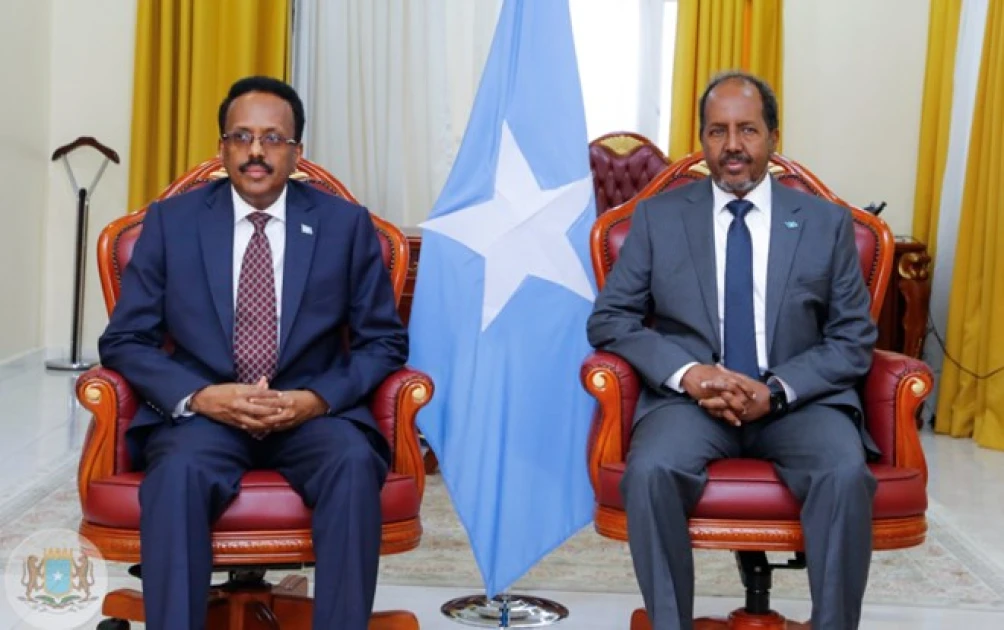
Somalia President Hassan Sheikh (left) and his predecessor Mohammed Abdullahi Farmaajo. Photo / Courtesy

Audio By Vocalize
Heavy gunfire erupted in Mogadishu on Thursday, plunging Somalia into a fresh political crisis and prompting former president Mohamed Abdullahi Farmaajo to launch a scathing attack on President Hassan Sheikh Mohamud, whom he accused of using force to suppress dissent and prolong his stay in office.
The clashes broke out amid rising tensions over Hassan
Sheikh's controversial decision to extend his tenure by one year after his term
expired on May 15.
Opposition leaders had planned demonstrations against the
move, which they say undermines Somalia's constitutional and democratic
processes.
Farmaajo blamed the president for the violence and the
country's growing instability.
“You alone approved a flawed constitution. You brought in an
electoral commission loyal to you, as well as political parties, even while we
were telling you to stop,” Farmaajo said in a strongly worded statement.
The former president accused Hassan Sheikh of abandoning
efforts to build consensus and instead steering the country toward
confrontation.
“Your term of office is over. You were supposed to bring a
broad-based consensus agreement. Today, you are responsible for fighting and
displacement. You cannot hold the country by force. Return to dialogue,” he
said.
Reports from Mogadishu indicated that security forces moved
against opposition leaders ahead of the planned protests. Former president
Sheikh Sharif Sheikh Ahmed and former prime minister Hassan Ali Khaire were
among senior opposition figures reportedly caught up in the unrest.
The United States also voiced concern over the deteriorating
situation, urging Somali stakeholders to resolve their differences through
peaceful dialogue and avoid actions that could further destabilize the country.
The violence has deepened an already widening rift between
the federal government, opposition groups and some regional administrations,
many of which have rejected the term extension and called for renewed
negotiations on electoral and constitutional reforms.
Farmaajo expressed sympathy for those affected by the
clashes and defended the constitutional right of citizens to demonstrate
peacefully.
“I am saddened by those who died, and may Allah heal those
who were wounded. The people have the right to protest; it is a constitutional
right. Why are you denying them that right and fighting them?” he said.
The latest turmoil is the newest chapter in Somalia's long
and often turbulent political journey since the collapse of the Siad Barre
government in 1991. The fall of the regime triggered decades of civil war, clan
rivalries, insurgencies and the absence of an effective central authority.
Although Somalia has made notable progress since the
establishment of transitional institutions in the 2000s and the formation of a
federal government in 2012, disputes over elections, constitutional reforms,
power-sharing arrangements and relations between the federal government and
regional states have repeatedly threatened political stability.
Analysts warn that the current standoff risks undermining
recent gains in governance and security at a time when the country remains
engaged in a protracted fight against the Al-Shabaab insurgency.
Join the Discussion
Share your perspective with the Citizen Digital community.
No comments yet
This discussion is waiting for your voice. Be the first to share your thoughts!