
Milk shortage to persist for another month, Kenya Dairy Board warns

Audio By Vocalize
The shortage, which has now lasted about three months, has left supermarket shelves across the country with limited supplies, while the price of some available brands has risen by as much as 30 per cent.
A fact-finding mission by Citizen TV teams in Mombasa, Kajiado, Nairobi and Busia found several supermarkets struggling to maintain supplies, with some retailers turning to lesser-known brands to fill the gap.
In Mombasa, some residents say the shortage has lasted several weeks, with consumers also feeling the impact of rising prices.
“Kwa wiki mbili tumekosa maziwa, na sasa ingekuwa ni vizuri tu tujue serikali yetu inachukulia jambo hili kwa namna gani, kwa sababu tunapitia katika tabu ya kupata maziwa,” Anthony Katana, a supermarket staff member in Mombasa, stated.
Mary Muthui, a Mombasa resident, said the price of milk had risen significantly, adding to the pressure on consumers.
“Maziwa yote imepanda. Kuna moja ilikuwa inauzwa 63, ingine 65, lakini saa hii imepanda sana, imefikia 80. Sasa customers wanalalamika imepanda sana,” Muthui stated.
Nairobi, which consumes more than one million litres of milk daily, is also among the areas affected, with some supermarket shelves remaining empty as retailers wait for fresh supplies.
In Busia, retailers are reporting reduced sales of popular milk brands as newer products enter the market to fill the shortage.
Some traders have also turned to Uganda for supplies, but say the cost of imported milk has also increased.
“Ni brand moja tu hii na ile ingine tunayo ni hii ndogo. All these are new companies in this region, but we normally get... For now, we don't have,” Francis Maingi, owner of Frankmatt in Busia, stated.
George Otieno, a retailer in Busia, said the price of milk sourced from Uganda had also increased sharply.
“Huko Uganda, huko Kitambo tulinunua maziwa box kwa 500 au 550, lakini kwa sasa wanatuambia maziwa ni 900. Wameongeza mara dufu,” Otieno stated.
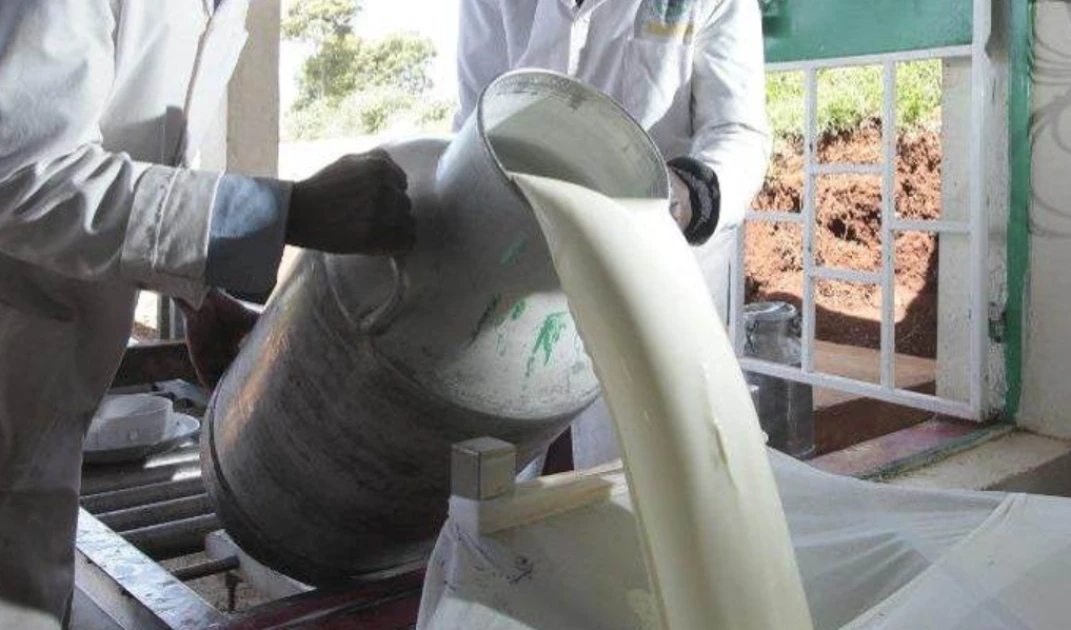
The Kenya Dairy Board says the shortage is being driven by a sharp decline in the amount of milk delivered to processors by farmers.
Data from the board shows that processors received 84.4 million litres of milk in June. The figure fell to 81 million litres in July before dropping further to 75 million litres in August, representing a decline of more than nine million litres over the three-month period.
Kenya Dairy Board Chairperson Genesio Mugo says efforts to bridge the deficit through imports have also been complicated by shortages in the region.
“Why are we not importing milk to cover the deficit? Unfortunately, we do not have much milk in the East African region, including our main suppliers Rwanda and Uganda. We are actually having a deficit, and a number of processors have already closed temporarily, waiting for the rains. We have nowhere to go,” Mugo stated.
Mugo attributed the decline in production to prolonged drought, which has affected pasture and reduced milk yields.
He also blamed milk brokers who are buying directly from farmers, reducing the volumes reaching processing companies.
The board expects the situation to improve once the long rains begin, with Mugo projecting a significant increase in milk production within weeks of the rains.
“We do expect the situation to stabilize immediately we have the long rains, which we are expecting the first and second week in October. And immediately after that, or two weeks thereafter, we will be expecting significant production of milk in the country, and no one will be crying of shortage or increased prices,” Mugo stated.
For now, consumers continue to contend with limited supplies and higher prices, while farmers and milk traders wait for improved weather conditions to restore production.
Join the Discussion
Share your perspective with the Citizen Digital community.
No comments yet
This discussion is waiting for your voice. Be the first to share your thoughts!