
Meru: FGM, poverty fuel early marriages and SGBV as SHOFCO sets up safe house

Audio By Vocalize
She was subjected to female genital mutilation (FGM) at 14, married at 15 and became a mother at 17. At 18, her husband sent her away, leaving her without a home or means of supporting herself and her two-year-old child.
“I was just a young girl when everything changed. I was circumcised, then married, and before I could understand what was happening, I had a child. When I was chased away, I had nowhere to return to. Now I am only trying to find a way to survive and give my child a better life,” she says.
Makena, not her real name, is among girls and women in Meru whose lives have been affected by a combination of FGM, poverty, early marriage and gender-based violence.
According to an analysis of the 2024/25 Administration of Justice in Kenya Annual Report by the National Council on the Administration of Justice (NCAJ), Meru recorded 1,727 cases of sexual and gender-based violence (SGBV) in 2025, up from 1,640 the previous year.
The county recorded the third-highest number of reported SGBV cases nationally, after Nairobi and Kiambu.
Despite the high number of cases, Meru has lacked an operational safe house where survivors of FGM and SGBV can seek immediate protection and support.
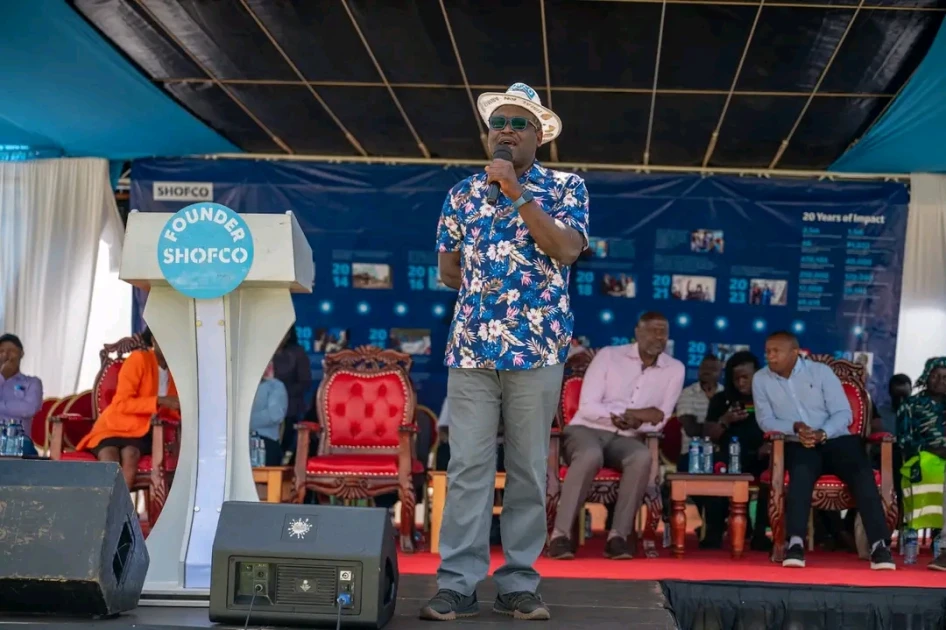
That is set to change with the establishment of a 48-bed safe house in Igembe Central through a partnership between Shining Hope for Communities (SHOFCO) and the Meru County Government.
The facility is expected to provide temporary shelter, counselling, medical care, legal assistance and economic empowerment services to survivors.
Judy Kawira, the Meru County GBV Prevention and Response Coordinator, said the county had struggled to accommodate the growing number of survivors.
“Meru is one of the counties that is overwhelmed by GBV cases, yet we did not have an operational safe house for adults or teenagers. We are very happy that SHOFCO has come up with one in the county and we are ready to operationalise it once it’s complete,” Kawira said.
The lack of a facility in the county has forced authorities to refer survivors to safe houses in Nakuru and Nyeri.
“We have been sending survivors of SGBV and FGM to safe houses outside the county. This has been a challenge because survivors need immediate protection and support. SHOFCO has also been helping with transport and other essential support,” she said.
The new facility will include counselling and clinical rooms where survivors can receive first-line care, including interventions to prevent HIV and unplanned pregnancies. It will also support the collection and preservation of evidence in sexual offence cases.
Officials say poverty and child neglect are among the factors exposing girls to early marriage and sexual exploitation.
Paul Ndung’u, a Children Services Officer in Meru County, said economic hardship had left some children vulnerable to exploitation, particularly in communities where the miraa trade provides young men with quick access to money.
“We have cases of child neglect because of poverty, and this is driving young girls into early marriages. Young men involved in the miraa trade can get quick money and use it to influence vulnerable girls. What we often call teenage marriage is actually child marriage because many of these girls are way below 18 years,” Ndung’u said.
He welcomed the establishment of SHOFCO’s Rights of Children (ROC) clubs, saying they could help children recognise abuse and seek assistance.
“ROC clubs are a step in the right direction because children need to know their rights and where to seek help when those rights are violated. Giving them knowledge and confidence to report offences can help us intervene before abuse turns into a lifelong trauma,” he said.
Tabitha Muthenya, the Ndoleli Location Chief, said she was currently handling three cases involving girls aged between 14 and 17 who had been sexually assaulted.
“We are seeing very young girls being left vulnerable because of poverty and neglect. In one case, a girl ran to her grandfather for safety after her parents fought, but she was sexually abused by the very person she thought would protect her,” Muthenya said.
The Office of the Director of Public Prosecutions (ODPP) in Meru County has also raised concerns over delays in the prosecution of sexual offences.
Sheila Wanjiru, a prosecutor at the ODPP, said 37 sexual offence cases had been handled at Meru Law Courts alone since the beginning of 2026.
“Culture and poverty continue to affect the way sexual offences are handled. Sometimes families agree to reconcile and the survivor withdraws the case, yet sexual offences are criminal matters that require justice,” Wanjiru said.
She said the absence of complainants and witnesses from court was also contributing to delays and withdrawals.
“Some cases are mentioned several times without the parties appearing in court. This contributes to a backlog and may eventually lead to withdrawal. We encourage survivors to approach the ODPP because we are ready to support them through the justice process,” she said.
Kelvin Gitonga, a SHOFCO programme officer for Gender and Inclusion in Meru, said the organisation was working with gender champions, the county government, ODPP and other justice-sector actors to support survivors.
“A survivor should never have to navigate the justice system alone. Our gender champions are helping identify cases, connect survivors to services and walk with them through the justice process. We are working with government and justice actors to make sure survivors receive protection, counselling and legal support,” Gitonga said.
SHOFCO founder and chief executive Dr Kennedy Odede said the safe house was intended to address the overlapping challenges that leave girls and women vulnerable to violence.
“Behind every SGBV case is a human being whose future has been disrupted. FGM, poverty, harmful cultural practices and early marriage create a cycle in which girls lose their choices and become vulnerable to further violence,” Odede said.
Nchoro Kibira, a former FGM cutter who has since become an anti-FGM campaigner and SHOFCO Champion, is also working with communities to discourage the practice.
“I know the pain and consequences of FGM because I was once part of it. Today, I speak against it so that no other girl has to suffer what I have seen and experienced. We must protect our daughters and give them a future free from FGM,” she said.
For Makena, access to counselling and economic empowerment could offer a chance to rebuild her life and support her child.
“I cannot change what happened to me, but I can decide what happens next. I want to learn a skill and become independent. I want my child to grow up knowing that her mother fought for a better life,” she said.
Join the Discussion
Share your perspective with the Citizen Digital community.
No comments yet
This discussion is waiting for your voice. Be the first to share your thoughts!