
MCK urges media and gov't to resolve conflicts amid demonstration coverage disputes
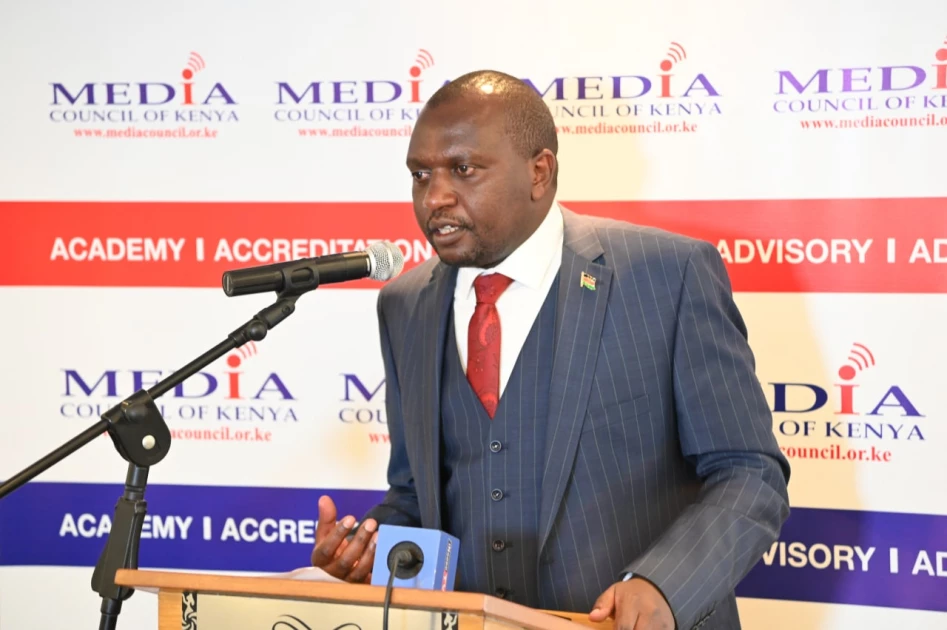
MCK Chief Executive Officer David Omwoyo

Audio By Vocalize
According to the council, the dispute began over perceptions of biased media coverage during the 2022 General Election and has since escalated into a full-fledged confrontation.
"The ongoing accusations bring to the fore a simmering tension between the Government and the media, leading to tension and confusion across the country," MCK said in a Monday statement.
"What started as a perception about biased media coverage of the 2022 General Election has now escalated into full blown conflict pitting the Government against the media; resulting in unwarranted threats, blame games coercion, intimidation and bad blood."
The MCK also pointed out the irony of the government's inconsistent messaging and lack of coherent government narratives, despite its significant investment in communications and media advisors such as editors, journalists, and communication consultants.
The MCK also highlighted the paradox of the political class, which was previously divided during elections, finding reasons to collaborate while the media and government continue to see each other as adversaries.
The council emphasised that both entities have a common public interest, including a commercial and editorial relationship.
MCK warned against the use of commercial interests to retaliate against editorial positions, and vice versa, urging both parties to focus on their national responsibilities as outlined in the Kenyan Constitution.
"Both the Government and the media have a common public interest, including a commercial and editorial relationship. Using commercial interests to get back at editorial misgivings is no better than utilising editorial position to revenge for unmet commercial expectations." the MCK said.
At the same time, the council pointed out that while the Constitution of Kenya guarantees a free, fair, and independent media focused on the public interest, mutual affection between the media and the government is not a requirement.
The council also faulted certain senior government officials for using their right to free expression to make accusations and threats against the media, arguing that this approach is counterproductive.
"While a section of senior government officials has exercised the right to freedom of expression through levelling accusations against certain media houses, open expletives and threats against the media and selected journalists, such approach is not the way to go," the council added.
The council also cited perceived media bias in guest selection for broadcast programmes and framing national conversations.
In contrast, the media highlights a lack of credible government voices and consistent messaging.
According to the MCK, the government-media relationship has created a new dilemma for Kenyans, who are torn between a government that sees the media as irresponsible and a media that portrays the government as out of touch and hostile.
"Kenyans are caught between a 'good' Government that believes the media is bad and irresponsible on one side and a good media whose actions portray Government as bad and out of touch that hates the media." the MCK added.
"The Media Council of Kenya believes that the same way a bad government is way better than no government at all, bad media is a million times better than no media at all."
To break the deadlock, the Media Council urged the government and media to find common ground and prioritise national unity.
The council recommends that the government instruct the police to stop harassing journalists and depersonalise media-government relations, while the media commit to professional reporting that does not escalate violence.
Join the Discussion
Share your perspective with the Citizen Digital community.
No comments yet
This discussion is waiting for your voice. Be the first to share your thoughts!