
Makueni healthcare workers team up with traditional birth attendants to tackle maternal deaths
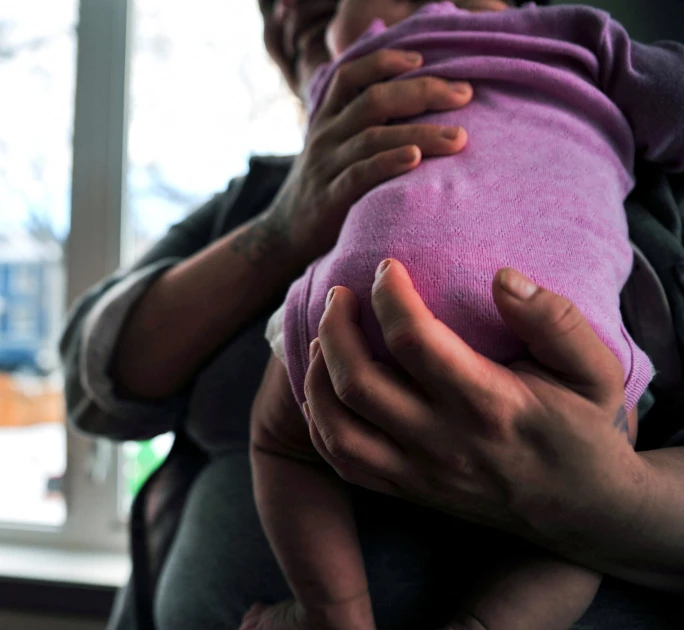
A woman holds her baby at the Sanctum Hospice and Care Home, in Saskatoon, Saskatchewan, Canada, on January 26, 2023. REUTERS/Nayan Sthankiya

Audio By Vocalize
Postpartum haemorrhage (severe bleeding after delivery) remains one of the leading causes of maternal deaths in Kenya and across the world. It strikes suddenly, often without warning, claiming the lives of mothers within hours if emergency care is not available.
In Makueni County, however, a quiet transformation is taking place.
Through stronger community partnerships, better-equipped health facilities and a life-saving medicine designed for rural settings, the county is proving that these deaths are not inevitable.
For decades, Lena Mathei Kitheka was the woman many expectant mothers turned to when labour began.
She started assisting women to give birth when she was just 30 years old. Without formal medical training, she relied on experience passed down through generations, helping mothers deliver in their homes, often with little more than courage and determination.
Today, her mission has changed.
Rather than delivering babies herself, Lena now spends her time encouraging expectant mothers to attend antenatal clinics and deliver in hospitals, where trained health professionals can respond quickly if complications arise.
"I want mothers to be safe," she says, knowing first-hand how dangerous childbirth can become without skilled medical care.
She admits that in the past, traditional birth attendants had limited knowledge and almost no equipment to manage emergencies such as excessive bleeding after childbirth. When complications occurred, there was often little they could do.
Today, Lena is part of a growing network of community champions helping bridge the gap between families and health facilities. Her message is simple: giving birth in a health facility saves lives.
For Milka, whose name has been changed to protect her identity, the memories of giving birth at home remain painfully clear.
The mother of four delivered with the help of a traditional birth attendant during a nationwide healthcare workers' strike, when access to hospital services was severely disrupted.
Looking back, she knows how easily things could have gone wrong.
Her experience reflects the reality many Kenyan women have faced over the years—where distance, limited access to healthcare or unexpected crises leave mothers with few safe options during childbirth.
Recognising the influence traditional birth attendants hold within their communities, Makueni County chose not to sideline them but to transform their role.
Instead of conducting home deliveries, they are now trained to identify pregnancies early, educate women on the importance of antenatal care, recognise danger signs and refer expectant mothers to health facilities for skilled delivery.
The approach has strengthened trust between communities and healthcare providers while increasing the number of women choosing to give birth in hospitals.
According to Patricia Mutanda, the Matron at Kibwezi Hospital, the collaboration between healthcare workers and former traditional birth attendants has become one of the county's greatest strengths.
She says the partnership has significantly improved maternal healthcare services and contributed to reducing preventable maternal deaths.
Alongside community education, health workers now have another powerful weapon in the fight against postpartum haemorrhage.
Makueni has introduced Heat-Stable Carbetocin, locally known as Kausha, a medicine used to prevent excessive bleeding immediately after childbirth.
Its biggest advantage lies in its resilience.
Unlike many medicines that require continuous refrigeration, Heat-Stable Carbetocin remains effective even in high temperatures. This makes it especially valuable in remote health facilities where maintaining a reliable cold chain can be difficult.
For mothers delivering in rural Kenya, that simple difference can mean the difference between life and death.
Health experts continue to identify postpartum haemorrhage as one of the world's leading causes of maternal mortality. Despite years of investment, thousands of women still die annually from complications related to pregnancy and childbirth.
Yet Makueni's experience offers hope.
County health officials credit the progress to a combination of stronger community awareness, improved referral systems, increased skilled deliveries, better-trained healthcare workers and consistent availability of essential maternal health commodities.
Together, these interventions are changing outcomes for mothers who, only a few years ago, would have faced far greater risks.
Every woman who survives childbirth returns home not only as a mother, but as the heart of her family. Every life saved means a baby grows up with a mother, siblings keep a sister, and communities remain whole.
Join the Discussion
Share your perspective with the Citizen Digital community.
No comments yet
This discussion is waiting for your voice. Be the first to share your thoughts!