
LSK wants CA chair Karondo suspended over alleged involvement in Ol Kalou campaigns
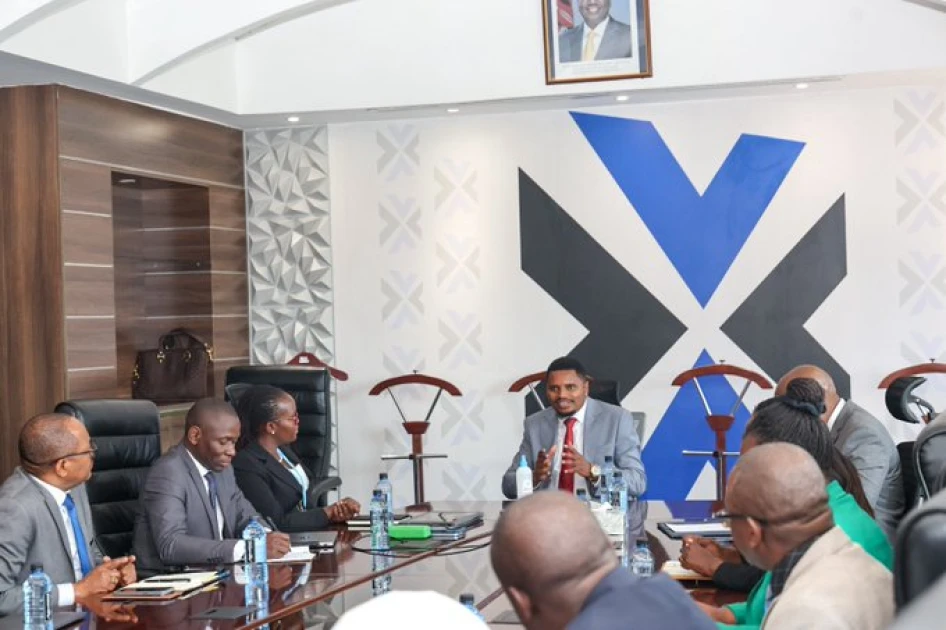
Board Chairperson Charles Kamau Karondo chairs a meeting with Communications Authority staff. Photo: FILE

Audio By Vocalize
The Law Society of Kenya (LSK) has demanded the suspension of Communications Authority of Kenya (CA) Board Chairperson Charles Kamau
Karondo over alleged involvement in political activities surrounding the July
2026 Ol Kalou Constituency by-election.
In a complaint filed under Section 6D of the Kenya
Information and Communications Act, LSK wants William Kabogo to find that the allegations against Karondo disclose a
prima facie case of gross misconduct and refer the matter to President William
Ruto for further action.
The Society is also seeking Karondo's suspension pending the
outcome of an independent tribunal to investigate the allegations.
The complaint, dated September 11, 2026, is supported by an
affidavit sworn by LSK Chief Executive Officer and Secretary Florence Muturi
and several annexures.
LSK's case stems partly from its deployment of accredited
election observers to monitor the Ol Kalou by-election held on July 16.
According to the Society, its observation report documented
incidents of violence, voter intimidation, road blockades, the presence of
armed and masked individuals, unmarked vehicles, attacks on journalists and
threats against election observers and members of the public.
LSK says it also reviewed an NTV investigative report titled 'The Ol Kalou Crime Scene', which examined allegations of violence,
bribery, intimidation and attacks during the by-election.
The Society alleges that material reviewed placed Karondo in
the company of individuals who were allegedly linked to activities involving
voter intimidation, electoral disruption and violence.
It further claims that Karondo attended meetings involving
some of the individuals later associated with the alleged electoral operation
and travelled with persons identified in the investigation.
However, LSK has stressed that its complaint does not seek
an immediate finding of guilt against Karondo.
Instead, it wants the Cabinet Secretary to determine whether
the evidence establishes a prima facie case warranting the commencement of the
statutory removal process under Section 6D of the Act.
“Any conduct creating a reasonable perception that the
Chairperson has aligned himself with partisan political interests fundamentally
undermines public confidence in the Authority,” LSK says in the complaint.
The Society argues that the allegations are particularly
serious because the Communications Authority regulates broadcasting,
telecommunications and other communications services, making the independence
and impartiality of its leadership critical to public confidence.
LSK further argues that any credible association with
individuals implicated in attacks against journalists would be incompatible
with the Authority's role in protecting media freedom and regulating the
communications sector.
The Society has consequently characterised the alleged
conduct, if established, as potentially amounting to gross misconduct.
It cites alleged involvement in or association with partisan
political activity, association with persons implicated in electoral violence
and voter intimidation, conduct prejudicial to media freedom and actions
capable of undermining public confidence in the regulator.
LSK is asking President Ruto to suspend Karondo pending
determination of the complaint and appoint a tribunal in accordance with the
law.
The Society also wants relevant documentary, electronic,
financial, media, telecommunications and vehicle records preserved to
facilitate the inquiry.
It has further requested an opportunity to present evidence
and submissions before the tribunal and wants the tribunal's final report and
recommendations made public, subject to lawful limitations.
Karondo was appointed Chairperson of the Communications
Authority Board by the President for a three-year term beginning August 8,
2025.
LSK maintains that the allegations should not be determined
through political statements or media commentary, but through the statutory
process that allows evidence to be tested and all parties to be heard.
The complaint therefore seeks an investigation rather than a
finding that Karondo committed the alleged offences.
Karondo had not, in the complaint provided, been found
guilty of any misconduct, and the allegations remain subject to investigation
and his right to respond.
Join the Discussion
Share your perspective with the Citizen Digital community.
No comments yet
This discussion is waiting for your voice. Be the first to share your thoughts!