
Lake Naivasha: How wanton encroachment is threatening Kenya’s most important wetland
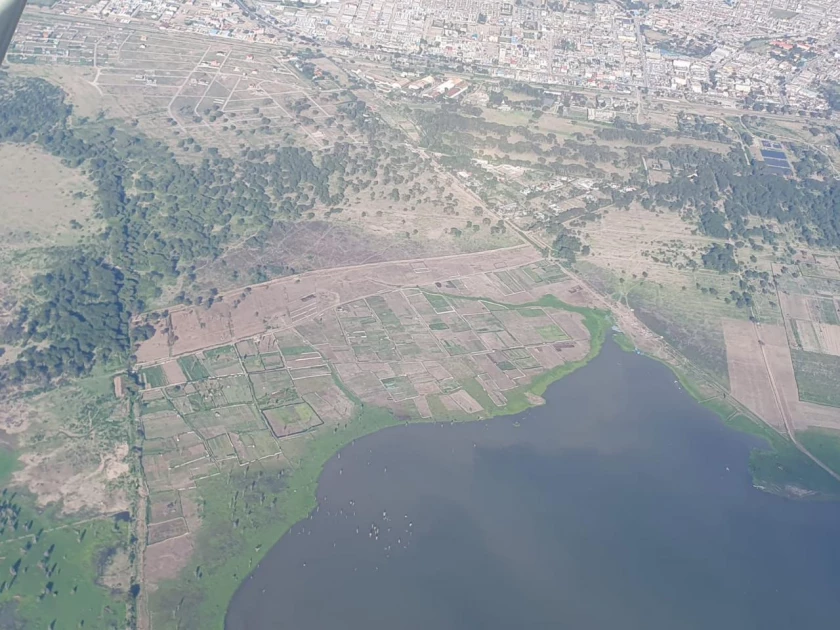
An aerial view of Lake Naivasha and its riparian

Audio By Vocalize
World Wetlands Day serves as a global reminder of the important role wetlands play in sustaining life on our planet.
Among the distinguished sites under the Ramsar Convention is Lake Naivasha, Kenya’s second site to be listed as a Wetland of International Importance.
Caught between the thriving hotel and booming horticulture industries, Lake Naivasha is a big driver of Kenya's agricultural sector, yet it also exemplifies the delicate balance between environmental conservation and economic development.
It estimated the Lake Naivasha Basin accounts for 40% of Kenya’s flower exports, generating 9% of the country's total foreign exchange revenue annually.
These economic successes are, however, overshadowed by disturbing incidents of riparian encroachment that now endangers the lake's ecological equilibrium and its future as a source of freshwater for the thousands of residents and businesses it serves.
From the untreated sewer discharged directly into the lake, to over-abstraction and land grabbing of riparian land, Lake Naivasha has been experiencing some of the worst acts of lawlessness that demands immediate attention.
Riparian areas, integral in maintaining water quality and ecological balance of a waterbody, also serve as vital wildlife habitats and recreational spaces for the public. The lake, which is renowned as a home to over 400 species of unique birds, is a popular bird watchers' paradise and tourist destination.
The lake’s current ordeal mirrors the predicaments of many other wetlands in Kenya, which are of equal importance.
Over the years, the global importance of wetlands, including floodplains, marshes, and deltas has been extensively studied, emphasizing their diverse benefits, from providing essential food sources to protecting against floods and droughts, providing habitats for birds, reptiles and mammals, sequestering carbon, and strengthening socio-economic resilience among local communities.
Despite these benefits, wetlands have historically been treated as wastelands, leading to a significant global loss of around 35% between 1970 and 2015, with the annual wetland loss rate increasing yearly.
For these reasons among others, the lake was listed as Ramsar Site in 1995, which as a country party to the Ramsar Convention swore to protect, manage and maintain.
While concrete structures and barbed wire fences replace natural habitats, the lake suffers deadly pollution due to inefficient sewerage infrastructure, habitat loss, and disruption of migratory patterns crucial to its biodiversity.
Regrettably, some of these illegal activities happen right under the supervision of those entrusted to protect and conserve this critical asset.
The blatant acts of disregard for regulations, often occurring under the watch of those in authority entrusted with environmental protection, undermine the very progress that various stakeholders have labored to achieve.
WWF-Kenya, in collaboration with other partners such as the Embassy of the Kingdom of Netherlands in Kenya, UK food and drink companies under Waste and Resources Action Programme (WRAP), Coop Switzerland, Nordic countries led by Sweden's government agency for development cooperation and Water Resource Users Associations within Lake Naivasha basin have dedicated resources, time and efforts to ensure proper water stewardship is undertaken for enhanced water quality and quantity.
Coincidentally, this year’s wetlands day commemoration focuses on ‘Wetlands and Human Wellbeing’. The theme recognizes wetlands as critical to people and nature, underscoring the intrinsic value of wetland ecosystems and their benefits and services, including contributions to sustainable development and human wellbeing.
The shift towards recognizing the value of wetland restoration, especially in the face of climate change, is gaining momentum globally and regionally.
As custodians of Lake Naivasha, we are at a crossroads where responsible stewardship is imperative. World Wetlands Day serves as a poignant reminder that the delicate balance between economic prosperity and environmental conservation must be safeguarded.
More collaborative initiatives are needed, bringing together government agencies, environmental organizations, and the business community to formulate and implement sustainable land-use practices for Lake Naivasha wetland and many other wetlands facing similar threats.
Lake Naivasha's significance goes beyond economic gains and interest. It embodies the intrinsic value of wetlands in preserving biodiversity and maintaining ecological balance. On this World Wetlands Day, let us reflect on the legacy we wish to leave for future generations.
It is our shared responsibility to ensure that the vibrant beauty of Lake Naivasha and our wetlands remains intact, providing sustenance not just for our economic mileage but for the thriving ecosystem that calls it home.
As we celebrate the marvel of wetlands, let us commit to a future where economic prosperity and preservation walk hand in hand, ensuring that Lake Naivasha remains a symbol of harmony between nature and human progress.
Wetlands, as WWF International Director General, Dr Kirsten Schuijt, points out have always been integral to our cultures and communities. And they are key to our future: protecting, restoring and sustainably managing the world's wetlands is not only essential for our individual health and wellbeing but also for global efforts to tackle the climate and nature crises.
Dr. William Oweke Ojwang, PhD, is a Freshwater Focal Lead at WWF-Kenya.
Join the Discussion
Share your perspective with the Citizen Digital community.
No comments yet
This discussion is waiting for your voice. Be the first to share your thoughts!