
Kwale residents demand transparency as court extends Mrima Hills mining dispute hearing
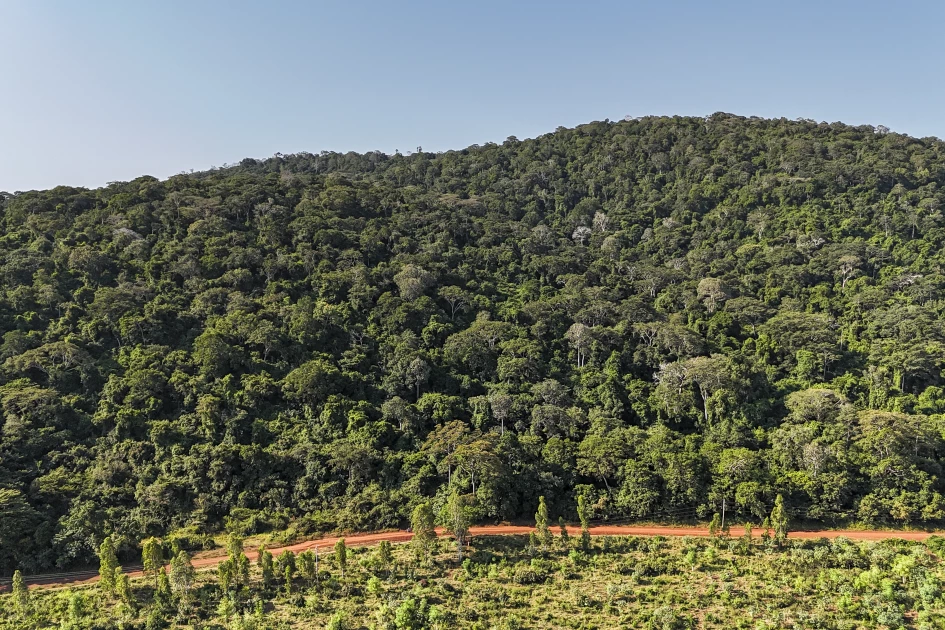
An aerial view of a section of the Mrima Hill Forest in Lunga-Lunga, Kwale county on September 26, 2025. Photo by TONY KARUMBA / AFP

Audio By Vocalize
Residents of Kwale have renewed calls for transparency over the proposed exploitation of rare earth minerals at Mrima Hills, even as the High Court deferred hearing of an application seeking to halt the project pending determination of a preliminary objection on jurisdiction.
The petitioners had sought conservatory orders to preserve the status quo, arguing that the public has not been adequately informed about plans involving the mineral-rich area.
However, the court ruled that it must first determine whether it has
jurisdiction to hear the matter after the Attorney General raised a preliminary
objection.
The judge directed
all parties to file written submissions on the jurisdictional issue before the
case is mentioned on September 16, 2026, for confirmation of compliance and
further directions.
During the virtual
proceedings, advocate Nicholas Kamwendwa, appearing for the petitioners, argued
that Mrima Hills hosts rare earth minerals used in the manufacture of
artificial intelligence hardware, missile guidance systems, electric vehicle
batteries, jet engines and other advanced technologies.
Following the
court session, Kamwendwa accused the government of delaying the hearing of the
petition.
"The
government is putting hurdles to the hearing of the case. Through the Attorney
General, it has raised an objection that the court has no jurisdiction to hear
the case. So the court has to decide on that issue first before it hears the
merits of the case," he said.
Kamwendwa added
that "the government doesn't want the public to know the truth."
The court
proceedings came as residents, Kaya elders and civil society organisations met
at Mrima to discuss concerns over the proposed mining project, warning that it
could threaten sacred cultural sites, forests and community livelihoods if
implemented without adequate consultation.
Speaking during
the forum, Faki Omar, a representative of Grassroots Voices Kwale, a
community-based organisation (CBO), urged the government to involve local
communities before making any decisions on the project.
"The
community deserves to know what is happening. People want to understand what
minerals are being explored, who stands to benefit, the environmental impact
and whether local residents have been properly consulted," he said.
Masoud Suleiman
Mwarizo, Chairman of Kaya Mbemba, described Mrima Hills as a sacred site that
has been preserved by generations of the Digo community.
"This is not
just a forest. It is our place of worship and the home of our ancestors. Once
it is destroyed, no amount of compensation can restore its cultural and
spiritual value," he said.
Mwarizo said
residents were not opposed to development but wanted the government to openly
engage the community and guarantee the protection of their heritage.
"If there are
minerals here, let the government tell us what it intends to do, what benefits
will come to the community and how our sacred sites will be protected."
He also questioned
whether local residents would benefit from the project.
"We are
asking what the community will gain if this land is mined. Development should
not come at the expense of our history, culture and livelihoods."
Representatives of
Search for Common Ground, which organised the dialogue under its GISRA
programme, said the meeting was aimed at promoting peaceful engagement between
communities and stakeholders on issues surrounding natural resource governance.
Dominic Mwambui, a
programme officer with Search for Common Ground, said dialogue was critical in
addressing emerging disputes over natural resources.
"Our role is
to create a platform where communities, government institutions and other
stakeholders can engage peacefully. Through dialogue, people can better
understand decisions affecting them while ensuring community concerns are
heard," he said.
Mwambui said the
organisation has also been working with local communities to improve access for
Kaya elders to sacred forest sites for traditional prayers through engagement
with relevant government agencies.
Residents at the
meeting called on the government to conduct meaningful public participation
before any mining activities commence and to ensure that the environmental,
cultural and economic interests of local communities are safeguarded.
The dispute has
brought renewed attention to the balance between exploiting Kenya's strategic
mineral resources and protecting indigenous cultural heritage, environmental
conservation and constitutional requirements on public participation.
Join the Discussion
Share your perspective with the Citizen Digital community.
No comments yet
This discussion is waiting for your voice. Be the first to share your thoughts!