
Ksh.30.6B on travel, Ksh.74.5 non-remitted deductions, pending bills; Where the budget shoe pinches
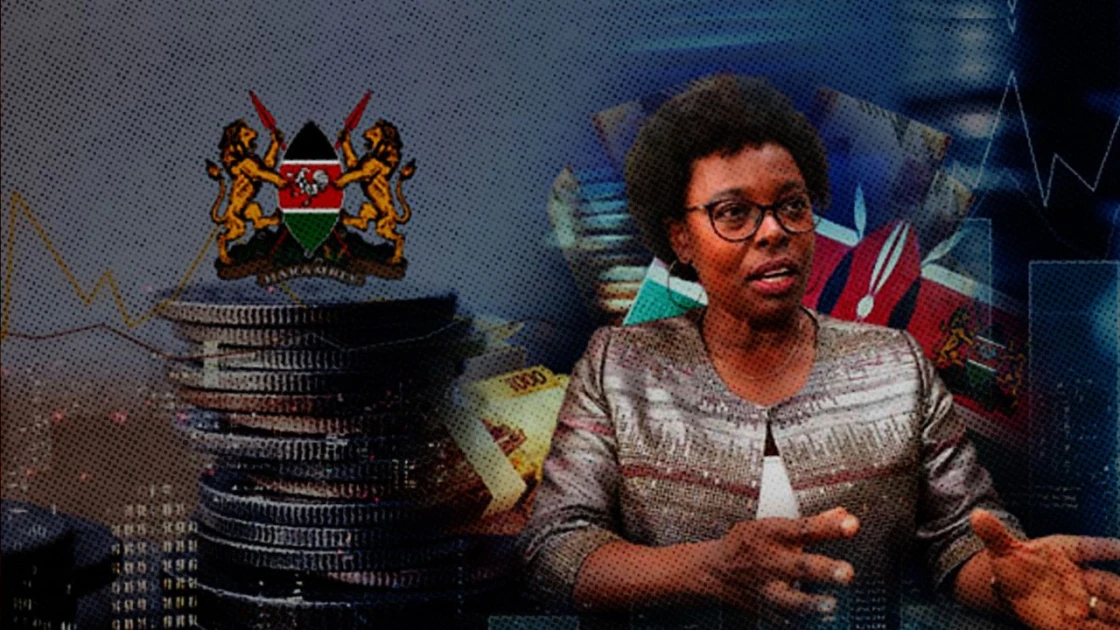
Controller of Budget Margaret Nyakang’o

Audio By Vocalize
Kenya's fiscal situation has been under strain for years, and the government has repeatedly told citizens that "austerity" is the name of the game under the Bottom-Up Economic Transformation Agenda (BETA).
But a new report from the Controller of Budget, Dr.Margaret Nyakang'o, suggests that while ordinary Kenyans are cutting back, some parts of government are still living large, on travel, hospitality, and emergency spending that skips the usual checks and balances.
The National Government Budget Implementation Review Report (NGBIRR) for the 2025/2026 financial year is essentially a report card on how the national government spent public money between July 2025 and June 2026. And the grades, in several key areas, are not good.
The Big Numbers Explained
Let us start with scale. The national government spent a total of Ksh.4.75 trillion in gross expenditure over the year.
To put that in perspective, that is more than four and a half times the total value of all shares traded annually on the Nairobi Securities Exchange in a typical year, an enormous sum moving through government coffers.
Of that, Ksh.1.77 trillion went to servicing public debt, essentially the interest and principal payments Kenya owes to lenders both at home and abroad.
Debt servicing has become one of the single biggest strains on the budget, eating into money that could otherwise go to hospitals, schools, or roads.
Meanwhile, pending bills, money the government owes to suppliers, contractors, and service providers for goods and services already delivered, ballooned to Ksh.475.53 billion by the end of June 2026.
Think of pending bills as the government's version of unpaid invoices: local businesses, from stationery suppliers to construction firms, deliver the work, but the cheque does not come.
This delays payment to ordinary Kenyans running small and medium businesses, some of whom depend largely on government tenders to stay afloat.
Against that backdrop, the report flags two specific problems that have raised eyebrows: the overuse of emergency spending powers, and lavish spending on travel and entertainment by top government offices.
Article 223: "Break Glass in Case of Emergency"
To understand the first issue, one needs to understand Article 223 of the Constitution of Kenya. It is the equivalent of a fire extinguisher bolted to the wall of government finance, meant to be used only when an emerging issue is genuinely urgent and totally unforeseen.
This could be a drought, a flood, a disease outbreak, a security crisis. In such moments, the National Treasury is allowed to spend money immediately, without first going through the usual step of getting Parliament's approval in advance.
Parliament only reviews and "regularizes" (formally approves) that spending afterward, through what is called a Supplementary Budget.
Article 223 is a sensible safety valve. No government can predict every crisis, and requiring lawmakers to debate and approve every shilling before it's released could paralyze the state during a genuine emergency.
The problem, according to the Controller of Budget's report, is that this fire extinguisher is being grabbed constantly — not just during actual fires.
During the 2025/2026 financial year, the National Treasury repeatedly leaned on Article 223 to release funds for things that don't obviously look like emergencies: administrative adjustments and ongoing capital projects that, in the normal run of things, should have gone through standard parliamentary scrutiny before a shilling was spent.
Why does this matter to the average Kenyan? Because Parliament's job, on our behalf, is to scrutinize how public money is spent before it goes out the door — checking that the spending is necessary, that it's not duplicated, and that it serves the public interest.
When Article 223 becomes a routine shortcut rather than a rare exception, that oversight function is quietly sidestepped.
The report warns this pattern "undermines fiscal transparency, inflates the fiscal deficit, and compromises budget credibility" — in plain terms, it makes it harder to trust that the budget Parliament approved is actually the budget being implemented, and it can push the government further into deficit (spending more than it collects in revenue) than officially planned.
Frequent Flyers: Who spend on travel and hospitality
The second flashpoint in the report is travel and entertainment spending; the allowances, flights, hotel bills, conference fees, and hospitality costs that come with government officials moving around the country and the world for work.
Nationally, the government spent Ksh.30.69 billion on travel in the year under review. Of that, Ksh.21.98 billion went to domestic travel and Ksh 8.71 billion to foreign travel including trips abroad, including delegations, conferences, and diplomatic engagements.
The report names several government bodies with particularly high recurrent expenditure, meaning day-to-day operational spending, as opposed to spending on long-term development projects, much of it tied to travel and hospitality:
The Teachers Service Commission (TSC) recorded the highest overall recurrent expenditure of any government vote, at Ksh.410.43 billion, reflecting the scale of administrative work and field monitoring required to manage the country's teaching workforce.
The Ministry of Defense and the National Police Service spent Ksh.156.40 billion and Ksh.114.10 billion respectively, much of it tied to operational movement and administrative travel, costs that come with running security operations across the country.
The State Department for Higher Education and Research spent Ksh.134.42 billion, with the report pointing to extensive delegation travel, conferences, and hospitality as key drivers.
The State Department for Internal Security and National Administration spent Ksh.48.40 billion, much of it on domestic travel and venue hospitality linked to regional coordination meetings, the kind of local barazas and inter-agency meetings held in hotels and conference centers around the country.
State House and the Executive Office of the President also recorded significant spending on hospitality, foreign delegations, and domestic travel.
None of this spending is automatically illegitimate, government does need to move people, host meetings, and send delegations abroad for legitimate diplomatic and technical reasons.
The concern raised by the report is one of proportion and priority: this scale of spending on travel and hospitality sits uncomfortably next to Ksh.475.53 billion in unpaid bills to Kenyan businesses, and against a backdrop of a government publicly preaching austerity.
When Priorities Get Mixed Up
The report draws attention to a specific and uncomfortable comparison: while government spent over Ksh.30 billion on travel, Ksh.74.57 billion in statutory deductions owed to Semi-Autonomous Government Agencies (SAGAs), bodies like NSSF, SHA, and pension funds that rely on the government remitting deductions on behalf of employees, remained unpaid.
In simple terms, this is money deducted from workers' pay or budgeted for their benefit that hasn't actually reached the institutions meant to hold it.
The report indicates a deeper problem of misplaced priorities: discretionary spending, the kind of spending government has more flexibility to cut back on, like retreats, workshops, and travel, is being protected, while contractual and statutory obligations that Kenyans are counting on, go unmet.
Over time, this is what drives the pending bills crisis: businesses that are not paid on time struggle to pay their own staff and suppliers, creating a ripple effect through the wider economy.
What the Controller of Budget Wants Done
The report does not just diagnose the problem; it proposes fixes, several of which target the very loopholes identified above.
Tighten the emergency spending rules. The Controller of Budget wants Parliament to get stricter about approving after-the-fact regularization of Article 223 withdrawals, rejecting any that do not clearly meet the constitutional bar of being unforeseen, urgent, and impossible to postpone.
Officials who misuse the provision, the report suggests, should face administrative sanctions rather than a rubber stamp.
Cap travel and hospitality spending. The National Treasury and the Salaries and Remuneration Commission (SRC), the body that sets pay and benefits for state officers, are being urged to impose a moratorium on non-essential foreign trips, cut the size of official delegations by half, and push more workshops and meetings into government-owned venues instead of paid hotels and conference centers.
Use technology to enforce discipline. The report recommends configuring the government's financial management system, the Integrated Financial Management Information System (IFMIS), along with e-procurement platforms, to automatically block new spending commitments on travel, hospitality, or emergency items if an agency still has verified pending bills or unmet operational obligations. In effect, the system itself would refuse to let officials book a flight or a hotel conference room if the agency hasn't first paid what it already owes.
Pay debts in the order they were incurred. Finally, the report calls for a First-In-First-Out (FIFO) approach to settling pending bills, clearing the oldest unpaid invoices first, and insists that ministries and departments should clear their backlog of pending bills before releasing budgets for non-essential recurrent spending in the 2026/2027 financial year.
The Bottom Line
When the technical language is stripped away, the message from the Controller of Budget's report is fairly simple: the rules exist to keep government spending disciplined, transparent, and accountable to Parliament and, ultimately, to citizens.
But when emergency powers become routine, and when travel and hospitality budgets keep growing even as suppliers and statutory agencies wait months or years to be paid, those rules start to lose their force.
For ordinary Kenyans, the numbers in this report are not just abstract billions; they translate into delayed government projects, cash-strapped local suppliers, and a widening gap between the austerity message coming from official podiums and the spending patterns showing up in the books.
Whether Parliament and the Treasury act on the Controller of Budget's recommendations before the next financial year will be one of the clearer tests of whether that gap is about to close, or further widen.
Join the Discussion
Share your perspective with the Citizen Digital community.
No comments yet
This discussion is waiting for your voice. Be the first to share your thoughts!