
KMPDU opposes President Ruto's proposed NHIF rates
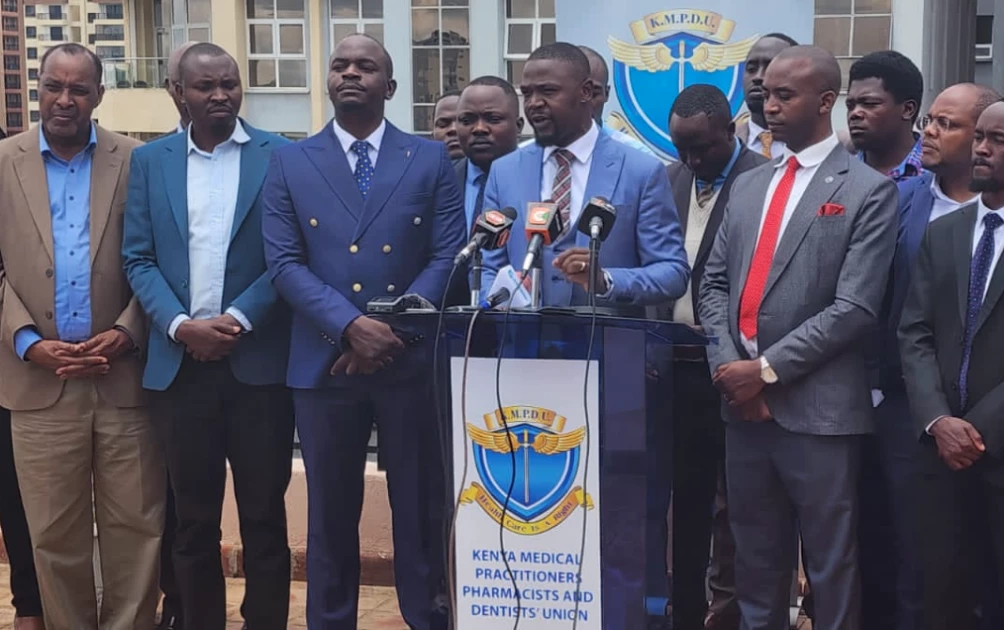
KMPDU officials, led by Secretary General Dr. Davji Atellah, during a press address on April 11, 2023. PHOTO | COURTESY

Audio By Vocalize
The Kenya Medical Practitioners, Pharmacists
and Dentists Union (KMPDU) is against as section of amendments proposed to the
National Health Insurance Fund (NHIF) regulations mooted by President William
Ruto.
This is after President Ruto, during the
Labour Day celebrations, announced that once the changes are approved, salaried
persons will be obligated to contribute 2.75 percent of their gross
monthly salaries to the fund.
KMPDU Secretary General Dr. Davji Atellah, in
a statement to newsrooms, noted that the State cannot claim to increase NHIF
funding by adding on to the premiums when the agency is already severely
under-funded.
"The national and county governments
have directed over Ksh.120 billion annually from NHIF to private insurance
companies. This applies to Parliamentary Service Commission, State officers and
all county governments who all have private insurances," he said.
"Civil servants' medical allowance was
removed from payslip to cover NHIF comprehensive services. And now without
a medical allowance or salary increases, we cannot subject ourselves to
extractive action on workers' payslip."
Instead of increasing the deductions, Dr.
Atellah went on, the State should work towards increasing the salaries of civil
servants to assist them deal with the high cost of living.
His sentiments were shared by KMPDU chair Dr.
Abi Mwachi who noted that increasing the premiums will make it more difficult
for individuals and households to afford healthcare.
“Higher premiums mean that people are paying
more out of their own pockets for healthcare, which can lead to fewer people
seeking medical attention when they need it. This can result in delayed or
inadequate treatment, which can lead to more serious health problems down the
line," Dr. Mwachi said in a subsequent statement.
Increasing premiums can also lead to a shift
in the burden of healthcare costs from the government to individuals and
households while having significant implications for healthcare providers,
according to the KMPDU Chair.
"Higher premiums might lead to decreased
demand for healthcare services, which can result in lower revenues for
providers," he said.
Join the Discussion
Share your perspective with the Citizen Digital community.
No comments yet
This discussion is waiting for your voice. Be the first to share your thoughts!