
KMA condemns politicians, public figures over live streams in hospitals
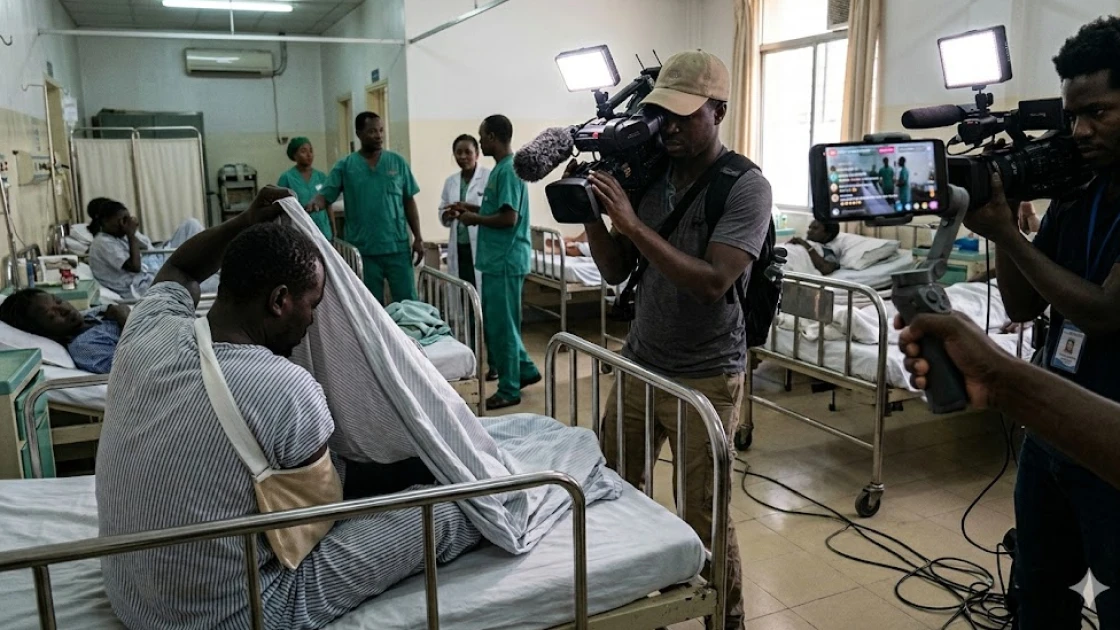
A Gemini AI-generated image of a live stream going on inside a hospital.

Audio By Vocalize
The Kenya Medical Association (KMA) has strongly condemned
what it termed as the growing trend of politicians, public figures and members
of the public staging photography sessions, live broadcasts and media events
inside healthcare facilities for political gain and personal promotion.
The doctors’ umbrella body, in a statement signed by Secretary
General Dr. Lyndah Kemunto on Friday, said filming or photographing patients in
wards, corridors and other patient-facing areas amounts to a serious violation
of privacy, dignity and confidentiality.
KMA said the actions violate several legal and ethical
frameworks, including Articles 28 and 31 of the Constitution, which guarantee
the right to dignity and privacy.
“Such actions are neither advocacy nor service; they are
exploitative practices that undermine the rights to privacy, confidentiality,
and respectful care,” Dr. Kemunto noted in the statement.
“The Health Act, 2017, further establishes statutory rights to
privacy, confidentiality, and dignified treatment."
The association underscored that medical workspaces should be
respected and accorded dignity, warning that vulnerable patients, particularly
those in public hospitals, are often unaware of their rights and therefore
exposed to exploitation.
It pointed to the Data Protection Act, 2019, which classifies
health data as sensitive personal information, saying recording or broadcasting
patients without explicit informed consent is actionable by the Office of the
Data Protection Commissioner (ODPC).
The association also cited the Kenya Medical Practitioners and
Dentists Council (KMPDC) Code of Professional Conduct and the World Medical
Association Declaration of Geneva, saying both uphold patient dignity and
insist that the patient-physician relationship must remain free from political
interference.
KMA thus appealed to the relevant agencies, including the ODPC and
the KMPDC to investigate incidents already in the public domain and
publish enforcement guidance specific to patient data in healthcare settings,
after which it should take stern action against those found culpable.
It also wants politicians and public figures to “immediately
cease all media events, photo opportunities, and live streams inside clinical
and patient-facing areas of any health facility.”
"The KMPDC must issue a formal directive clarifying that
facilitating political filming in clinical settings constitutes professional
misconduct, and must investigate reported incidents," stated the KMA SG.
"The ODPC must investigate incidents in the public domain
and publish enforcement guidance specific to patient data in healthcare
settings."
The association further called on health facility
administrators to enforce strict no-filming policies and ensure informed
consent is obtained before any photography involving patients is conducted.
It also urged the KMPDC to issue a formal directive clarifying
that facilitating political filming in clinical settings constitutes
professional misconduct and to investigate reported incidents.
The doctors’ body further urged national and county
governments to enact laws criminalising the filming or broadcasting of patients
without documented informed consent.
“To the Kenyan healthcare practitioner: you have both the
right and the duty to protect your patients from violations of privacy,
dignity, and political intrusion,” the statement added.
The remarks come days after uproar over a TikTok live session by
newly-appointed Mama Lucy Kibaki Hospital board member Calvince Gaucho, who was
filmed moving through hospital wards while streaming patients and hospital
activities in real time.
The widely-circulated livestream sparked outrage online, with
Kenyans, health activists and legal experts raising concerns over patient
privacy, confidentiality and the legality of filming patients without consent.
At the time, critics argued that the incident violated the
Constitution, the Data Protection Act and the Health Act, all of which protect
patient privacy and confidential medical information.
Join the Discussion
Share your perspective with the Citizen Digital community.
No comments yet
This discussion is waiting for your voice. Be the first to share your thoughts!