
KFS responds to deforestation concerns
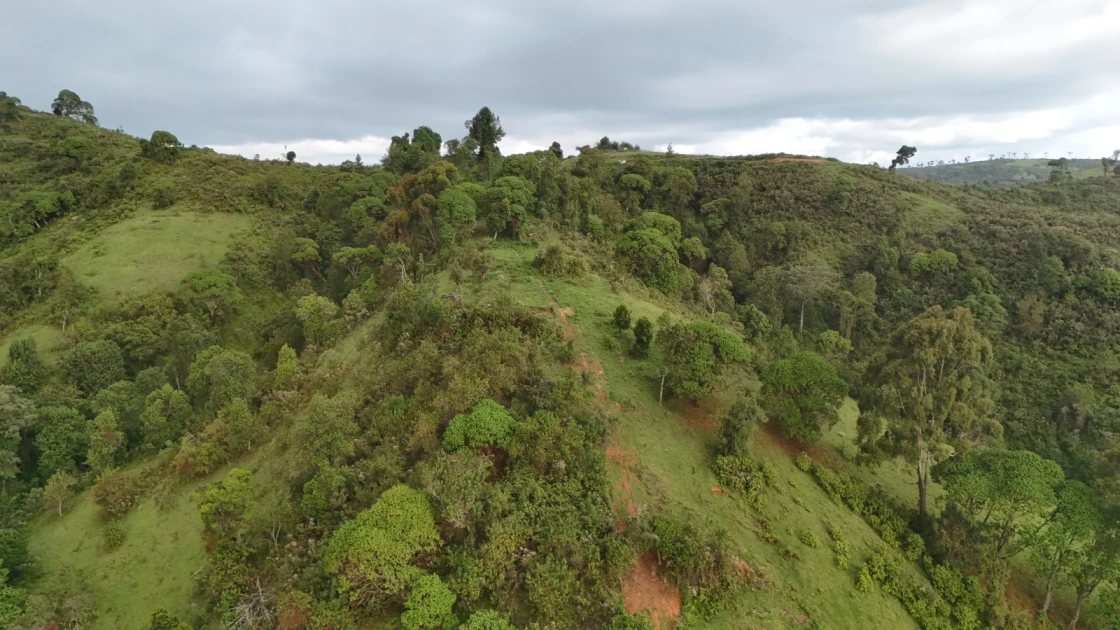
A file drone shot showing sections of the depleted Cherangany Forest, where widespread deforestation has been linked to the deadly landslide in Chesongoch.

Audio By Vocalize
Covering widely utilized commercial species such as cypress, pine, and eucalyptus, the guide aims to clear misconceptions, demystify the regulatory framework, and balance commercial wood production with stringent environmental conservation goals.
The agency emphasized the distinction between protected indigenous forests and commercial tree plantations managed under strict government regulation.
Stating that Kenya’s total forest estate spans approximately 2.602 million hectares, KFS indicated that industrial plantation forests make up 152,790.1 hectares - representing roughly 6% of the country's total forest area.
The remaining majority, exceeding 90%, consists of indigenous and natural forests alongside dryland woodlands kept under strict conservation, KFS says.
All public plantation forests are managed by KFS under legally approved Plantation Forest Management Plans (PFMPs).
Addressing common public misconceptions, KFS clarified that tree harvesting in Kenya is not illegal when conducted in designated zones.
The law enforces a clear distinction: indigenous and natural forests are strictly protected under complete conservation prohibitions, whereas designated plantation forests are managed for sustainable utilization under strict statutory guidelines.
Commercial harvesting, KFS said, is primarily governed by the Forest Conservation and Management (Amendment) Act, 2026, alongside the Forest (Harvesting) Rules 2009.
Key legal safeguards and regulatory requirements required before harvesting include mandatory Plantation Forest Management Plans (PFMPs), Environmental Impact Assessments (EIA), statutory licensing, and direct oversight and supervision by KFS.
To ensure fairness, environmental compliance, and accountability, KFS authorizes tree harvesting in public plantation forests exclusively through a competitive and transparent tendering process.
The regulatory authorization workflow follows a six-stage process: inventory and valuation of mature tree compartments, official approval of the annual harvesting plan, open advertisement of harvesting opportunities, competitive bidding and allocation to licensed sawmillers, official issuance of harvesting entry and exit certificates, and official issuance of timber movement permits.
In the guide, (KFS) also clarified the scientific protocols governing tree maturity, harvesting timelines, and sustainable forest management across the country.
According to the guide, the harvesting readiness of plantation trees varies depending on species and site conditions.
Eucalyptus typically reaches maturity within eight to 12 years, Pine requires 25 to 28 years, and Cypress takes 26 to 32 years.
KFS emphasized that maturity is scientifically determined by foresters from KFS and the Kenya Forestry Research Institute (KEFRI).
KFS clarified that mature plantation trees must be harvested because once they pass maturity, they cease growing, decay, rot, and become significant fire hazards while losing their commercial value.
Delaying harvesting, KFS says, results in severe consequences, including substantial loss of revenue, timber shortages that lead to import dependence, and an inability to replant for the next cycle, ultimately defeating long-term sustainability.
Addressing environmental concerns, KFS affirmed that harvesting a plantation forest does not mean permanent destruction.
"Plantation forestry is designed to be cyclical rather than destructive, as harvesting is strictly followed by compulsory replanting to ensure the land remains forest land in perpetuity," KFS states.
Furthermore, harvesting creates room for the establishment of more vigorous young forests that offer higher rates of carbon sequestration.
The responsibility for replanting harvested areas lies with KFS under the Plantation Forest Management Plan.
Also, replanting must occur during the same or next rainy season, within one year of harvesting.
To ensure adherence to approved management plans throughout the harvesting and replanting cycles, KFS maintains monitoring and compliance through a robust chain of oversight.
This framework includes on-site resident foresters, an independent forest inventory section, conservancy and headquarters monitoring teams, the application of Geographical Information System (GIS) technology, and active stakeholder participation through Community Forest Associations (CFAs).
This comprehensive KFS regulatory guideline directly follows a recent piece published by Citizen Digital, which brought intense public scrutiny and outrage to the forefront regarding massive, wanton deforestation currently unfolding across Kenya's critical water towers.
The report exposed alarming destruction in vital water catchment zones, sparking widespread public concern that commercial logging activities are spilling over or degrading ecologically sensitive natural areas under the guise of plantation harvesting.
Join the Discussion
Share your perspective with the Citizen Digital community.
No comments yet
This discussion is waiting for your voice. Be the first to share your thoughts!