
Kenya’s Next Devolution Chapter: Delivering Quality Services and Results That Matter
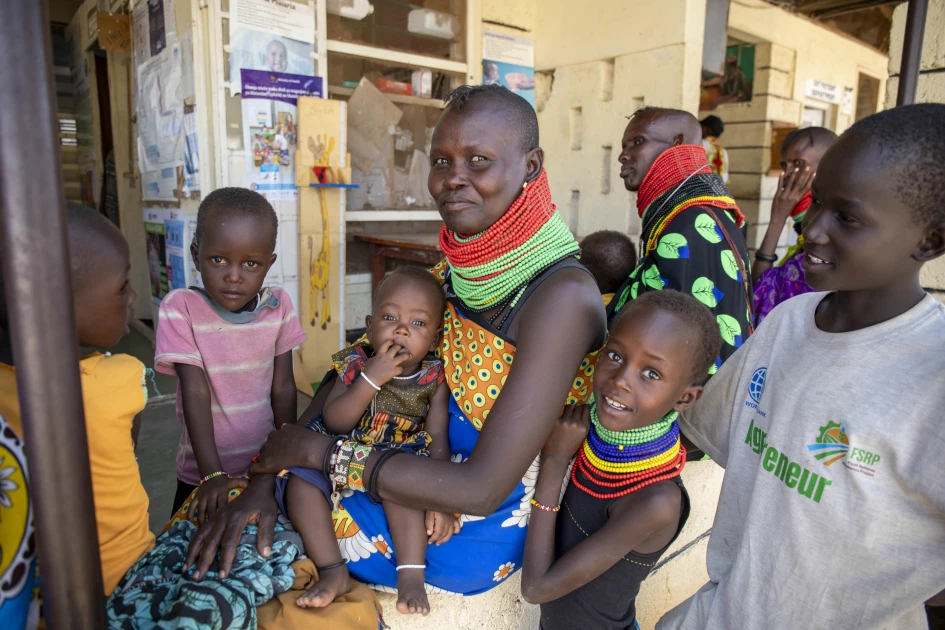
Elizabeth with her four children at Nakabosan Dispensary in Turkana County, after Melvin (pictured in the pink-and-white striped t-shirt) received treatment. ©UNICEFKenya_2026_LucasOdhiambo

Audio By Vocalize
As Kenya enters the final year of the third devolution cycle, the question is no longer whether devolution can bring government closer to people. It has.
Across all 47 counties, devolution has expanded infrastructure, improved access to services, and opened new pathways for local development and jobs.
As Kenya enters the next chapter of devolution, progress must be measured not only by resources allocated or spent, projects delivered, or infrastructure built, but by the tangible improvements people experience in health, early childhood development, nutrition, water and sanitation, social protection, child protection, and climate resilience. With reliable financing and stronger accountability for results, Kenya can ensure that every child, family, and community shares in the promise of devolution.
Devolution’s promise is not in structures alone, but in what reaches people. The next chapter must be about turning county financing into visible, reliable services for children, families, and vulnerable communities. The foundation is clear: 107,831 Community Health Promoters are already bringing primary health care closer to households across all 47 counties, while pre-primary enrolment has grown from 2.91 million learners in 2024 to 3.12 million in 2025.
These are not just statistics, they are proof that when devolved systems are properly financed and accountable, they deliver. The priority now is to protect these gains, close remaining gaps, and ensure every shilling translates into equitable results where they matter most: at the front line.
The stakes are high because the services delivered through devolution shape Kenya’s human capital. Children aged 0 to 17 make up 41.3 per cent of the population, about 22 million people, and in some counties more than half of the population is under 18.
Every child reached through a health facility, an early learning classroom, a nutrition programme, a safe water point or a social protection system is not only receiving a service today, they are becoming part of Kenya’s future workforce, resilience and growth. This is why the next phase of devolution must be anchored in predictable financing and clear accountability for results in the sectors that matter most for children.
Predictable financing is the hinge between plans and services, but governance is what ensures that financing delivers. In financial year 2024/25, county disbursements were highly uneven, moving from zero in some months to Ksh 63.9 billion in others.4 In financial year 2025/26, only 50.3 per cent of approved grant allocations to county governments were disbursed by the reporting period.
When releases are delayed, procurement slows, implementation windows shrink and spending is compressed late in the year. For health, nutrition, early learning and social protection, this is not a technical cash flow problem. It is the difference between services reaching people when they need them, reaching them too late, or not reaching them at all and it is why timely and predictable financing, transparent planning, and accountable delivery must define the next chapter of devolution.
Health illustrates both the gains achieved through devolution and the importance of sustaining momentum to protect and expand those gains. Devolved systems have expanded community health and supported gains in maternal and newborn care, but recent pressures are a reminder that progress cannot be taken for granted.
The county health workforce declined by 26 per cent after the loss of externally supported health workers, while skilled birth deliveries declined by 23 per cent. The lesson is clear. National and county governments must protect frontline capacity, strengthen primary health care and track results in maternal health, newborn survival, immunization, nutrition and adolescent wellbeing.
Early learning tells the same story. Enrolment is rising, but quality remains uneven. Counties allocated Ksh 6.81 billion to preprimary education, yet pupil teacher ratios range from about 30 pupils per teacher in some counties to as high as 200 in others. Access is not enough. Success must also mean quality, inclusive and play-based learning that prepares every child for school and life.
Equity remains the ultimate test of whether results reach those who need them most. More than 55 per cent of children in Kenya are multidimensionally poor, with county level child poverty ranging from 13.5 per cent in Nairobi to as high as 94 per cent in some counties.6 Counties face different levels of need, climate risk, service delivery costs and household vulnerability. A fair financing system should therefore ask a simple question: is spending closing these gaps, or merely recording expenditure?
Social protection is vital to protecting families, building resilience and investing in children’s futures. Kenya has shown that large-scale cash transfers can work, yet the Cash Transfer for Orphans and Vulnerable Children reaches about 1.1 million children (or 441,000 households) against an estimated 9 million children in need, with its FY 2026/27 allocation remaining at Ksh 8.9 billion. When families face food price increases, droughts, floods or illness, limited or delayed support can force children out of school, reduce access to antenatal care, increase hunger and push households intoresorting harmful coping practices . Timely support protects children before hardship becomes crisis.
Kenya’s Constitution already gives this agenda its foundation. Through the principles of devolution, equity, public participation and accountable governance, it requires public resources to promote equitable development, including special provision for marginalized groups and lagging areas. Financing should therefore be predictable. Priorities should balance infrastructure with human capital. People should experience the benefits of public spending through reliable, accessible and quality services.
Kenya’s next devolution chapter must be practical, costed and relentlessly focused on delivery. In the current fiscal reality, counties and the national government cannot afford plans that look strong on paper but fail at the facility, classroom, household or water point. The priority is clear: release approved funds on time, protect frontline workers and essential supplies, target the counties and households facing the greatest deprivation, and track whether public spending is improving lives. This is how devolution can move from promise to performance. If every budget decision asks what it will change for a mother seeking safe delivery, a child entering pre-primary school, a household facing hunger, or a community exposed to drought or floods, Kenya will not only protect hard-won gains; it will build a fairer, more resilient future for every county and every child.
By Ahmed Abdulahi, Chair of Council of Governors and Dr. Shaheen Nilofer, UNICEF Representative to Kenya
Join the Discussion
Share your perspective with the Citizen Digital community.
No comments yet
This discussion is waiting for your voice. Be the first to share your thoughts!