
Kenya’s Public Private Partnership agenda gains momentum amid infrastructure financing push
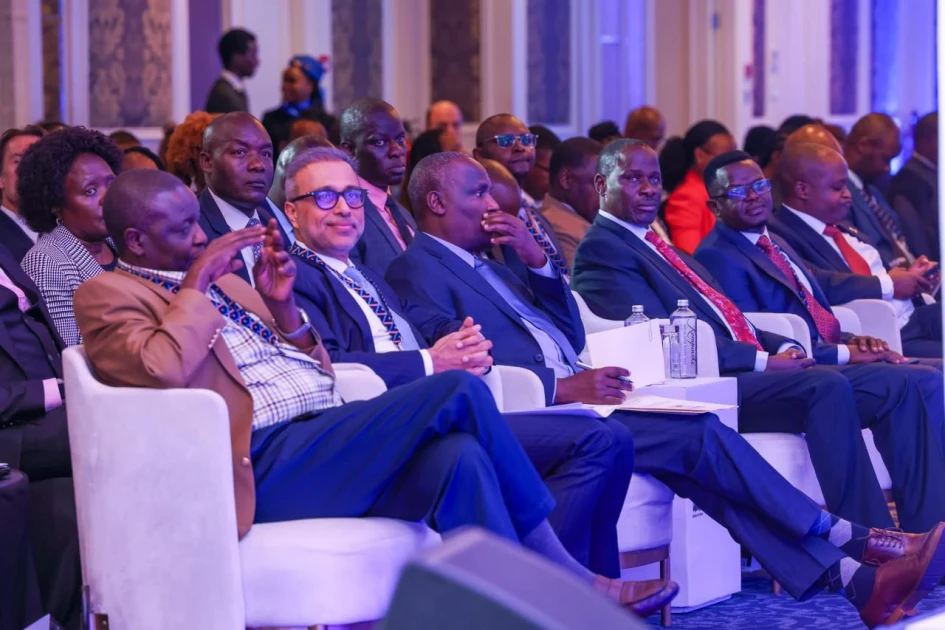
National Treasury CS John Mbadi, PPP Director General Eng. Kefa Seda, PS Investment Cyrell Odede during the Kenya PPP Symposium 2026 PHOTO| COURTESY

Audio By Vocalize
Kenya is
increasingly positioning Public Private Partnerships (PPPs) at the centre of
its infrastructure financing strategy as growing development demands continue
exerting pressure on public finances.
This
emerged prominently during the Kenya PPP Symposium 2026 held in Nairobi, where
government officials, infrastructure financiers, institutional investors,
development finance institutions, commercial banks, pension funds, legal
experts, and private sector players convened to discuss the future of
infrastructure investment in Kenya and the wider region.
The
symposium marked a shift from previous policy and regulatory-focused
engagements toward investment mobilisation, transaction structuring, and
private capital participation in infrastructure development.
Officially
opened by Cabinet Secretary for the National Treasury and Economic
Planning John Mbadi, alongside Principal Secretary for Public Investments and
Asset Management Cyrell Wagunda Odede, the forum highlighted Kenya’s growing
PPP project pipeline and efforts to attract long-term infrastructure capital.
Backed by
the World Bank Group, the symposium reflected increasing international
confidence in Kenya’s infrastructure financing framework, transaction
governance systems, and pipeline of investment ready projects.
The Public
Private Partnerships Directorate under the National Treasury emerged as a key
institution driving the country’s infrastructure financing agenda through
project preparation, transaction appraisal, procurement oversight, investor
engagement, and implementation coordination.
Under the
leadership of Director General Kefa Seda, the Directorate is advancing PPP
frameworks across transport, renewable energy, ICT infrastructure, healthcare,
water systems, affordable housing, student accommodation, logistics, and
industrial development.
A major
highlight of the symposium was Kenya’s active PPP pipeline comprising 51
projects valued at approximately KSh1.7 trillion. Of these, 10 projects are
already under implementation while 41 remain at various stages of the PPP
project cycle.
Cabinet
Secretary John Mbadi said increasing recurrent expenditure obligations, debt
servicing pressures, county allocations, and statutory commitments are
continuing to strain public finances, reinforcing the need to expand
infrastructure financing through PPPs and the proposed National Infrastructure
Fund.
“We collect
approximately KSh3.6 trillion annually in taxes, yet recurrent expenditure,
salaries, county allocations, and statutory obligations consume amounts far
beyond that,” Mbadi said.
He noted
that the National Infrastructure Fund is expected to strengthen PPP financing
by unlocking larger pools of capital and accelerating implementation of
transformative national infrastructure projects.
Director
General Kefa Seda said shrinking fiscal space is increasing the strategic
importance of PPPs in sustaining infrastructure financing and accelerating
project delivery.
“Shrinking
fiscal space continues to reinforce the strategic importance of the PPP route
in sustaining infrastructure financing, accelerating delivery capacity, and
expanding private sector participation,” Seda stated.
He added
that modern PPP structuring is increasingly focused on de-risking projects,
strengthening bankability, enhancing transaction credibility, and positioning
infrastructure investments more attractively before long term institutional
investors.
Principal
Secretary Cyrell Wagunda Odede emphasised the importance of transparent
procurement systems, structured risk allocation, and credible project
preparation frameworks in attracting private capital.
“Private
capital responds to credible risk assessment, transparent de-risking
frameworks, and commercially structured projects,” he said.
Odede noted
that Kenya’s PPP pipeline reflects a deliberate transition from conventional
public financing dependence toward structured infrastructure partnerships
supporting highways, renewable energy, water systems, logistics, ICT
infrastructure, food security projects, and Konza Technopolis.
KenInvest
Chief Executive Officer John Mwendwa said government agencies are strengthening
collaboration with investors and private sector players to improve investment
facilitation and ease of doing business.
“We are
partnering with investors and the private sector to ensure life becomes easier
when it comes to road and government processes,” Mwendwa said.
The
symposium also highlighted the growing contribution of PPPs in financing
renewable energy, transport infrastructure, irrigation systems, healthcare
facilities, independent power generation, digital connectivity, student
accommodation, and water projects.
Projects
such as the Menengai Geothermal Project and the Galana Kulalu Food Security
Project were cited as examples of how private sector participation is
supporting Kenya’s clean energy transition, food security, irrigation
expansion, and industrial development.
Stakeholders
at the symposium agreed that the long term success of Kenya’s PPP agenda will
depend on efficient project delivery, investor confidence, transparent
governance systems, and the economic value generated through infrastructure
investments.
The Kenya
PPP Symposium 2026 reinforced Kenya’s position as one of Africa’s emerging
destinations for infrastructure investment while reaffirming the central role
of PPPs in supporting sustainable economic transformation.
Join the Discussion
Share your perspective with the Citizen Digital community.
No comments yet
This discussion is waiting for your voice. Be the first to share your thoughts!