
Kenya’s public infrastructure projects called out by World Bank for offering little value for money
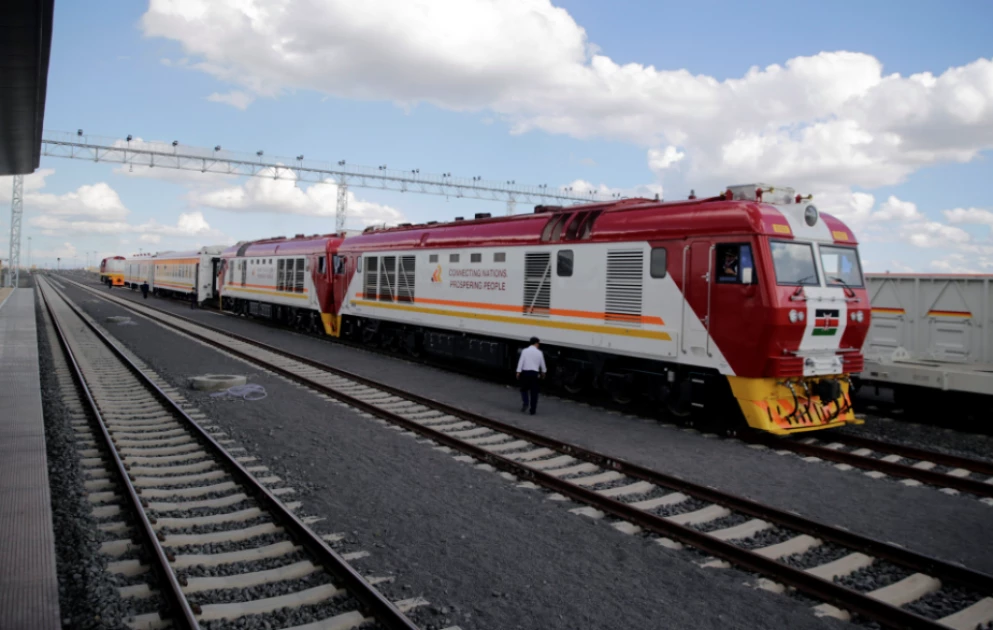
A train launched to operate on the Standard Gauge Railway (SGR) line constructed by the China Road and Bridge Corporation (CRBC) and financed by the Chinese government arrives at the Nairobi Terminus on the outskirts of Kenya's capital in June 2017. | REUTERS

Audio By Vocalize
The numbers do not add up
The Mombasa–Nairobi SGR cost US$7.6 million per kilometre, against US$5.7 million for Tanzania’s electrified Dar es Salaam–Dodoma line and US$5.3 million for the electrified Djibouti–Addis Ababa line. That makes Kenya’s line roughly a third dearer than Tanzania’s and 43% dearer than the Ethiopia–Djibouti railway. At Tanzania’s rate, the Bank says, Kenya could have saved up to US$900 million, roughly Sh116 billion. At least 30 percent of that gap is attributed to governance challenges rather than topography or technical differences.
Some caveats are worth stating. The Bank itself cautions that comparing railway costs is not straightforward, since terrain, construction periods and project requirements all factors that affect the ultimate price. Nor does it claim that 30 percent of the whole SGR budget was stolen. The claim is narrower but still damaging: at least 30 percent of the project cost, which is on the order of US$270 million, traces to how the project was run rather than what it was. Kenya’s line also came first, which cuts both ways. Pioneers pay a premium, but Tanzania’s railway was built several years later and to a higher specification, including electrification.
What TI-Kenya found
Further, the World Bank report cites a June 2026 assessment by Transparency International Kenya, which used the Infrastructure Corruption Risk Assessment Tool (ICRAT) in examining Kenya’s infrastructure projects that were susceptible to corruption. The tool is a diagnostic and participatory framework designed to identify governance loopholes, red-flag hotspots, and institutional weaknesses. It scrutinized three infrastructure projects in Kenya. The SGR scored 4.49 out of 5 on corruption risk, against 3.56 for the Vihiga affordable housing project and 3.24 for the Kiambu civil servants’ housing scheme. That puts the railway in the “very high” category. Kenya’s overall governance environment was rated high risk, with a score of 4.125 point.
The reasons are mundane, and that is the point. The assessment named limited public access to financing and contract information, opaque procurement, inadequate oversight and weak public participation. TI-Kenya also said weaknesses in project selection and approval undermined the railway’s expected benefits. In plain terms: nobody outside the room could see the deal, and few inside it had reason to ask hard questions.
How corruption affects economic growth
Corruption in infrastructure is a tax on every shilling of public investment. It is prudent to note that money lost to inflated contracts or fraudulent land payments buys no extra track, school or road. The World Bank’s wider assessment is stark: it estimates that corruption and collusion have widened annual budget deficits by about two percentage points of GDP, through excess spending, weak revenue collection and higher borrowing costs. That is not a rounding error, rather it is the difference between a manageable deficit and one spiraling out of manageable levels.
There is a second cost of corruption to the wider economy that is tougher to measure. Projects chosen for their contract-creaming potential rather than their economic return introduce the wrong assets in the wrong places. A railway that is outdated, expensive to build and underused, ends up earning too little to repay itself. Kenya’s annual losses from stalled and mismanaged public projects have been cited in the billions.
How it feeds the debt problem
The money for the construction of the SGR was largely borrowed. Of its roughly US$3.6 billion cost, 90 per cent came from China’s Exim Bank. Overpayment on a loan-financed project is not a one-time loss. It is compounded interest on a number that should never have been that large.
The wider picture is tight. The World Bank puts public debt at 72.3 per cent of GDP as of August 2026, with interest payments taking about a third of government revenue. When a third of revenue goes to creditors, less is left for hospitals, teachers and university lecturers and the very infrastructure that was supposed to lift growth. Each overpriced project makes that squeeze worse. Secrecy makes it harder to fix, too. A public that cannot read the contract cannot judge the price.
Are there mitigating factors to run-away corruption
One of the solutions towards eradicating corruption is to make competition the default. Direct contracting should be rare, justified in writing and open to scrutiny. Competitive tendering is the cheapest anti-corruption tool there is. It is also prudent to publish the public contracts and loan terms every time they are contracts are entered into. Costs, financing, contractors and variations should be public from the start. Secrecy within public contracts are a red-flag and a big source of problems.
The government should also be deliberate in cleaning up land acquisition bottlenecks. Identification of land parcels for acquisition, titling, valuation and compensation are the points rife with fraud and speculation. Public registers of affected parcels and independent valuation of these processes would be of great help. In 2018, officials including the then-head of Kenya Railways Corporation were arrested over alleged graft in land compensation on the railway.
To cure rampant corruption, the need to run pilot tests before borrowing for full-scale infrastructure projects is vital.Independent cost-benefit reviews and benchmarking against comparable lines should come before any financing is signed, not after.
Another real fix to corruption would be to give oversight real teeth. This would ensure that Parliament, the Auditor-General and procurement regulators need early access to documents and the power to halt projects, not just to comment on them afterwards. Monitoring and evaluation of public projects would ensure lessons learnt are applied in subsequent projects. The extensions from Naivasha to Kisumu and Malaba are already under way. If the same non-competitive model is used again, the bitter lesson of over-pricing and creaming over the funding will serve no purpose.
The uncomfortable bottom line is that Kenya’s SGR problem was never a technical railway problem. A country that cannot buy a railway at a fair price will struggle to buy anything else at one, and it will keep borrowing to do it until it goes bust from the debts
Join the Discussion
Share your perspective with the Citizen Digital community.
No comments yet
This discussion is waiting for your voice. Be the first to share your thoughts!