Kenya’s changing weather raises questions about malaria risks
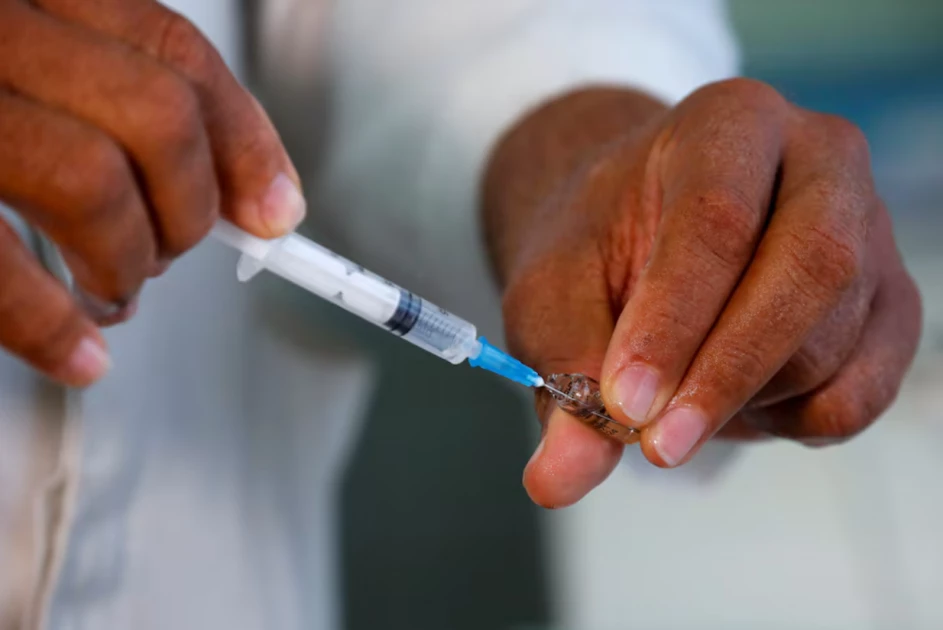
A health agent prepares an anti-malaria injection at Marcory General Hospital in Abidjan, Ivory Coast October 7, 2021. REUTERS/Luc Gnago/File Photo

Audio By Vocalize
Kenyans have been talking about the heat, even as forecasts point to enhanced rainfall across much of the country during the October–December 2026 short-rains season.
The Kenya Meteorological Department forecasts above-average rainfall across much of the country, alongside warmer-than-average mean temperatures, with particularly high probabilities of warmer conditions in parts of the Coast and North-Eastern Kenya.
The combination raises questions about how changing weather conditions could affect public health, particularly malaria transmission in the Western Kenya Highlands, where transmission can be seasonal and outbreaks can emerge when conditions become favourable.
But warmer weather alone does not mean a malaria outbreak is imminent. The risk depends on several factors, including rainfall, temperature, mosquito populations, local transmission patterns and the effectiveness of existing prevention measures.
Health officials are therefore urging counties to use climate forecasts, mosquito surveillance and community-level alerts to identify potential risks before health facilities face a surge in cases.
For families in Kenya’s highlands, rainfall can replenish water sources and support farming. However, intense rainfall and flooding can also create standing water in which some mosquitoes breed.
At the same time, temperatures within suitable ranges can accelerate the development of malaria parasites inside mosquitoes, potentially shortening the time between a mosquito acquiring the parasite and becoming capable of transmitting it.
The challenge for health authorities is to determine when these environmental changes are likely to translate into increased malaria transmission and act before cases rise sharply.
Unlike areas where malaria transmission occurs more consistently, Kenya’s highlands often experience seasonal and unstable transmission.
When conditions become favourable for mosquitoes and malaria parasites, infections can increase among populations that have had less frequent exposure to malaria and may consequently have lower acquired immunity.
Dr Abubakar Badawy, who discussed malaria surveillance and preparedness, explained that cooler temperatures in highland areas usually limit mosquito survival and parasite development. However, when temperature, rainfall and humidity become favourable, transmission can increase.
This makes preparedness particularly important in counties where malaria transmission is usually lower or seasonal.
The counties identified during the preparedness discussions include Kakamega, Vihiga, Bungoma, Nandi, Kericho, Uasin Gishu, Elgeyo-Marakwet, Bomet, Trans Nzoia and West Pokot.
Together, the counties have 128 sub-counties, according to Moses Wambusi, the malaria coordinator for Bungoma County, who spoke on behalf of highland counties.
Wambusi said county teams were preparing for potential increases in transmission associated with the anticipated late-2026 and early-2027 climate conditions.
However, the presence of a climate warning does not automatically mean that a malaria epidemic will occur. The timing and severity of any outbreak depend on local weather patterns, mosquito populations, existing control measures, access to diagnosis and treatment, and the susceptibility of affected populations.
That distinction is important as counties interpret weather forecasts and decide where to direct limited public-health resources.
The Kenya Meteorological Department publishes a monthly malaria epidemic early-warning bulletin for the Western Kenya Highlands. Its October 2026 bulletin provides a specific source for assessing the current predicted risk in the region.
The findings of that bulletin should be considered alongside current malaria case data and mosquito surveillance before drawing conclusions about the likelihood of an outbreak.
During the preparedness discussions, Simon Cheptot, a representative of the Kenya Meteorological Department, explained how El Niño and the Indian Ocean Dipole can influence rainfall over East Africa.
El Niño is associated with warmer-than-normal sea surface temperatures in the central and eastern equatorial Pacific Ocean. The Indian Ocean Dipole, meanwhile, describes differences in sea surface temperatures between the western and eastern parts of the Indian Ocean.
During a positive Indian Ocean Dipole, waters in the western Indian Ocean, closer to East Africa, become warmer relative to those in the eastern Indian Ocean, near Indonesia.
Under certain conditions, a positive Indian Ocean Dipole and El Niño can reinforce rainfall-favouring atmospheric patterns over East Africa.
The resulting rainfall can increase the risk of flooding, waterlogging and the formation of mosquito breeding sites, although the effects vary across locations.
Simon Cheptot, the county director of meteorological services for Uasin Gishu and Elgeyo-Marakwet, also discussed how El Niño can influence temperatures as well as rainfall.
For malaria prevention, the relationship matters because rainfall can affect the availability of breeding habitats, while temperature can influence mosquito survival and the speed at which malaria parasites develop inside mosquitoes.
Edith Ramaita, an entomologist at the National Malaria Control Programme, explained that warmer conditions can shorten the parasite's extrinsic incubation period; the time required for the malaria parasite to develop inside a mosquito before it can be transmitted to another person.
A shorter incubation period can mean that a mosquito becomes infectious sooner, provided other conditions support its survival.
However, the relationship is not straightforward. Excessive heat can also reduce mosquito survival, while heavy rainfall may sometimes flush away breeding sites. Different mosquito species also respond differently to environmental conditions.
Consequently, public concerns about heat should be investigated alongside recorded temperatures, rainfall observations and local mosquito data rather than treated as evidence of increased malaria transmission on their own.
Malaria surveillance often focuses on people who develop symptoms and seek treatment. But by the time health facilities record a substantial increase in cases, transmission may already have intensified.
Entomological surveillance, which monitors mosquito populations and behaviour, can provide another source of early-warning information.
“Kenya conducts vector surveillance during both dry and wet seasons to identify changes in mosquito populations and their seasonal patterns,” Ramaita said.
The surveillance examines mosquito species, their breeding sites and their behaviour, including whether they predominantly bite people indoors or outdoors and where they rest after feeding.
This information helps determine which interventions are likely to work in specific locations.
Insecticide-treated nets and indoor residual spraying can help reduce transmission from mosquitoes that bite or rest indoors. However, mosquitoes that bite outdoors or feed on both humans and animals may require additional approaches to address gaps in protection.
Ramaita highlighted mosquito species found in Kenya, including Anopheles gambiae, Anopheles arabiensis and Anopheles funestus. Their behaviour and geographical distribution vary.
She also reported the detection of Anopheles stephensi in 12 counties, with surveillance identifying breeding sites associated largely with human-made environments.
However, she cautioned that the mosquitoes detected had not been incriminated in malaria transmission in Kenya. This means that malaria parasites had not been detected in the collected adult vectors.
The distinction matters because detecting a mosquito species does not, on its own, establish that it is transmitting malaria locally.
Nevertheless, monitoring mosquito populations and identifying their breeding sites can help health officials target interventions before cases rise.
Another challenge is the delay between malaria cases occurring and information reaching decision-makers.
Routine malaria data reported through the Kenya Health Information System are useful for monitoring trends. However, monthly reporting may not provide sufficiently timely information to identify a rapidly developing epidemic.
Dr Badawi recommends more frequent reporting in areas prone to outbreaks, particularly weekly malaria surveillance through the Integrated Disease Surveillance and Response system.
He said health teams should monitor suspected cases, the number of patients tested, confirmed cases, test positivity rates and malaria deaths.
These indicators should be linked to automated alerts and predetermined action thresholds. Once a threshold is crossed, the alert should trigger verification by facility, sub-county and county teams.
In particularly high-risk situations, reporting could temporarily become daily or every 48 hours.
Badawi also recommends combining clinical data with community alerts, climate information, mosquito surveillance and information about the availability of medicines and diagnostic supplies.
Such an approach would help health teams distinguish between a normal seasonal increase and an unusual rise requiring investigation.
The objective is to move from responding after an outbreak becomes apparent to identifying warning signs early enough to prevent cases from escalating.
Early warnings have limited value if health facilities lack the supplies or personnel needed to respond.
Wambusi said highland counties were strengthening surveillance, monitoring weekly malaria trends, investigating unusual increases in fever cases and preparing rapid-response teams to verify suspected outbreaks.
The counties are also forecasting requirements for malaria rapid diagnostic tests, antimalarial medicines and other essential commodities while planning buffer stocks for high-risk facilities.
These measures are intended to reduce the risk of stockouts when demand increases or heavy rainfall disrupts transport and supply chains.
Counties can monitor stocks across facilities and redistribute commodities where some facilities have excess supplies while others face shortages. They can also coordinate emergency orders with the national Ministry of Health and relevant supply-chain agencies.
However, forecasting demand requires more than predicting rainfall. Health teams must consider historical malaria trends, current case numbers, population vulnerability, local transmission patterns, the likely duration of increased risk and available supplies.
The World Health Organization, represented by Dr James Dan Otieno during the preparedness discussions, said its support for public-health emergencies can include mobilising funding, strengthening governance and supporting emergency preparedness and response teams.
He cautioned that extreme weather can disrupt several parts of the health system simultaneously. Flooding may affect transport networks, while electricity disruptions can compromise diagnostic services and other essential operations.
Preparedness must therefore extend beyond stocking medicines to maintaining referral systems, transport, communications and health-worker availability.
The first signs of a developing health problem may emerge in households and villages before they appear in official reports.
Wambusi said community leaders, including chiefs, village elders, religious leaders, teachers and other influential figures, can help disseminate malaria prevention messages and encourage residents to seek testing and treatment promptly.
Community health promoters can support consistent use of insecticide-treated nets, identify stagnant water and encourage households to eliminate avoidable breeding sites.
They can also help health teams identify people who may struggle to reach health facilities during floods or other severe weather events.
Ramaita emphasised the importance of testing suspected malaria cases and ensuring that confirmed cases receive prompt and complete treatment. Treating infections reduces the pool of parasites that mosquitoes can acquire and subsequently transmit.
However, prevention messages must be accompanied by accessible services. Encouraging people to seek care will have limited impact if facilities are too distant, roads are impassable or essential medicines and diagnostic tests are unavailable.
For communities already concerned about changing weather conditions, timely and accurate communication is equally important. Residents need clear information about local weather risks, malaria prevention and when to seek medical attention, without being led to believe that every hot day or heavy downpour signals an outbreak.
The Kenya Meteorological Department issues climate information across different time horizons, from seasonal and monthly outlooks to weekly and daily forecasts.
Cheptot explained that longer-range forecasts generally carry greater uncertainty, making continuous monitoring and updates important as the anticipated weather period approaches.
For health teams, the task is to interpret these forecasts alongside epidemiological and entomological evidence rather than treating a weather prediction as a stand-alone trigger for action.
A forecast of above-average rainfall could prompt counties to review malaria commodity stocks, identify vulnerable communities, check the readiness of rapid-response teams and strengthen community engagement.
Subsequent reports of rising mosquito density or unusual increases in fever cases could trigger more targeted investigations and interventions.
Such an approach requires coordination between meteorological departments, county health teams, the national Ministry of Health, disaster-management units and community structures.
It also requires clear responsibility: officials must know who receives an alert, who verifies it, what threshold triggers action and how quickly resources can be deployed.
Ultimately, the objective is not simply to predict an outbreak. It is to use the available warning time to reduce exposure, maintain access to testing and treatment, and protect communities before malaria cases surge.
For families, the difference between a forecast and an effective warning may come down to whether a health facility has the supplies it needs, whether a community receives timely information and whether a patient can reach treatment without delay.
Climate information becomes a lifesaving tool only when it is translated into early, coordinated and locally appropriate public-health action.
Join the Discussion
Share your perspective with the Citizen Digital community.
No comments yet
This discussion is waiting for your voice. Be the first to share your thoughts!