
Kenyan football clubs urged to invest more in anti-doping awareness
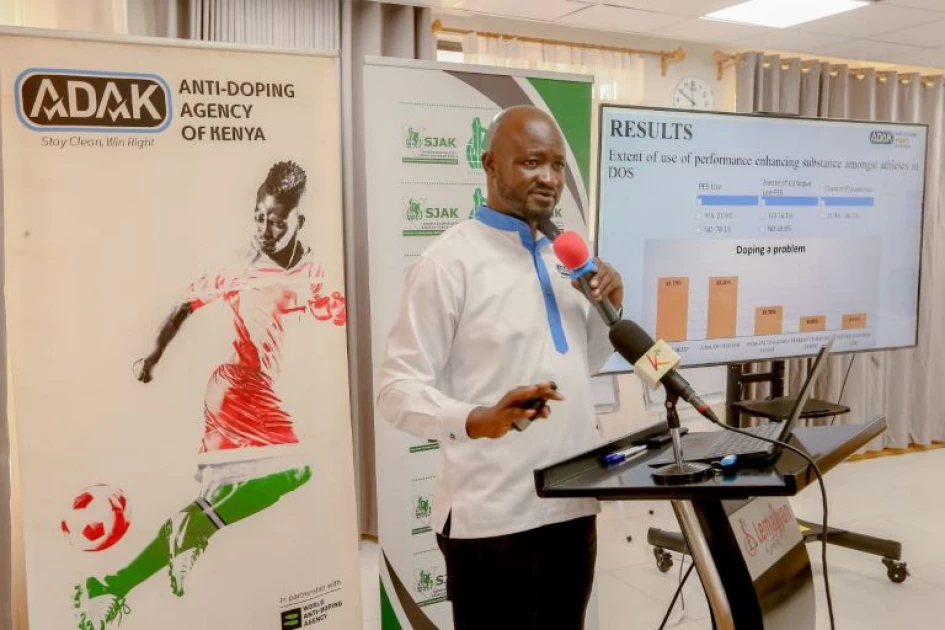
ADAK Head of Anti-Doping Education and Research Dr. Martin Sisa addressing journalists during a training held in Naivasha, July 5, 2024. Photo by Oliver Ananda / SportPicha

Audio By Vocalize
FKF, in partnership with ADAK, has held the first in a series of anti-doping workshops targeting clubs in the Kenya Premier League, FKF Women’s Premier League and FKF National Super League.
Club officials from Nairobi and its environs were taken through the doping control process, the World Anti-Doping Agency Prohibited List and Anti-Doping Rule Violations.
ADAK Instructor Charles Omondi says direct engagement with clubs is important in ensuring players and officials receive accurate information and understand what is expected of them under anti-doping rules.
“Players and leaders come to understand and know what anti-doping expects of them.”
Omondi further says the education will help protect the integrity of football by ensuring players compete fairly.
“Many have acknowledged receiving good guidance and explanations that will assist them and enable them to protect the game of football by ensuring players compete fairly.”
He says the message is about achieving genuine victories through clean competition, in line with ADAK’s “Stay clean, win right” motto.
Gor Mahia Administratiion Manager Ronald Ngala says club administrators now have a responsibility to pass the knowledge gained from the workshop to their players.
“Before even the players are convened so that they can get it directly from the horse’s mouth, we are going to share more knowledge of what we have gathered today.”
Ngala also says the sessions have also helped clubs understand the role of anti-doping authorities in protecting players and the integrity of matches.
“We have realized that they are not enemies of football clubs, they're just trying to make sure the players have it right for both their health and also the outcome of our matches.”
At AFC Leopards, Head of Medical Department Dr Patrick Ngusale says anti-doping education is particularly important for players who may not understand the implications of substances they take.
“This is very important for our players, especially those who take substances without knowing their effect.”
Additionally, Ngusale says the message should extend beyond club administrators to the wider team structure.
“For us to have fair play and protect the players in terms of their health, it is very important for this information to cascade down to the players, the team managers and even the coaches.”
Ulinzi Starlets Secretary Binti Shamuri Makoti says the knowledge gained at the workshop will also be shared with players.
“I've learned a lot, at least I've gained knowledge on the dangers of doping and I'm looking forward to sharing it with players so that they can avoid some things too.”
The workshops are aimed at strengthening anti-doping awareness and promoting clean sport across Kenyan football, with the programme expected to continue reaching more clubs and football stakeholders.
The focus now shifts to ensuring the knowledge gained by club officials reaches players, coaches, medical teams and managers, helping strengthen awareness of anti-doping responsibilities across the game.
Join the Discussion
Share your perspective with the Citizen Digital community.
No comments yet
This discussion is waiting for your voice. Be the first to share your thoughts!