
‘Kenya is now Africa’s largest milk producer,’ Ruto says as he highlights agriculture gains
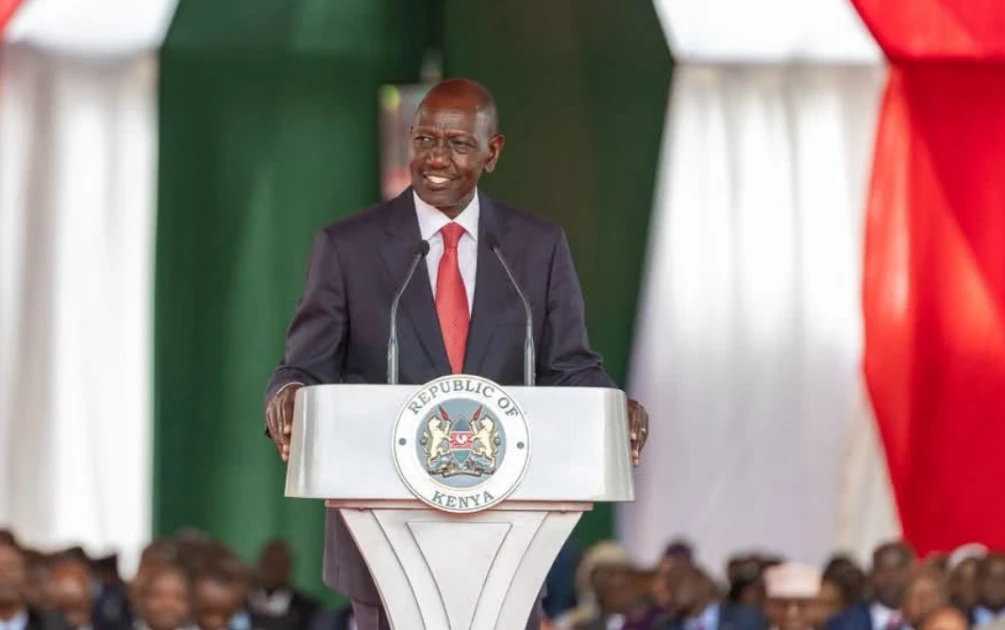
President William Ruto addresses the Agriculture and Food Security Transformation Summit at Jamhuri ASK Showground, Nairobi on October 8, 2026. Photo/PCS

Audio By Vocalize
Ruto attributed the growth to reforms in the agriculture sector, including lower fertiliser prices, which he said had made it easier for farmers to produce fodder and silage.
“Farmers must put money in their pockets. Milk farmers today, you were getting Ksh.35 four years ago, today it is Ksh.50 going to Ksh.60 and we will move it. It's not just the price going up, we are producing more milk today," Ruto stated.
"We've moved production from about 4.5 billion litres to 5.6 billion litres last year. In fact, Kenya has overtaken the other two countries, we are now the largest milk producer in Africa. We want to improve it further."
Speaking at the Agriculture and Food Security Transformation Summit at the Jamhuri Park ASK Showground in Nairobi on Thursday, the President said the increase in dairy production was part of wider gains recorded in agriculture over the past four years.
Ruto said the Government had subsidised 38 million bags of fertiliser since 2022, reducing the price from Ksh.7,500 to Ksh.2,000 and eliminating middlemen he accused of inflating the cost.
“It is contributed by fertiliser. Silage requires fertiliser so when you reduce the cost of fertiliser, you make it easier for farmers to do silage,” he said.
The President said milk production per cow had also increased from 2.5 kilogrammes to more than 5.6 kilogrammes a day, which he linked to improved access to farm inputs and better productivity.
He said maize production had risen from 34.3 million bags in 2022 to about 71 million bags in 2025, while cotton yields increased from 177 kilogrammes to 378 kilogrammes an acre.
Rice production also increased from 192,299 tonnes to more than 300,000 tonnes, according to the President.
“Behind these results is a simple sum,” he said. “On the same acre, with the same labour and the same diesel, more bags mean lower cost for every bag. That is how we lower the price of food without lowering the farmer’s income.”
On the dairy sector, Ruto said the Government would pay Ksh.8 billion owed by New KCC to enable the company to serve farmers more effectively.
He also announced that the Government would clear the remaining Ksh.2.8 billion coffee debt and Ksh.1.8 billion sugar debt through the next Supplementary Budget.
The President said reforms in the coffee sector had pushed the average cherry price from Ksh.78.99 to Ksh.114.17 per kilogramme, above the guaranteed minimum return of Ksh.100.
In the sugar sector, he said factory workers and sugarcane farmers were being paid on time, with farmers also benefiting from bonuses.
Ruto said nine million farmers had been mapped and registered on a digital platform, giving the Government better data for planning and delivery of agricultural services.
He added that the Agricultural Finance Corporation had disbursed Ksh.19.9 billion to more than 218,000 beneficiaries over the past four years.
The President, however, said Kenya continued to face a major food security challenge, with the food import bill rising two-and-a-half times to about $3 billion annually, largely due to imports of edible oil, wheat and rice.
“A country that imports its food imports inflation. Every distant drought, every broken supply chain and every spike in global prices finds its way into every Kenyan home,” he said.
Ruto said the Government would also focus on expanding irrigation, noting that the area under irrigation had increased from 664,000 acres to 778,636 acres over the past four years.
He said the Government planned to develop mega, medium and micro dams through the National Infrastructure Fund, with the goal of expanding the area under irrigation to 2.5 million acres.
The summit brought together more than 10,000 farmers, agribusiness people, agronomists, scientists, researchers and innovators to assess progress in the agriculture sector and discuss ways of improving food security.
Join the Discussion
Share your perspective with the Citizen Digital community.
No comments yet
This discussion is waiting for your voice. Be the first to share your thoughts!