
Kenya ideal for Ebola quarantine facility due to proximity to DRC - US official
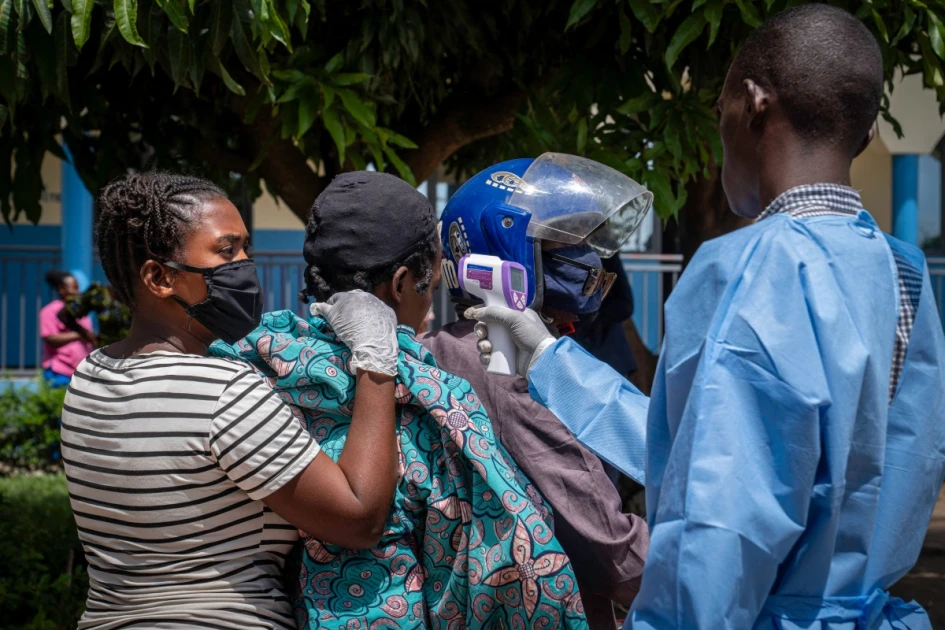
A health worker (R) measures the temperature of a patient (2nd L) suspected of having Ebola as she is transported by motorcycle taxi to Rwampara Hospital in Ituri, in the eastern Democratic Republic of the Congo, on May 26, 2026. On May 15, the DRC declared an epidemic caused by the Bundibugyo virus. Photo by GLODY MURHABAZI / AFP

Audio By Vocalize
Speaking at a White House briefing on Tuesday, Dr. Oz said that Kenya is strategically positioned to house its citizens and will allow for swift medical attention to the patients.
"As a doctor, I want to take the patient to the Operating Room next to where they are sick, not to the building next to them or two blocks away because that time is precious," he said.
"There are many places we can send folks, but sending them across the world, especially when we are not sure about what's going on with them, is not the wisest move."
The DRC, on May 15, reported another outbreak of the deadly virus in conflict-hit Ituri province in the northeastern region, which has claimed 48 lives out of 321 confirmed cases. Nine other cases and one fatality have been reported in neighbouring Uganda.
President William Ruto has allowed the U.S. to set up a quarantine centre at the Laikipia Air Base in Nanyuki to house its affected citizens.
Dr. Oz added that the Kenyan and the U.S. governments are holding talks to address the High Court's decision to freeze the facility's construction.
"The State Department is confident that they will work something out with Kenya. There has already been a fair amount of communication around this issue," he said.
The Kenyan High Court extended the freeze order on Tuesday, directing the government to provide the full terms of any agreement, memorandum, arrangement, or negotiations concerning the proposed facility.
The court also ordered the disclosure of any public health, environmental, biosafety, or security assessments undertaken in relation to the project, as well as any approvals obtained from Parliament, relevant regulatory agencies, or county governments.
Meanwhile, the Ministry of Health (MoH) has marked 25 counties as either ‘very high risk’ or ‘high risk’ as efforts to heighten preparedness are underway.
Counties under the 'very high risk' category include Nairobi, Mombasa, Uasin Gishu, Busia, Kisumu, Bungoma, Trans Nzoia, Siaya, West Pokot, Turkana, Homa Bay and Migori, most of them being counties at the country’s borders.
Those under the 'high risk' category are Vihiga, Kakamega, Nakuru, Kericho, Nandi, Kiambu, Machakos, Kilifi, Makueni, Taita Taveta, Isiolo, Elgeyo Marakwet and Garissa.
The move has, however, been met with uproar from Kenyans as protests erupted in Nanyuki on Monday, demanding the relocation of the facility.
Others have argued that Kenya lacks enough capacity to combat a high-risk virus and opening its borders to Ebola victims poses a threat to national health security.
President Ruto has maintained that he approved the construction because he has a loyal partnership with the Western powerhouse.
Join the Discussion
Share your perspective with the Citizen Digital community.
No comments yet
This discussion is waiting for your voice. Be the first to share your thoughts!