
Kenya-France military pact sparks sovereignty concerns over troop immunity
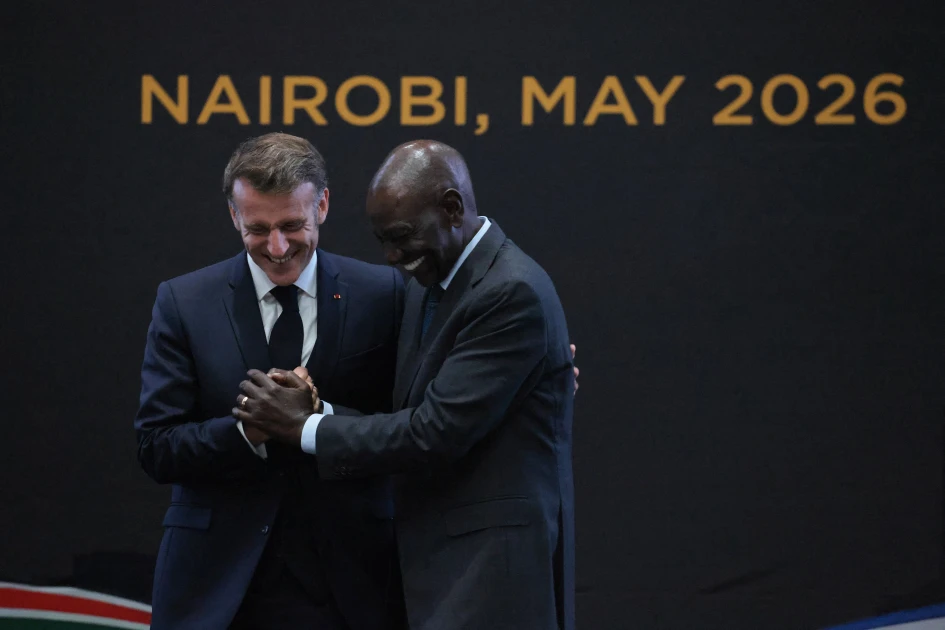
France's President Emmanuel Macron (L) shakes hands with Kenya's President William Ruto (R) during the signing of bilateral agreements at State House ahead of the Africa Forward Summit on May 10, 2026. Photo by LUDOVIC MARIN / AFP

Audio By Vocalize
Outspoken lawyer Dr.
Miguna Miguna has criticised Kenya’s newly ratified Defence Cooperation
Agreement with France, warning that the deal undermines national sovereignty
and risks repeating past failures linked to foreign military presence in the
country.
Kenya ratified the
agreement on April 8, 2026, granting French soldiers legal immunity from Kenyan
prosecution. The pact had earlier been signed on October 29, 2025, by Defence
Cabinet Secretary Soipan Tuya and French Ambassador Arnaud Suquet. The agreement
adds French troops to an existing foreign military presence in Kenya that
already includes British and American forces.
The development
comes at a time when several Sahel nations, including Mali, Burkina Faso and
Niger, have expelled French military forces over sovereignty concerns and
opposition to foreign military influence.
According to Dr.
Miguna, the agreement weakens the constitutional principles of equality before
the law and national dignity.
“The Constitution
of Kenya 2010 emphasizes the sovereignty of the people, equality before the
law, and national dignity,” he said. “Yet granting extensive immunities to
foreign troops creates the appearance that Kenyan lives are subordinate to
strategic alliances.”
Civil society
groups have also raised concerns over the arrangement, arguing that Kenya risks
repeating what they describe as longstanding accountability failures under its
defence agreements with the United Kingdom.
Under the France
agreement, French personnel retain primary jurisdiction over crimes committed
while on duty. In cases involving serious offences, French soldiers may be
tried in French courts and serve sentences in France.
The arrangement
mirrors protections granted to the British Army Training Unit Kenya (BATUK),
which has operated in Nanyuki since the first Kenya-UK defence agreement signed
in June 1964.
Over the years,
BATUK has faced allegations involving civilian deaths, sexual assault and
injuries caused by unexploded ordnance allegedly left behind during military
exercises.
The case of Agnes
Wanjiru, a 21-year-old woman whose body was discovered in a septic tank in
Nanyuki in 2012, remains one of the most prominent incidents associated with
the British military presence.
Despite an inquest
finding that British soldiers were responsible and reports of a suspect being
arrested in the United Kingdom, the matter remains unresolved.
Dr. Miguna argued
that the Wanjiru case exposed structural weaknesses in Kenya’s defence
agreements with foreign powers.
“The state had
prioritised geopolitical partnerships over addressing unresolved accountability
gaps,” he said, adding that extending similar protections to French soldiers
“signals continuity, not reform.”
The criticism also
comes days after French President Emmanuel Macron hosted the Africa Forward
Summit in Nairobi on May 11 and 12, 2026, where France announced 23 billion Euros
in investments across energy, agriculture and digital sectors.
Macron described
the initiative as a “partnership of equals” intended to reset relations between
France and African countries.
However, the
summit attracted criticism from some Kenyans and pan-Africanists who argued
that the investment promises masked deeper geopolitical interests and amounted
to a repackaging of neocolonial influence.
Observers cited
the timing of the summit alongside the ratification of the military pact as
evidence of expanding French strategic interests in Kenya.
Beyond concerns
over immunity and sovereignty, Dr. Miguna warned that Kenya’s growing military
alignment with Western countries and Israel could expose the country to broader
geopolitical and security risks.
“The government
appears excessively aligned with one geopolitical axis,” he said, noting that
Kenya could face internal political backlash, terrorism threats, oil price
shocks, disruption of Red Sea trade routes and diplomatic strain with
Muslim-majority states.
He maintained that
the issue was not Kenya engaging foreign allies, but the need to preserve
strategic independence. “The real challenge is maintaining strategic autonomy,”
he said.
Dr. Miguna further
argued that defence agreements involving foreign troops should be transparent,
subject to parliamentary oversight and aligned strictly with Kenya’s national
interests rather than becoming permanent dependencies.
“As French
soldiers prepare to arrive under the new agreement, the case of Agnes Wanjiru
and six decades of unresolved BATUK abuses remain the most concrete indication
of what that failure costs,” he said.
Join the Discussion
Share your perspective with the Citizen Digital community.
No comments yet
This discussion is waiting for your voice. Be the first to share your thoughts!