
Kenya can unlock Ksh.194B and 80,000 jobs across three sectors - World Bank
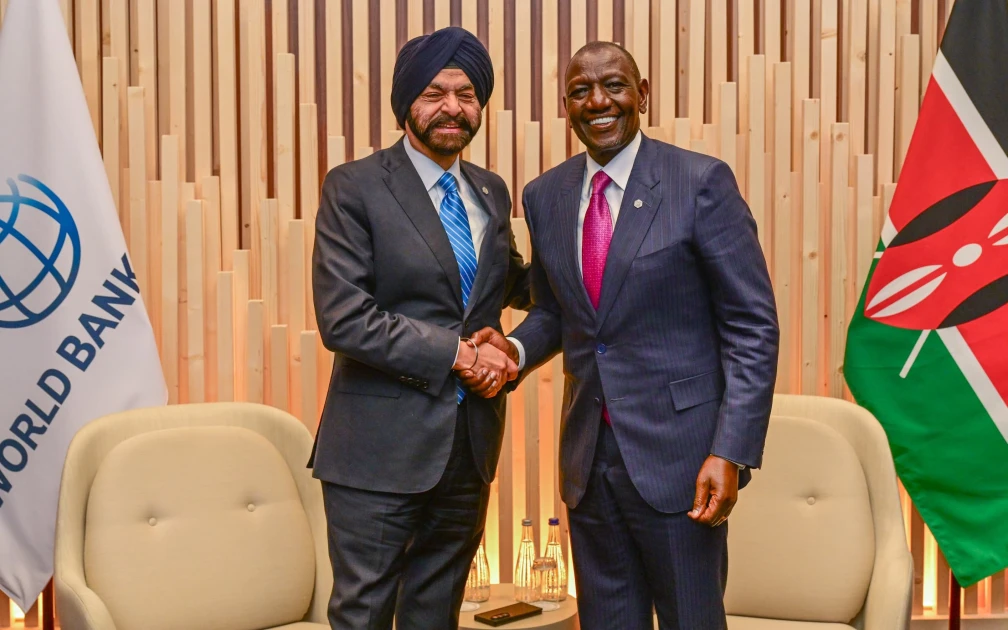
World Bank Group President Ajay Banga with President William Ruto on the sidelines of the G7 Summit in Évian, France, June 16, 2026.

Audio By Vocalize
This is according to the World Bank's Private Sector Diagnostic report, which focused on three sectors - avocado and mango, medical consumables and coastal tourism - as areas with untapped potential that could position Kenya for greater competitiveness in global markets if existing challenges are addressed.
"The selected sectors align with the tourism, agriculture, and manufacturing priorities under Vision 2030, and the recommendations illustrate how sector-specific actions can help accelerate progress while deeper structural reforms advance," the report read in part.
Avocado and mango value chains
According to the report, Kenya can create jobs and attract investment by moving beyond exporting raw fruit and expanding higher-value production and processing.
For avocado, the report recommended increasing fresh avocado exports to Europe by taking advantage of Kenya's counterseasonal harvesting periods, competitive production costs and established export markets.
The report also highlighted that only about 10 per cent of mango production is currently processed and just 3 per cent exported. To address this, the World Bank recommended that private investors establish and expand facilities producing mango pulp for Kenyan and regional juice manufacturers.
To build regional markets, mango processors can compete by supplying African markets with shorter delivery times, flexible order sizes and products suited to local tastes.
Private-sector exporters and processors were also advised to invest in better farm-level quality systems, pest management, traceability and packhouse operations to meet international phytosanitary standards.
The report further recommended measures to improve investors' cash flow, including deferring import VAT on processing equipment.
According to the report, the sector could unlock up to Ksh.21.6 billion (US$167 million) in incremental investment and 36,000 additional and better-paid jobs over 10 years.
Coastal tourism
The report highlighted Kenya's coastal tourism as having significant untapped private investment potential, supported by established visitor flows and the region's natural and cultural attractions.
However, Mombasa receives only about 134,000 European arrivals compared with about two million from the same markets at comparable long-haul beach destinations, pointing to a significant untapped market.
The disparity is also reflected in regional competition. In the past six years, international arrivals through Mombasa have rebounded strongly following the COVID-19 pandemic, but Kenya's coast continues to trail Zanzibar as a major Indian Ocean tourism destination.
In 2024, Mombasa recorded around 100,000 international arrivals compared with more than 600,000 recorded by Zanzibar.
The report noted that coastal bed-nights in 2024 had exceeded pre-pandemic levels by about 25 per cent, supported by the return of package tourism, new European markets, growing domestic demand and increased MICE travel.
Despite the recovery in visitor numbers, investment in coastal accommodation has not increased at the same pace. Development remains concentrated in Nairobi and safari circuits, while coastal hotel development is limited and much of the existing accommodation stock is outdated.
The World Bank said private investment could help expand coastal tourism by increasing accommodation and developing new experiences while linking beach tourism with Kenya's established safari and business-travel markets.
It recommended investment in the construction and modernisation of hotels to meet growing demand, as well as the development of marine, cultural, golf and wellness tourism.
Private operators could also develop integrated bush-and-beach packages targeting European visitors, domestic tourists, MICE travellers and high-spending safari tourists.
The report further identified improved international air connectivity as important in expanding the market, with more direct flights potentially making Kenya's coast more accessible to overseas visitors.
To encourage investment, the World Bank recommended establishing clear coastal tourism zones, improving spatial planning, digitising land registries and strengthening the management of beach and marine assets.
These measures, the report said, could provide greater certainty to investors while improving the quality and competitiveness of Kenya's coastal tourism product.
The sector could unlock between Ksh.49 billion (US$380 million) and Ksh.72 billion (US$560 million) in private investment and support up to 14,000 additional and better-paid job equivalents.
Medical consumables manufacturing
The third area identified by the World Bank is medical consumables manufacturing, where Kenya could use its skilled workforce, logistics infrastructure and access to regional markets to develop a manufacturing hub.
The sector includes high-volume products such as gloves, syringes, gauze and intravenous kits, which are widely used by health facilities and are largely imported across the region.
Kenya's domestic medical consumables market was valued at about Ksh.55 billion (US$430 million) in 2025 and is projected to reach Ksh.70 billion (US$540 million) by 2030.
The World Bank said manufacturers could expand beyond the domestic market by supplying countries including Uganda, Tanzania, Ethiopia, Somalia and South Sudan, while also targeting wider African and global markets.
However, the report identified regulatory complexity and uncertainty as major barriers to investment, noting that overlapping requirements and slow approvals increase the cost of establishing and expanding manufacturing operations.
The World Bank recommended simplifying and streamlining regulatory processes, including adopting a tiered system that would allow Kenya to rely on approvals from recognised reference regulatory authorities.
The report also called for more predictable government procurement to give manufacturers greater certainty about demand.
It recommended consolidating public-sector demand, improving demand forecasting and ensuring timely payments for supplies delivered to government.
According to the report, government procurement could serve as an anchor market for new manufacturers before they expand into private healthcare, donor-funded programmes and export markets.
The report also urged manufacturers to incorporate environmental standards and circular-economy principles from the outset, particularly in managing waste, chemicals, water and energy use.
Medical consumables manufacturing has the largest investment potential among the three sectors, with up to Ksh.101 billion (US$780 million) in incremental private investment and 33,200 additional and better-paid direct jobs projected over 10 years.
Join the Discussion
Share your perspective with the Citizen Digital community.
No comments yet
This discussion is waiting for your voice. Be the first to share your thoughts!