
Kenya calls for stronger policies and community action to boost biodiversity conservation

Audio By Vocalize
Conservation stakeholders in Kenya have called for stronger policy coordination, increased funding, and active community involvement to scale up biodiversity conservation, amid growing environmental and climate challenges.
Kenya, classified by the World Bank as a lower-middle-income
country with a population exceeding 55 million, relies heavily on nature-based
sectors. Forestry, agriculture, and fisheries contribute around 33% of the
country’s GDP and provide employment to over 70% of the rural population,
underscoring the need for intentional conservation measures.
Despite Kenya being recognised globally for having some of
the best conservation policies, weak enforcement and limited financial
resources continue to hinder progress on biodiversity protection and coastal
and ocean resilience initiatives.
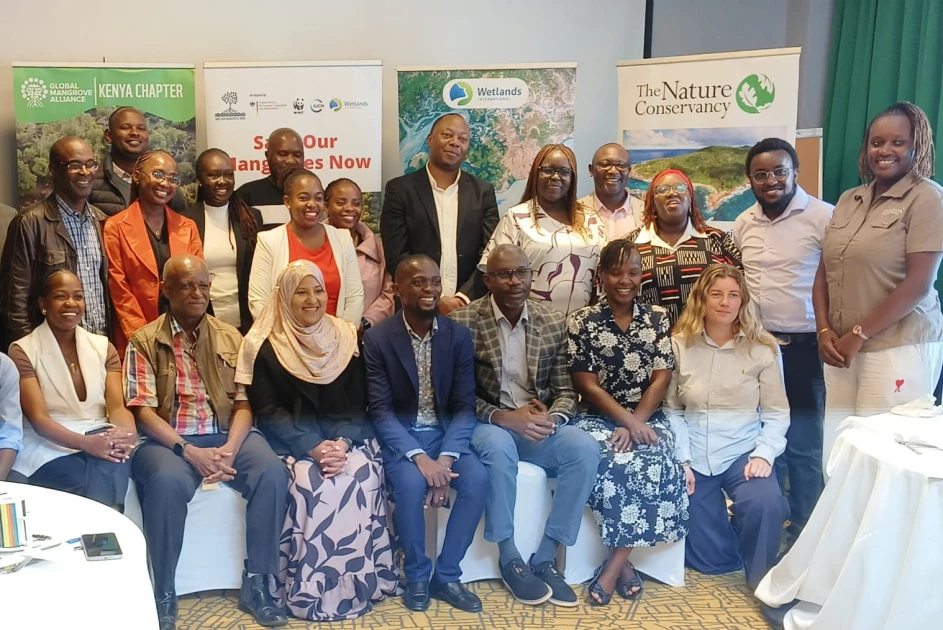
At a recent donor roundtable in Nairobi on bankable
biodiversity engagements, stakeholders emphasised the urgency of quick,
well-financed responses to environmental and climate challenges.
“The rate of degradation and deforestation far outpaces our responses. Kenya’s economy is nature-based, including fisheries, wildlife, and tourism. Conserving nature is therefore securing our economy, as many communities’ livelihoods depend on it. Vigilance and timely action are key,” said Dr Elinasi Monga, Regional Head at the International Union for Conservation of Nature (IUCN).
The GMA Kenya chapter focuses on capacity building, science and monitoring, and innovative finance to support mangrove conservation while underscoring the urgent need to close financing gaps through catalytic partnerships, blended finance approaches, innovative mechanisms, and community-led models
Community engagement was also highlighted as a critical
component of effective conservation. Louisa Chinyavu, Regional Programme
Manager at Wetlands International Eastern Africa, stressed that “without the
community, there is no conservation. Successful initiatives are grounded in
local knowledge, stewardship, and equitable benefit-sharing. Investment
opportunities in conservation and restoration must align with community
priorities and inclusive governance.”
Despite these challenges, Kenya is positioning itself as a
continental leader in bioeconomy and biodiversity conservation by 2030.
Initiatives such as the Advancing Bioeconomy Development in Kenya (ABDK)
project and BIODEV2030 aim to integrate biodiversity into key economic sectors,
in line with Kenya’s Vision 2030 development goals.
Speaking to journalists, Mayiani Saino, Deputy Director for Multilateral Environmental Agreements at Kenya’s State Department for Environment, highlighted the country’s progress: “Kenya is performing very well in biodiversity conservation."
"In 2024, we submitted our 27 conservation
targets. For our National Biodiversity Strategies and Action Plans (NBSAP), we
have completed the preliminary groundwork, including financing and monitoring
plans. We aim to consolidate these by June to ensure that our commitments and
roadmaps are achievable,” said Saino.
Kenya’s commitment comes as the world prepares for the 17th
Conference of Parties (COP 17) to the Convention on Biological Diversity (CBD),
scheduled for October 2026 in Yerevan, Armenia.
Join the Discussion
Share your perspective with the Citizen Digital community.
No comments yet
This discussion is waiting for your voice. Be the first to share your thoughts!