
Kenya calls for stronger global cooperation in fight against drugs


Audio By Vocalize
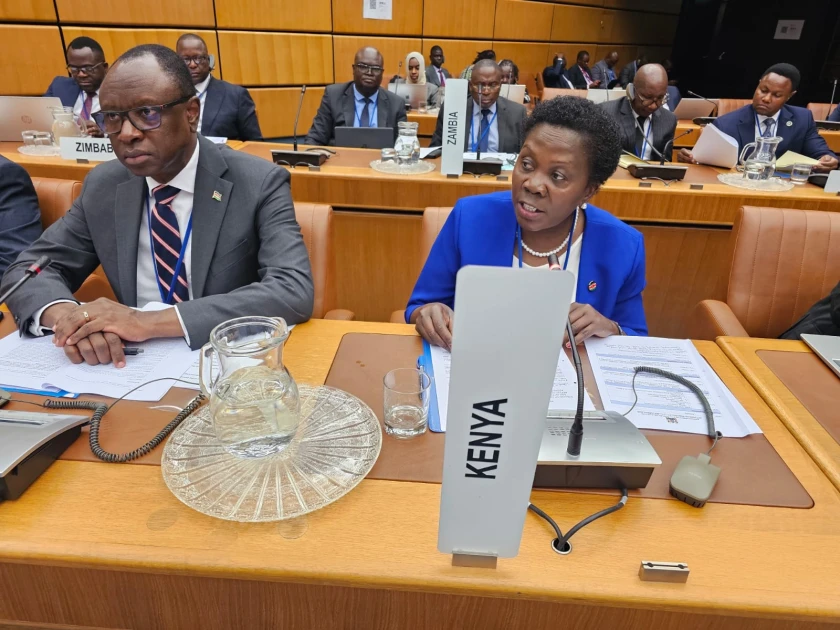
Speaking at the 33rd Meeting of Heads of National Law Enforcement Agencies (HONLEA) in Vienna, Kenya’s Ambassador and Permanent Representative to the United Nations in Vienna, Edwin Afande, said the fight against drugs was a shared responsibility among UN member states.
Afande, who spoke on behalf of the Africa Group, raised concern over disparities in access to controlled substances for medical and scientific purposes, as well as the growing threat posed by synthetic drugs.
He said drug trafficking was increasingly intertwined with other forms of organised crime, including corruption, illicit financial flows and terrorism, requiring greater regional and international cooperation.
Afande also called on the United Nations Office on Drugs and Crime (UNODC) to support African countries in strengthening their capacity to prevent, detect and respond to substandard and falsified medical products.
He urged the international community to address barriers to access to controlled substances, particularly those needed for pain management and palliative care.
Kenya’s national statement was delivered by Beverly Opwora, Principal Administrative Secretary in the Ministry of Interior and National Administration and head of the Kenyan delegation.
Opwora said Kenya had developed a legal and policy framework aligned with the 2019 Ministerial Declaration, including the National Policy for the Prevention, Management and Control of Alcohol, Drugs and Substance Abuse.
The policy takes a comprehensive approach that combines law enforcement, public health and care for people affected by substance abuse.
However, Opwora warned that the changing nature of the drug trade was placing new demands on law enforcement agencies.
She cited the growing variety of drugs, misuse of precursor chemicals and the shift from plant-based narcotics to synthetic substances that can be produced almost anywhere.
The increasing practice of combining different substances, which she described as becoming a “fashionable” trend, has further complicated efforts to identify and respond to drug-related harm.
Afande similarly described the “scourge of synthetic drugs” as a game changer that has exposed limitations in traditional approaches to combating narcotics.
Opwora called for a shift in how the international community responds to the drug problem, including greater investment in expertise, technology and data systems.
She urged countries to strengthen monitoring and communication platforms, invest in modern forensic capabilities to identify synthetic drugs and improve the collection and sharing of drug-related data.
She also stressed the need to strengthen health systems to respond to substance-use disorders and the health consequences of drug use, including overdoses.
Both Kenyan officials backed the principle of common and shared responsibility, saying efforts to combat drug abuse should combine enforcement with public health and social interventions.
Afande said African countries also needed sustained support from developed nations, including financing, technology transfer and capacity building tailored to their specific needs.
Opwora expressed hope that the commitments made by the international community would translate into measurable progress by the time they are reviewed in 2029, with greater protection for communities affected by the global drug problem.
Join the Discussion
Share your perspective with the Citizen Digital community.
No comments yet
This discussion is waiting for your voice. Be the first to share your thoughts!