
Wanjigi calls for rejection of Finance Bill 2026, accuses Gov't of illegal borrowing
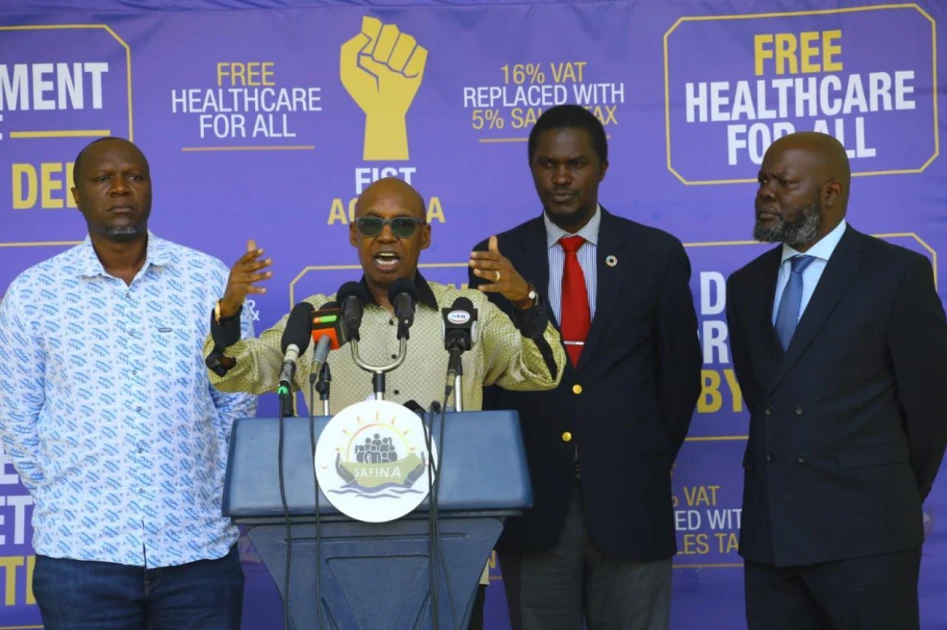
Safina Party leader Jimi Wanjigi, flanked by other party officials, addresses the press on June 1, 2026. PHOTO | COURTESY

Audio By Vocalize
Safina Party leader Jimi Wanjigi has urged Kenyans to reject the Finance Bill 2026, accusing the government of burdening citizens with excessive taxation and illegal borrowing while failing to deliver meaningful development.
Speaking during a
press briefing in Nairobi on Monday, Wanjigi criticized the 2026/27 Budget
Statement presented by Treasury Cabinet Secretary John Mbadi, saying it would only
serve to further increase the country's debt burden.
Wanjigi argued
that the Finance Bill seeks to raise an additional Ksh.120 billion through
taxation despite Kenya's growing debt obligations.
"The budget
is not about development; it is about servicing debt and I call on Kenyans to
reject it," he said.
The Safina Party
leader questioned the government's continued repayment of what he termed
"illegal debt," claiming some of the borrowing was undertaken outside
constitutional provisions and without proper Parliamentary oversight.
He referenced what
he described as a secret sovereign bonds account established under the
Consolidated Fund in 2014, alleging that it had been used as a conduit for
borrowing and repayment of debt without adequate scrutiny.
According to
Wanjigi, Kenya's public debt has now risen to approximately Ksh.13 trillion,
yet the country has little tangible infrastructure development to show for the
borrowing.
"Every budget
cycle is now designed around paying illegal creditors rather than improving the
lives of wananchi," he said.
Wanjigi also
expressed concern over the rapid growth of domestic debt, warning that the
government's increasing reliance on Treasury Bills and Treasury Bonds could
crowd out private sector investment and undermine long-term economic
sustainability.
He further
challenged the legitimacy of portions of Kenya's public debt, arguing that
borrowing undertaken without Parliamentary approval or in violation of Kenyan
law should not be honoured.
In a strongly
worded warning directed at potential investors, Wanjigi stated that domestic
debt issued under such circumstances would be considered "illegal"
and "odious."
The opposition
politician additionally criticized plans to spend an estimated Ksh.2.6 trillion
annually on debt servicing, saying the expenditure was competing with essential
sectors such as healthcare, education, agriculture and infrastructure.
"The solution
to Kenya's economic challenges is not more taxes. Kenyans are already
overtaxed," Wanjigi said, adding that further taxation would weaken
businesses, destroy jobs and reduce citizens' purchasing power.
As an alternative,
Wanjigi called for what he termed economic sovereignty, urging the country to
end its dependence on borrowing and debt repayment.
He outlined a
Safina Party agenda that includes free healthcare, free primary and secondary
education, replacement of the 16 per cent VAT with a five per cent sales tax,
and an end to domestic borrowing by the government.
"The Safina
vision is simple: no tax burden; no illegal borrowing; no debt slavery,"
he said.
Join the Discussion
Share your perspective with the Citizen Digital community.
No comments yet
This discussion is waiting for your voice. Be the first to share your thoughts!