
International Women’s Day: Eight actions for a more equal world
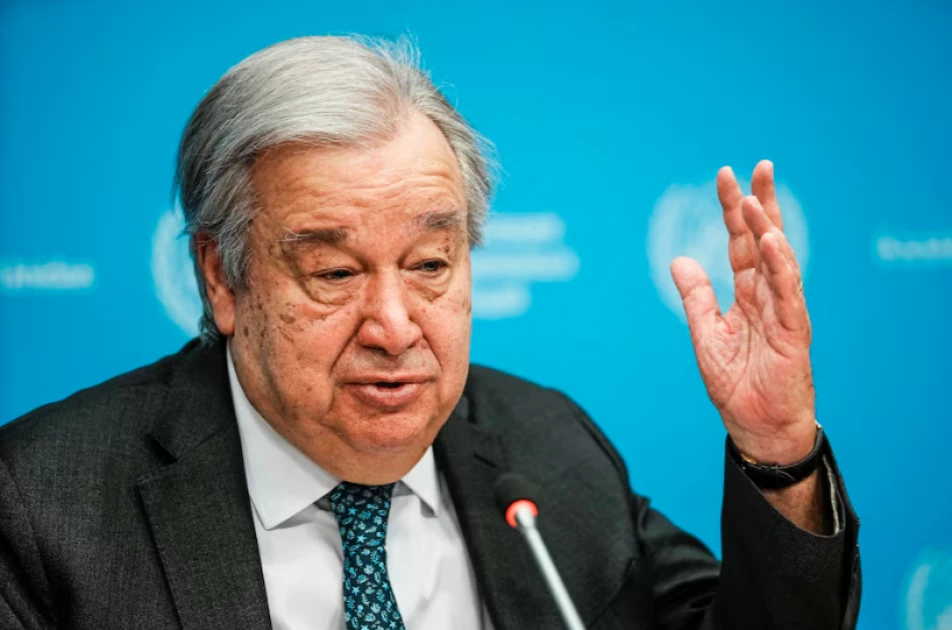
United Nations Secretary-General Antonio Guterres speaks during a press conference outlining his priorities for 2026 at U.N. headquarters in New York City, U.S., January 29, 2026. REUTERS/Eduardo Munoz

Audio By Vocalize
Over nearly a decade leading the United Nations, I have seen our world repeatedly tested by climate shocks, deepening poverty, violent conflict and shrinking civic space.
But I have also watched many solutions take root, and they shared one common denominator: women.
As the world marks International Women’s Day, it is time to recognize that gender inequality is the greatest human rights challenge of our time – and advancing equality is one of the strongest drivers of sustainable development and peace.
Here are eight actions drawn from my own experience, and inspired by the work of the UN system and civil society movements across the globe, to advance women’s rights and deliver results.
1. Fix the Power Gap
Gender equality is a question of power. But male-dominated institutions still shape our world. A rising tide of authoritarianism is deepening these inequalities, rolling back hard-won protections – from fair work practices to reproductive rights – and entrenching racial and gender biases that hold women back. Gender equality lifts societies. When power is shared, freedom expands.
2. Make Parity a Priority
Women are grossly under-represented in governments and boardrooms across the globe. At the United Nations, we set out to make gender parity a priority, starting with senior leadership.
We did this by widening the search for qualified candidates, not by lowering standards. The UN is stronger for it, with an enhanced workplace culture and more inclusive decision-making. The lesson is clear. When institutions choose equality, results follow.
3. Bet on the Highest-Return Investment
Investment in women delivers outsized returns. Every dollar spent on girls’ education yields nearly triple the gains, while maternal health and family planning generate more than eightfold benefits.
Policies that support families, such as child care and elder care, strengthen communities and unlock even more growth. Taken together, such steps lay the foundation for closing gender gaps, which can boost national income by as much as 20%.
4. Make Room at the Peace Table
Peace agreements are more durable when women take part in negotiating and implementing them. Yet in too many conflicts – including Gaza, Ukraine, and Sudan – women have been largely shut out of the room, even though they carry the heaviest burdens of war.
At a time of rising instability, inclusion is not symbolic – it is a shortcut to stabilize our fractured world.
5. End Legal Discrimination
Worldwide, women hold only 64 per cent of the legal rights enjoyed by men. In too many places, they cannot own property, work freely, or seek a divorce.
Even where protections exist, women face higher barriers to access legal aid or the courts. Every country must commit to dismantling discriminatory laws, and to enforcing rights in practice.
6. Zero Tolerance for Gender-Based Violence – and Zero Excuses
Violence against women is a global emergency, rooted in inequality and sustained by silence. Every woman and girl has the right to live free from fear.
Yet gender-based violence – including sexual exploitation and abuse – remains a horrific breach of trust and humanity. We must confront it everywhere, with zero tolerance, full accountability, and unwavering support for survivors.
7. Code Out Bias
With women comprising just one in four tech workers, bias is being hardwired into the systems that shape daily lives. Meanwhile, misogyny is exploding online. Technology companies and governments must act together to build safe, inclusive digital spaces – and the world must do more to remove barriers for girls in science and technology.
8. Put Gender in the Climate Plan
Climate change is sexist. Women often eat last in food crises and endure greater danger in emergencies. Girls face higher risks of child marriage when livelihoods collapse.
But women are also leading climate solutions – advancing green legislation, powering global movements, and driving change on the ground.
A liveable planet demands gender-responsive climate policies, including equal access to green jobs, better protection in emergencies, and full participation in environmental decision-making.
Across the globe, I have seen these eight solutions in action – in war zones and recovery efforts, parliaments and classrooms, organizations and communities.
If leaders get serious about gender equality and commit to them now, we will change the world – for women and girls, and for us all.
Join the Discussion
Share your perspective with the Citizen Digital community.
No comments yet
This discussion is waiting for your voice. Be the first to share your thoughts!