
Inside Nyashinski’s Showman experience
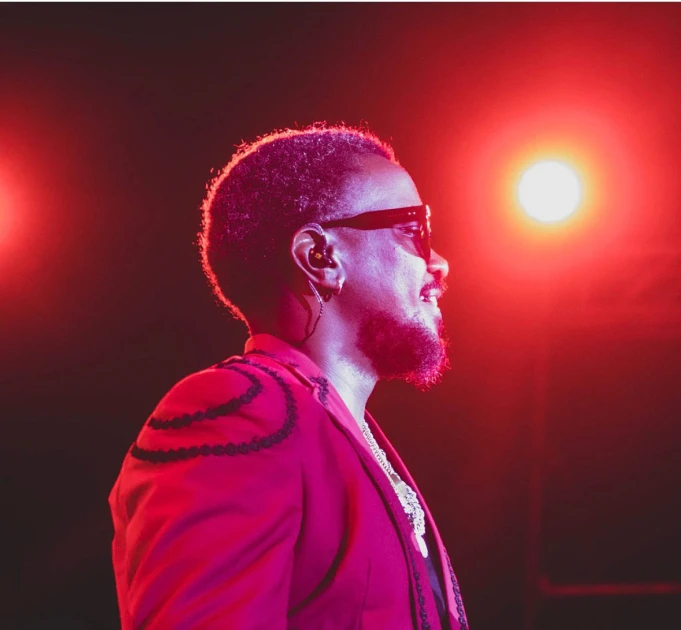
Nyashinski performs at The Showman Residency show.

Audio By Vocalize
In Kenya, let’s be honest, we are used to a pattern. The same complaints get recycled after every event: poor security, slow service, bad sound, and disorganised lineups.
The list is long… and tired. But The Showman Residency by Nyashinski? This wasn’t just another event. It broke the pattern. It disrupted expectations. It refused to be ordinary.
Running from April 4th to April 12th across seven performances, The Showman Residency didn’t feel like a concert. It felt like a statement. A rebellion. A carefully orchestrated experience that demanded your attention from the very first second.
And what a beginning it was.
The show opened with spoken word; not the soft, polite kind where the poet uses a smooth voice, but the kind that grabs you by the throat and forces you to listen. One line lingered, almost haunting:
“F**k the algorithm for making us stagnate, thinking you’re waiting your turn kumbe hawaja indicate venye hii game wamei-manipulate.” Snaps fingers—or should I say, clock it.
That line didn’t just land—it pierced. It set the tone for everything that followed. This was not just entertainment; it was confrontation.
The performance unfolded in seven episodes, each one blending seamlessly into the next like chapters of a living, breathing story. There was intention in every transition, every costume, every note.
To understand just how intentional this was, I spoke to Fakii Liwali, a creative executive producer deeply embedded in the music and entertainment space and also Nyashinski’s manager. According to him, this vision didn’t just appear overnight.
After Shin City in 2022, the question became: how do we elevate this?
Nyashinski, he says, was constantly experimenting—bringing ideas to the team, changing them, then pushing them further. “He would come in with something, then go back and say, ‘let’s flip this, let’s try something different.’”
Eventually, those scattered ideas found a home in a book.
If you watched the show, you saw it. At one point, Nyashinski carries a book on stage. That wasn’t just a prop. That book, referred to as “the bible” by the team, is where it all began—the blueprint of The Showman. Every scene, every emotion, every twist was born from those pages.
The inspiration? A fusion of worlds. Think Michael Jackson’s This Is It meets The Greatest Showman, but grounded in Nyashinski’s own music and identity. Add to that characters like the Lover Boy and the Dream Girl, and suddenly, this isn’t just a concert—it’s theatre. It’s cinema. It’s storytelling.
And the cast? A full universe.
A choir. Acrobats. Actors. Energy moving in all directions, yet somehow perfectly aligned. The script, written by Mugambi and Muthoni Drummer Queen, added depth, giving the show a narrative spine that most concerts lack.
And then, in the middle of all the spectacle, came a moment that slowed everything down—a tribute that felt deeply personal. A quiet but powerful honouring of legends we have lost and those who are still with us, who have shaped the sound and soul of Kenya.
From the timeless presence of Wahu Kagwi and Nameless, to the cultural weight carried by Leonard Mambo Mbotela and voices like Mary Atieno, and even the undeniable legacy of groups like Sauti Sol and icons like Raila Odinga (Baba).
You could feel it in the air—nostalgia, gratitude, even a little grief. For a moment, it wasn’t just about the show anymore; it was about history, about honoring the shoulders this generation stands on. And in that moment, the audience wasn’t just watching… we were remembering.
But here’s the part that makes this even more insane: the show is self-sponsored.
Yes. You read that right.
Fakii puts it plainly:
“It’s a hard thing to explain to people—even the audience—because we have a long-term vision for it. This, to us, was more than a proof of concept.”
Money, he insists, was not the focus. Not yet.
“We just wanted to show people this is what we’ve been talking about.”
So far, the production has cost up to 40 million shillings. And still, one of the biggest challenges remains… understanding.
“The painful thing,” Fakii says, “is getting people to understand what we are doing.”
And maybe he’s right. Because in a culture where people constantly ask for complimentary tickets but will spend thousands on food, drinks, and another location after the event without blinking, it becomes harder to build something sustainable.
“The culture of complimentary tickets is draining,” he adds. “If people respected this, sponsors would be a secondary thing.”
Still, partnerships with brands like Homeboyz, Carnivore, Starts, and G25 helped bring the vision to life.
And at the centre of it all is Nyashinski himself, who, despite the grandeur of The Showman, remains grounded.
“This is a life-changing experience, I promise you,” he says.
But perhaps more telling is this:
“I’m humbled to be part of Showman. I know the show suggests that it’s all about me, but Showman is about everyone who makes it possible.”
And that’s what makes this whole thing hit different.
The bar has been raised—and there is no going back.
Join the Discussion
Share your perspective with the Citizen Digital community.
No comments yet
This discussion is waiting for your voice. Be the first to share your thoughts!