
Inside Mbadi’s Ksh.784.5B education budget amid capitation woes, school unrest

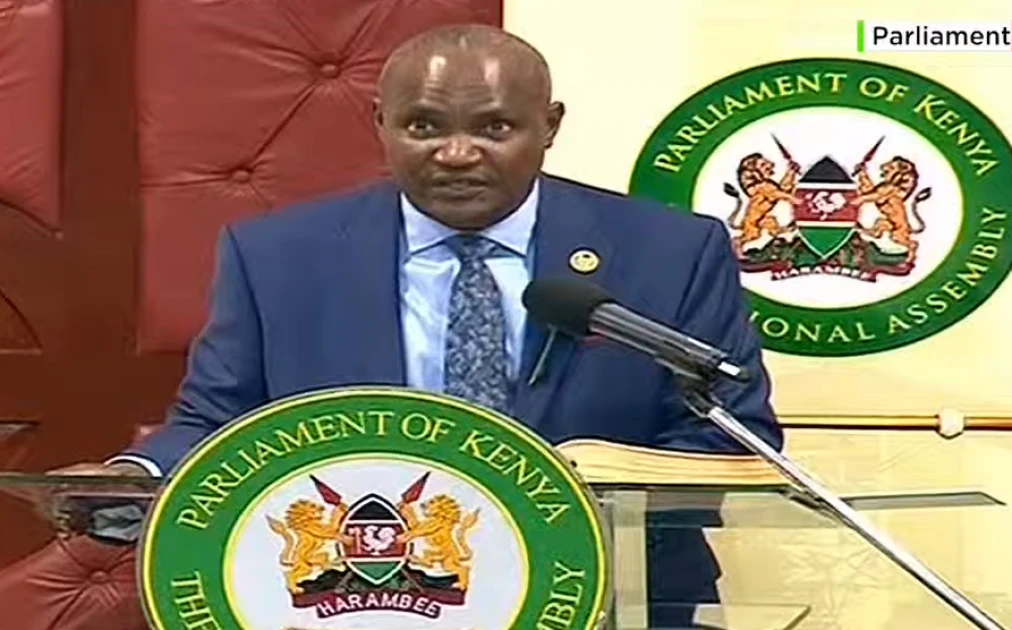
Treasury CS John Mbadi reads his 2026/2027 budget proposals in Parliament on June 11, 2026.

Audio By Vocalize
Education has emerged as the biggest winner in the 2026/2027
national budget after Treasury Cabinet Secretary John Mbadi proposed an
allocation of Ksh.784.5 billion, representing 26.4 per cent of the total
ministerial spending plan, in what the government says is evidence of its
commitment to addressing longstanding funding challenges in the sector.
The allocation, announced by
Mbadi while presenting the budget estimates in Parliament on Thursday afternoon,
comes at a time when schools across the country have been grappling with
delayed capitation, mounting operational costs and widespread unrest that has
affected more than 200 learning institutions.
The sector has been under intense
public scrutiny in recent months following complaints from headteachers and
principals over inadequate funding, delayed disbursement of capitation funds
and a growing strain on school operations.
The situation has been compounded by a wave of unrest in
schools, with Education Cabinet Secretary Julius Migos Ogamba recently
revealing that at least 204 schools had experienced disturbances, including
incidents of arson that destroyed dormitories and other facilities.
Against this backdrop, CS Mbadi
sought to dismiss claims that the government was reducing funding to education.
"Kenya's future depends on
developing strong human capital. And to this end, we will continue to
strengthen quality learning, training and research, promote equity and
inclusivity, scale up investment in education, fortify the system against
emerging technological and labour market shift, as well as fortify education to
industry linkages, thus ensuring skills match demand," said Mbadi.
The Treasury CS argued that
funding to education has significantly increased since the current
administration took office.
"A lot has been said about
defunding education, but in 2026/27 we're proposing Ksh.784.5 billion, which is
26.4 per cent of the ministerial budget. Compare that to the 2021/22 budget
before this administration came into office, when the budget for education was
Ksh.526 billion. That has now increased by 49 per cent," he told
Parliament.
The largest portion of the
allocation will go to the Teachers Service Commission (TSC), which has been
earmarked Ksh.424 billion for teachers' salaries and related expenses.
The allocation marks a substantial increase from the Ksh.290
billion allocated to the commission in the 2021/2022 budget.
Basic education has been
allocated Ksh.136.6 billion, up from Ksh.107 billion four years ago, while
higher education will receive Ksh.163.9 billion compared to Ksh.105 billion in
2022.
The government has also proposed
Ksh.58.5 billion for Technical and Vocational Education and Training (TVET)
institutions and Ksh.1.3 billion for science, innovation and research
programmes.
To support free basic education,
Mbadi proposed Ksh.7 billion for free primary education, Ksh.54.6 billion for
free day secondary education and Ksh.30.7 billion for junior secondary school
capitation.
The combined allocation for
secondary and junior secondary capitation stands at Ksh.85.3 billion,
significantly higher than the Ksh.62.4 billion allocated in 2022.
The Treasury CS also proposed
Ksh.9.9 billion for the administration of national examinations. He further
announced that teachers who participated in national examination marking would
receive outstanding payments before the close of the current financial year.
"I propose Ksh.9.9 billion for administering national
exams, and that is in addition to what we have just provided before the end of
this year to pay the arrears of Ksh.1.5 billion to teachers. So teachers who
marked exams will be paid Ksh.15 billion before the end of this financial year,"
he said.
School feeding programmes, which
have become increasingly important in improving learner retention and
attendance, have been allocated Ksh.3 billion, up from Ksh.2.2 billion in 2022.
In a move aimed at addressing
teacher shortages, the Treasury has proposed Ksh.4.9 billion to facilitate the
conversion of 20,000 intern teachers into permanent and pensionable terms
beginning January 2027.
An additional Ksh.8.2 billion has
been allocated for intern teachers, with the government also committing to
convert another 24,000 intern teachers to permanent and pensionable terms in
July 2027.
Mbadi defended the
administration's recruitment record, saying no previous government had hired
teachers at the pace witnessed under the current regime.
"This government, by the
time we reach next year, will have employed 116,000 teachers, averagely over
20,000 teachers per year. There is no other government that has ever employed
more than 10,000 teachers a year," he said.
To improve learning environments,
the budget sets aside Ksh.4.1 billion for infrastructure development in primary
and secondary schools and Ksh.2.1 billion for the construction and equipping of
TVET institutions.
Other allocations include Ksh.7.1
billion for the Kenya Primary Education Equity in Learning (KPEEL) Programme
and Ksh.4.7 billion for the Kenya Secondary Education Quality Improvement
Programme (SEEQIP).
The higher education sector is
also poised for a significant funding boost under the proposed estimates.
The Higher Education Loans Board
(HELB) has been allocated Ksh.56.3 billion for student loans, a dramatic
increase from Ksh.15.39 billion in 2022.
Universities and TVET students will also benefit from Ksh.30.9
billion in university scholarships and Ksh.9.2 billion in TVET scholarships.
The government has further
earmarked Ksh.6.7 billion for implementation of Collective Bargaining Agreement
(CBA) arrears in universities and Ksh.5.9 billion for ongoing university
development projects across the country.
The proposed allocations are
expected to spark debate in the coming weeks as stakeholders assess whether the
increased funding will be sufficient to address concerns raised by school
administrators over capitation deficits, infrastructure damage caused by recent
unrest, teacher shortages and the financial pressures facing institutions
implementing the Competency-Based Education (CBE) system.
Join the Discussion
Share your perspective with the Citizen Digital community.
No comments yet
This discussion is waiting for your voice. Be the first to share your thoughts!